Brandon Sanderson’s Skyward series is officially heading to television, with Tomorrow Studios developing the adaptation announced May 20, 2026. The beloved sci-fi novel, first published in 2018, will feature Sanderson as executive producer and co-writer of the pilot episode alongside Emmy-winning showrunners Jed Whedon and Maurissa Tancharoen. This marks a significant expansion of Sanderson’s media presence as multiple properties from his vast literary universe move into production.
🔥 Quick Facts
- Skyward adaptation announced May 20, 2026 by Tomorrow Studios
- Jed Whedon and Maurissa Tancharoen serve as writers and executive producers
- Brandon Sanderson will write the pilot script and executive produce the series
- Skyward is part of Sanderson’s Cytoverse (not connected to Cosmere)
- Source material spans 4 main novels published between 2018–2021
The Source Material: A Young Adult Sci-Fi Phenomenon
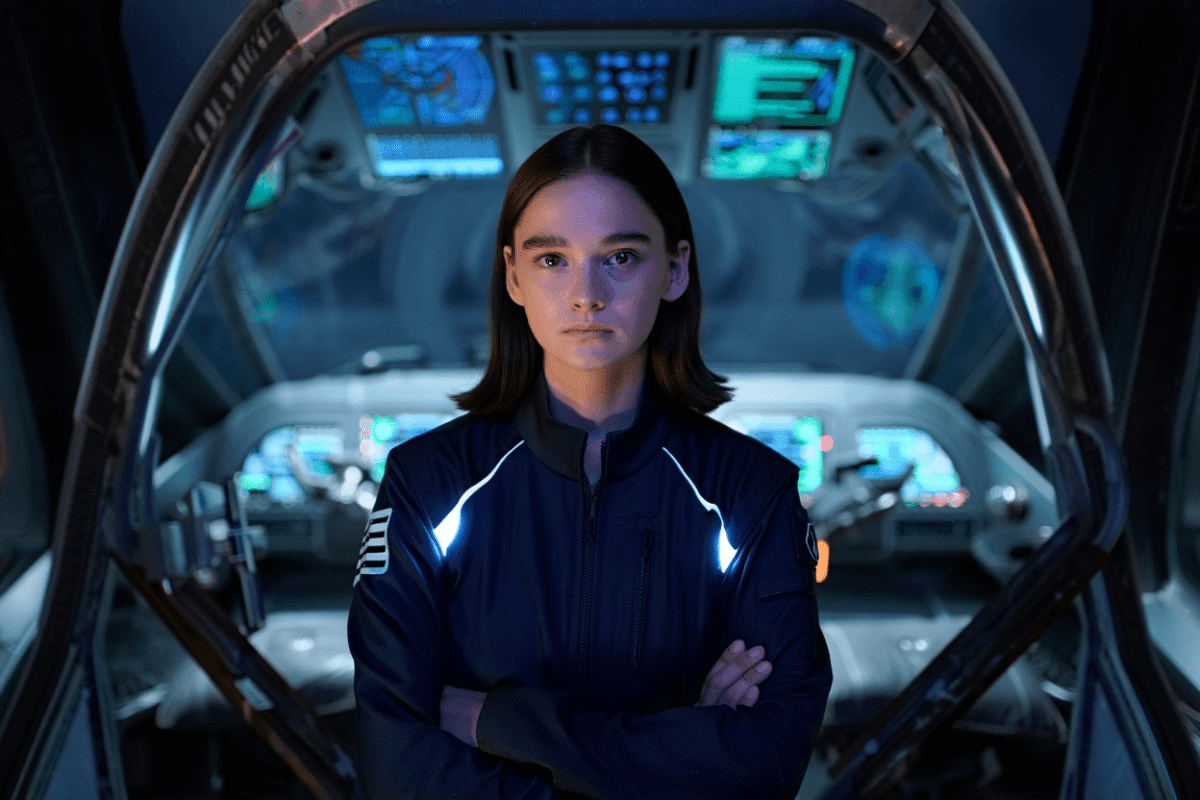
Skyward introduces Spensa Nightshade, a 17-year-old dreamer living on Detritus, a ruined world perpetually under attack from an advanced alien civilization called the Krell. Humanity crash-landed on this hostile planet generations ago, and Spensa‘s sole ambition is to become a pilot like her famous (and controversial) father. The narrative follows her enrollment in flight school, where she trains alongside fellow recruits while uncovering deeper truths about her world’s history and her own bloodline.
Sanderson’s four-book series in the Cytoverse universe—Skyward (2018), Starsight (2019), Cytonic (2021), and Interstellar Flight (expanded universe novellas)—delivers hard science fiction principles without excessive technical jargon, making it accessible to teenage audiences while engaging adult readers. The protagonist discovers a sentient artificial intelligence called M-Bot (a stealth fighter) that becomes her secret ally, amplifying both the stakes and the emotional core of her journey.
The Creative Team: Marvel Veterans Bring Pedigree
Jed Whedon and Maurissa Tancharoen bring formidable credentials to Skyward. As co-creators, co-showrunners, and executive producers of Marvel’s Agents of S.H.I.E.L.D., the pair guided the spy-superhero series through 7 seasons (2013–2020) on ABC, overseeing one of the longest-running series in the Marvel Television universe. Their experience managing complex mythology, ensemble casts, and large-scale action sequences directly aligns with the scope required to adapt Skyward’s expanding universe.
Sanderson, meanwhile, is engineering his own multimedia empire. Beyond Skyward, he is actively developing Mistborn into a feature film for Apple, completing the screenplay as of March 2026. He is also writing the pilot for The Stormlight Archive, another Apple-backed television adaptation of his epic fantasy series. This hands-on approach to television writing distinguishes Sanderson from many novelists who sell adaptation rights but remain uninvolved creatively.
Why Tomorrow Studios?: Track Record and Strategic Placement
Tomorrow Studios—a U.S.-based subsidiary of ITV Studios—has built its reputation on navigating complex source material adaptations. The company produced Netflix’s One Piece, the live-action adaptation of Eiichiro Oda’s iconic manga series, demonstrating the ability to translate beloved intellectual property to screen while respecting fan expectations. Tomorrow Studios also handles Let The Right One In, a prestige reimagining of the vampire narrative, showcasing their range across genre and tone.
The studio’s selection signals a commitment to quality production design and world-building that Skyward demands. The novel’s setting—a colonized alien world with distinctive architecture, technology, and cultural codes—requires considerable creative investment. Tomorrow Studios’ experience balancing visual spectacle with narrative intimacy positions them well to expand Skyward’s intimate coming-of-age story into a serialized universe.
Adaptation Timeline and Production Status
| Key Development | Status / Date |
| Official Announcement | May 20, 2026 |
| Pilot Script Writers | Sanderson, Whedon, Tancharoen |
| Production Company | Tomorrow Studios (ITV Studios) |
| Series Format | Full television series (scope TBA) |
| Network / Streamer | To be announced |
| Pilot Greenlight Phase | Script development in progress |
No air date has been announced. Typical television development cycles place pilot production and potential greenlight decisions in 2027 at the earliest, with production beginning 2028 if greenlit. Sanderson’s dual commitments to Mistborn and Stormlight Archive may influence his hands-on timeline, though he has publicly committed to maintaining creative oversight across his adaptations.
What Makes Skyward Adaptation-Ready: Examining the Source Material
“Spensa’s world has been under alien attack for hundreds of years. An alien race called the Krell leads onslaught after onslaught, and the humans surviving in this precarious colony have learned to hide in caves beneath the surface of the planet Detritus. Her dream of becoming a pilot is the only hope she has of protecting her world—and her people.”
— Brandon Sanderson, official series synopsis
Skyward succeeds as adaptation material because it balances intimate character development with expansive world-building. The protagonist’s journey—self-doubt, training sequences, interpersonal conflict, and gradual revelation of cosmic truths—mirrors proven television arcs (think Avatar: The Last Airbender or The Expanse). Simultaneously, Sanderson’s meticulous plotting across four books creates serializable mythology: each novel escalates the stakes and expands the setting, preventing narrative stagnation across multiple seasons.
The supporting cast—fellow cadets with distinct personality types, hardened veteran instructors, morally complicated authority figures—offers ensemble dynamics critical to long-form television. M-Bot’s artificial consciousness provides both comedic relief and philosophical weight, functioning as a technological mirror for Spensa’s internal conflicts. This design mirrors successful precedents in Marvel’s Agents of S.H.I.E.L.D., where ensemble chemistry sustained seven seasons.
The Broader Sanderson Adaptation Ecosystem
Skyward’s development arrives amid unprecedented activity in Brandon Sanderson adaptations. Apple TV+ signed a sweeping deal covering his Cosmere universe (distinct from the Cytoverse), with Mistborn films and Stormlight Archive television in advanced development. Sanderson’s willingness to write directly for screen—unusual among bestselling novelists—reflects both his technical skill in screenwriting and his determination to preserve narrative fidelity.
This ecosystem matters contextually: successful Skyward adaptation could accelerate timelines for Stormlight and Mistborn projects, while underperformance might signal streaming caution. The Cytoverse books occupy YA territory, positioning Skyward within a distinct audience—potentially younger than Stormlight’s adult fantasy demographic—which could influence network selection and editorial approach.
What Challenges Lie Ahead for the Skyward Adaptation?
Converting Skyward to screen presents recognized obstacles. Flight choreography requires sophisticated VFX budgeting; the dogfighting sequences are central to the narrative, not ancillary. Worldbuilding exposition must avoid the lecture-hall traps plaguing many sci-fi pilots—Skyward requires explaining colonization history, military hierarchy, alien taxonomy, and technological systems with efficiency. Casting Spensa at age 17 demands finding an actor capable of carrying a complex narrative—ambitious, flawed, intelligent, but still adolescent in vulnerability.
Additionally, Skyward benefits from Sanderson’s trademark humor and small moments of absurdist levity within high-stakes narrative. Maintaining that tonal balance is notoriously difficult in television, where darker prestige expectations often override genre levity. Marvel’s Agents of S.H.I.E.L.D. often struggled with this exact tension, alternating between tonal registers—Whedon and Tancharoen understand the challenge intimately.
Will Skyward Adaptation Reach Screen in a Timely Manner?
The timeline remains uncertain. If pilot greenlight occurs in 2027, production could begin late 2027 or early 2028, placing a potential premiere at 2029–2030 at earliest. This lag reflects industry standards post-pandemic, budgetary considerations for sci-fi, and the competing priorities of primary creatives. Optimistically, active development and the prestige of involved talent could compress timelines by 6–12 months; pessimistically, shift priorities or network changes could delay indefinitely.
The involvement of Sanderson himself as co-writer and executive producer reduces likelihood of indefinite development hell—unlike optioned properties where authors remain distant, Sanderson’s active hand ensures momentum and accountability.
Sources
- Deadline – Official announcement of Skyward TV series adaptation, May 20, 2026
- Brandon Sanderson Official Website – Series information and author statements
- The Coppermind (17th Shard) – Comprehensive Skyward series analysis and character details
- Wikipedia (Skyward novel) – Publication history and series overview
- IMDb, Marvel Cinematic Universe Wiki – Jed Whedon and Maurissa Tancharoen credentials and career history
- Winter is Coming, Book Riot, Collider – Brandon Sanderson adaptation ecosystem reporting