Apple TV’s newest sci-fi series Star City landed on May 29, 2026, with a rare 100% critics’ score on Rotten Tomatoes—opening to immediate acclaim rarely seen for television launches. The For All Mankind spinoff pivots from the original show’s American optimism to explore the Cold War space race through the Soviet Union’s perspective, positioning itself as a paranoid spy thriller rather than an aspirational drama.
🔥 Quick Facts
- Star City premiered May 29, 2026 on Apple TV+ with the first two episodes available on day one.
- 100% Rotten Tomatoes critics’ score based on reviews from multiple major publications and outlets.
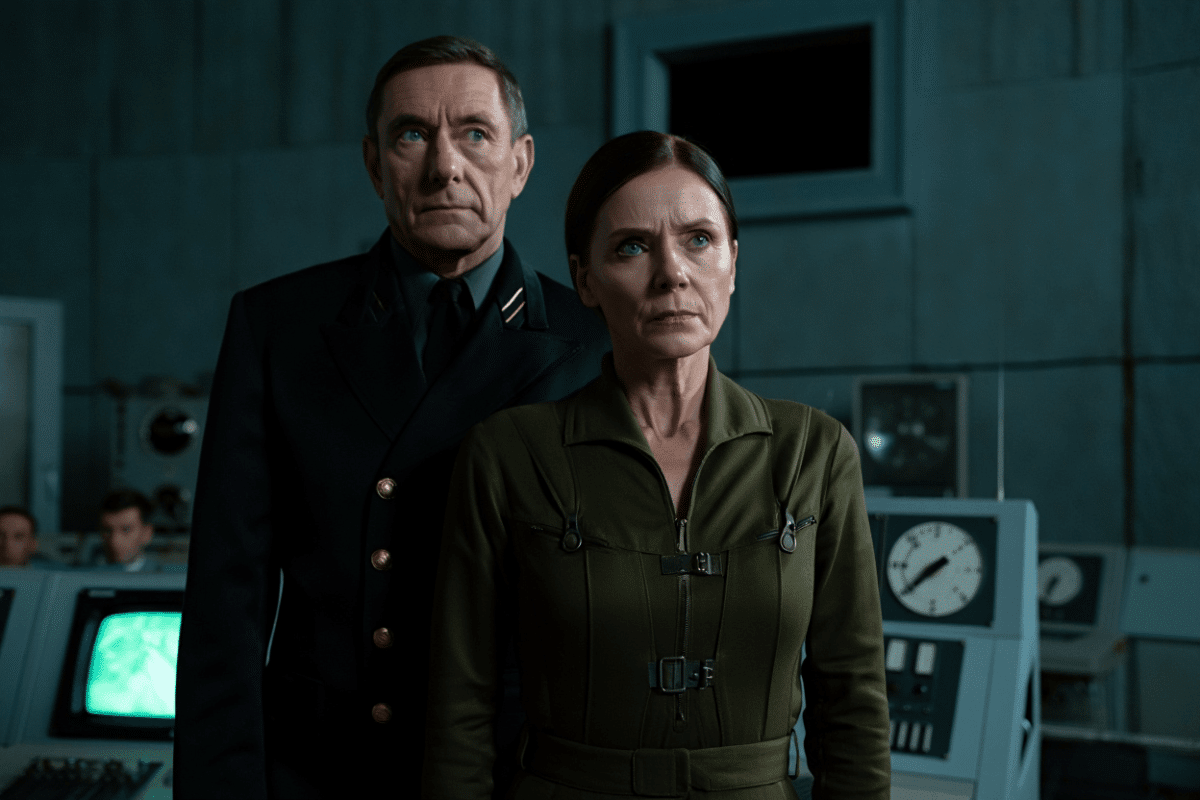
- Lead cast includes Welsh actor Rhys Ifans as the Chief Designer and British actress Anna Maxwell Martin as KGB surveillance chief Lyudmilla.
- First official spinoff of the award-winning For All Mankind series, set in the same alternate-history universe.
A New Era for the For All Mankind Universe
For All Mankind established itself as Apple TV+’s flagship alternate-history drama, charting a version of the Cold War space race where geopolitical outcomes shifted dramatically. The original series, created by Ronald D. Moore, emphasized the American side of this struggle—NASA’s ambitions, astronaut drama, political machinations.
Star City fundamentally reorients the franchise’s perspective. Rather than follow American astronauts and engineers, the spinoff centers Soviet cosmonauts, designers, and intelligence officers racing to reach the moon first in this alternate 1970s. This narrative inversion allows the show to explore themes For All Mankind never fully developed: state surveillance, ideological commitment to collectivism, and the personal costs of Cold War competition.
According to press materials, Star City is described as a “propulsive paranoid thriller”—a tone significantly darker than its parent show. Where For All Mankind balanced geopolitical stakes with human warmth, Star City embraces the murky, secretive atmosphere of Soviet state apparatus.
Critical Reception and Rotten Tomatoes Achievement
A perfect 100% critics’ score on Rotten Tomatoes remains rare for television series. Star City achieved this primarily during its early review window, with critics praising the show’s tense atmosphere, strong performances, and bold narrative choices. Major publications rewarded the series for successfully stepping away from For All Mankind‘s established formula without losing coherence to the broader universe.
The Guardian highlighted Anna Maxwell Martin’s performance as “terrifying” and central to the show’s success. Collider described it as a “tense spy thriller” that pulls back the curtain on a completely new side of the franchise. Variety’s review emphasized the show’s ability to peel back the Iron Curtain and examine Soviet space program secrecy.
Critics noted that Star City trades the optimistic, humanistic tone of the original series for something more melancholic and paranoid—a deliberate creative choice that distinguished the spinoff rather than replicated its source.
Cast, Characters, and Creative Leadership
The ensemble centers on two commanding leads. Rhys Ifans portrays the Chief Designer—the brilliant, shadowy figure orchestrating the Soviet space program’s mission architecture. Anna Maxwell Martin plays Lyudmilla, the calculating head of the KGB’s surveillance division, tasked with ensuring ideological loyalty while navigating the program’s internal politics.
Supporting cast members include Agnes O’Casey, Alice Englert, Solly McLeod, Adam Nagaitis, and Ruby Ashbourne Serkis, filling roles as cosmonauts, engineers, and intelligence operatives caught in the system’s machinery.
The show is led creatively by Ben Nedivi and Matt Wolpert alongside Ronald D. Moore, the Emmy-nominated showrunner of For All Mankind. Their involvement signals continuity with the original series’ quality standards while allowing new narrative directions. The creative team filmed the series in Vilnius, Lithuania, using Eastern European locations to authentically ground the Soviet aesthetic.
How Star City Differs From For All Mankind
| Element | For All Mankind | Star City |
| Primary Perspective | American space program and politics | Soviet space program and KGB |
| Tone | Optimistic, dramatic, humanistic | Paranoid, tense, noir-inflected |
| Narrative Genre | Historical drama with sci-fi alternate history | Cold War spy thriller within sci-fi alternate history |
| Setting Emphasis | NASA facilities, Washington politics, broadcast studios | Soviet space facilities, surveillance apparatus, state institutions |
| Character Focus | Astronauts, engineers, politicians | Cosmonauts, intelligence officers, regime enforcers |
| Thematic Core | Human achievement, national pride, family dynamics | State control, ideological pressure, personal sacrifice |
“Star City trades the soaring optimism of early For All Mankind for a darker, more paranoid Cold War narrative that mirrors the show’s espionage focus.”
— Tom’s Guide, Apple TV Review Roundup
Why the 100% Score Matters in Streaming Context
A perfect critics’ score on Rotten Tomatoes requires unanimous positive review aggregation—a threshold that excludes mixed or negative assessments entirely. Star City achieved this feat despite launching a brand-new series in a saturated streaming landscape where audience and critical expectations have grown increasingly demanding.
The achievement placed Star City above even the original For All Mankind in critical estimation. Reviews emphasized that the spinoff proved the franchise could sustain compelling storytelling beyond its original premise—a significant validation for Apple TV+ executives betting on expanded universe content.
Context matters: only a fraction of television series achieve perfect critical scores in their initial review window. Breaking Bad never reached 100%, The Wire peaked at 98%, and most prestige dramas fluctuate between 85-95% range. Star City’s unanimous praise suggests genuine excellence rather than mere competence.
What’s Next for the Franchise?
Apple TV+ has positioned Star City as a continuing spinoff series rather than a limited series. The first season premiered with two episodes followed by weekly drops. For All Mankind itself continues with a fifth season finale coinciding with Star City’s launch—creating thematic bookends where the original series’ American climax meets the Soviet counternarrative simultaneously.
Future seasons of Star City would potentially explore later decades of this alternate-history space race, potentially depicting Soviet responses to events from For All Mankind seasons fans have already witnessed.
Is Star City Essential Viewing for For All Mankind Fans?
The series functions as both standalone spy thriller and universe expansion. Viewers without prior For All Mankind experience can follow Star City‘s self-contained narrative without confusion. However, fans of the original will find additional resonance recognizing the broader alternate-history stakes and how Soviet actions shadow American achievements.
The show operates successfully on two levels—surface-level espionage drama for newcomers and thematic companion piece for invested franchise followers.
Sources
- Rotten Tomatoes – Star City critics’ score tracking and reviews aggregation
- Apple TV Press – Official series release information and producer statements
- The Guardian – “Star City review: Anna Maxwell Martin is terrifying in a fascinating space race thriller”
- Collider – Star City spinoff review and critical assessment
- Variety – Star City premiere coverage and creator interviews
- Tom’s Guide – Star City review and streaming analysis
- IMDb – Cast information, runtime, and production details