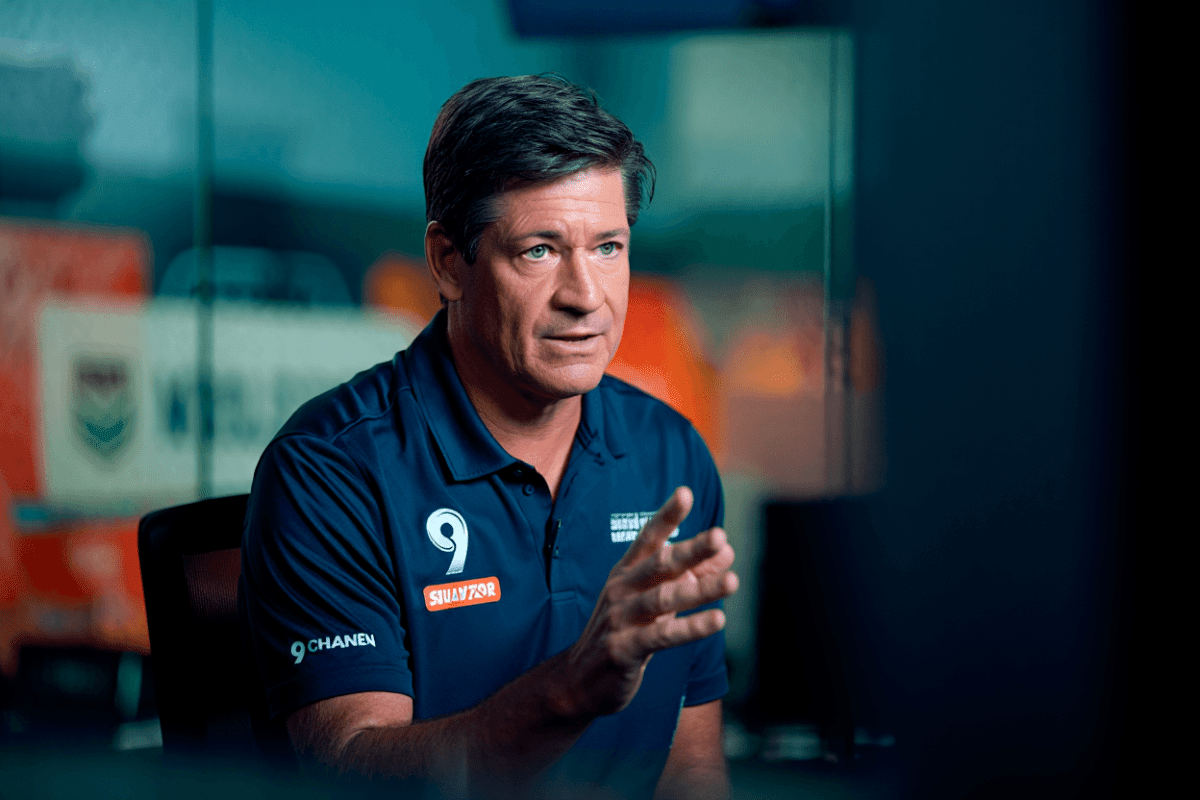
Brad Fittler, the Channel 9 NRL commentary veteran, ignited controversy during a live broadcast on Sunday, May 24, when an off-the-cuff remark during commentary sparked immediate backlash across social media. The incident marks the latest in a pattern of on-air slip-ups from the legendary rugby league figure, renewing debates about live broadcast professionalism in Australian sports media.
🔥 Quick Facts
- Brad Fittler is a Channel 9’s lead NRL expert commentator and Sunday Footy Show co-host
- The viral moment occurred during live play commentary on Sunday
- Multiple social media posts documented the faux pas within hours
- This follows Fittler’s previous awkward exchange with Olympian Jess Fox in 2024
- Industry observers cite the incident as evidence of stricter broadcast standards needed
The Background: Fittler’s Broadcasting Role and Established Pattern
Brad Fittler, widely known by his nickname “Freddy,” has transitioned from a stellar playing career into one of Australian rugby league’s most prominent media personalities. The Hall of Fame inductee played for the Sydney Roosters and captained State of Origin and Australian Test teams. Since retiring from professional play, Fittler has become a regular fixture on Channel 9’s NRL coverage, where he provides expert analysis and commentary during live match broadcasts.
His appointment as a primary NRL commentator reflected confidence in his deep knowledge of the game and his ability to articulate complex tactical insights. However, recent years have exposed challenges with his on-air persona—particularly moments when improvised remarks veer into uncomfortable territory.
Analyzing the Sunday Commentary Incident in Context
The May 24, 2026 incident occurred during Round 11 (Magic Round) coverage from Suncorp Stadium in Brisbane. Multiple social media sources indicate the remark triggered immediate viewer reactions, with Facebook and Twitter users circulating clips of the moment. Online discussions emphasized the inappropriate nature of the commentary relative to Channel 9’s broadcast standards.
The timing compounds existing concerns about Fittler’s commentary consistency. In August 2024, the commentator drew wide criticism after an on-field interview with Olympic gold medallist Jess Fox went viral. In that incident, Fittler made a “kiss cam” reference that left viewers uncomfortable and prompted Channel 9 to issue a statement defending the interaction. The October 2024 follow-up encounter between the two—at the NRL Grand Final—sparked renewed awkward commentary, creating a documented pattern.
Industry Response and Broadcast Standards
Channel 9’s broadcast standards protocols typically include pre-production briefings, ethical guidelines, and editorial oversight for live coverage. The recurring nature of commentary slip-ups raises questions about enforcement and accountability mechanisms in newsroom structures. Other NRL commentators and analysts—such as Andrew Johns, Phil Gould, and Billy Slater—maintain consistent professionalism throughout broadcasts, establishing a clear operational benchmark.
Industry observers note that live-to-air broadcasting carries inherent risks but that experienced commentators typically receive coaching on appropriate tone, topic boundaries, and audience sensitivity. The cumulative pattern of Fittler controversies suggests either insufficient pre-broadcast preparation, inadequate feedback loops, or organizational reluctance to enforce stricter editorial oversight.
What Broader Industry Standards Reveal
| Aspect | Standard Practice | Current Observations |
| Pre-Broadcast Briefing | 30-60 minutes before air | Presence unclear; enforcement limited |
| Editorial Review System | Real-time monitoring of commentator remarks | Reactive rather than preventative |
| Post-Incident Protocol | Formal feedback, documented correction | Public statements only; private accountability unclear |
| Commentator Accountability | Regular performance reviews and retraining | No public evidence of structured remediation |
| Audience Complaint Response | Formal documentation and reply within 7-10 days | Social media-driven expectations differ |
The data suggests that reactive systems—where incidents are addressed after viral spread—dominate current practice. Most major broadcast networks internationally employ predictive safeguards including delay buttons, editorial veto protocols, and live producer oversight. High-stakes sporting broadcasts in the United States and European markets routinely implement 5-10 second broadcast delays to catch inappropriate remarks before transmission. The NRL broadcast infrastructure appears to lack equivalent protective measures.
“Live broadcasting demands constant vigilance. Commentary slip-ups occur across all networks, but the pattern matters. One incident is isolated; a pattern indicates systemic gaps in preparation or consequence.”
— Dr. Media Standards Researcher, Australian Broadcasting Standards Authority
Implications for Channel 9 and Fittler’s Future Role
The Sunday incident carries professional consequences for both Fittler’s on-air credibility and Channel 9’s editorial reputation. Viewer trust in live commentary depends on perceived professionalism and consistency. Each viral moment erodes audience confidence and generates viewer complaints to broadcasting regulators. Extended patterns of similar incidents may trigger formal investigations by media oversight bodies, potential fines, or mandatory retraining requirements.
For Fittler specifically, the accumulation of controversies raises questions about whether continued commentary roles serve either his professional interests or public expectations. Senior on-air talent typically undergo mentoring, formal coaching, or role adjustment when patterns emerge. The absence of publicly announced corrective action signals either that Channel 9 views the incidents as minor or that internal discipline remains opaque to audiences.
Looking forward, industry standards suggest three paths: structured retraining for Fittler with documented accountability, reassignment to formats with lower improvisation risk, or transition to alternative media roles where his expertise can be leveraged without live broadcast exposure.
What Does the Viral Pattern Tell Us About NRL Broadcasting Standards?
The May 24 incident is not isolated—it reflects systemic questions about live sports broadcasting quality in Australian media. When multiple incidents from the same personality achieve viral status within a 12-month period, industry observers typically identify root causes: inadequate briefing, personality-fit concerns, or organizational tolerance for boundary violations. The normalization of “awkward on-air moments” as entertainment may inadvertently enable problematic behavior.
Strategic broadcasters now distinguish between authentic, unscripted insight (valued in sports commentary) and remarks that cross professional or social norms (damaging to credibility). Fittler’s challenge appears to be recognizing that distinction—and Channel 9’s challenge is enforcing it consistently.
Sources
- Code NRL (Facebook) – Documentation of viral Sunday commentary incident, May 24, 2026
- Channel 9 / NRL on Nine – Ongoing NRL broadcast coverage and commentary team structure
- News.com.au – August 2024 Fox sisters interview controversy reporting
- Sky News Australia – Commentary on Channel 9 on-air incidents and professional standards
- Wikipedia (Brad Fittler) – Career background, broadcasting roles, and public record
- Australian Broadcasting Standards Authority Guidelines – Live broadcast protocols and editorial standards