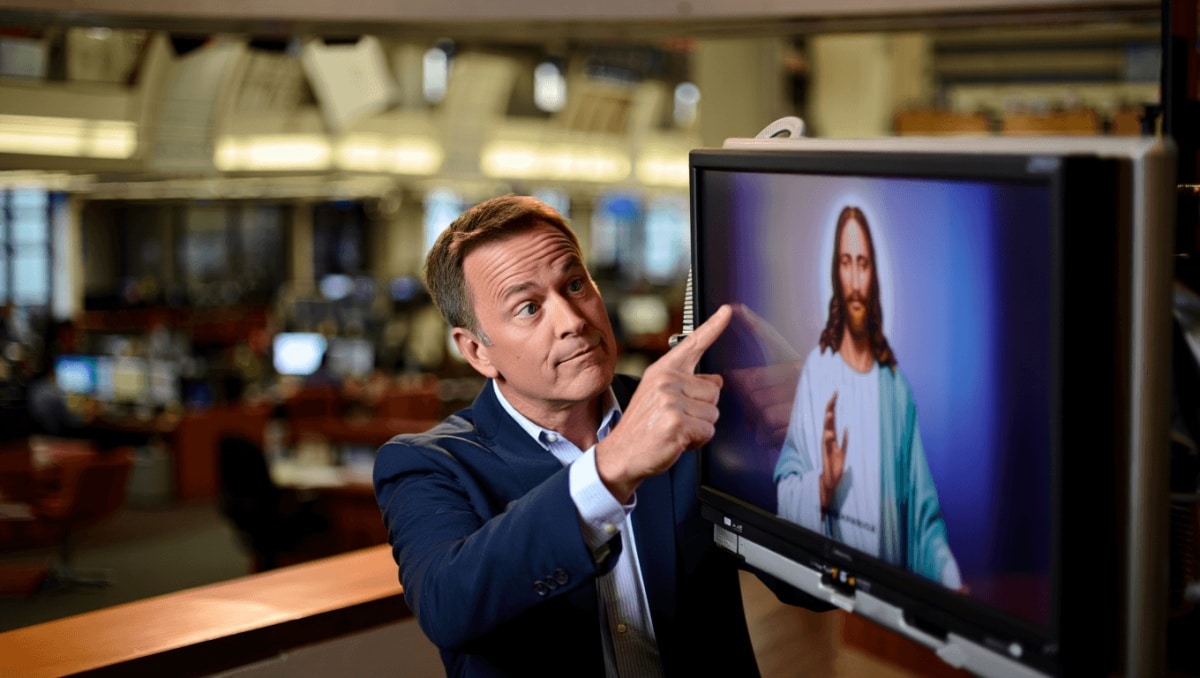
Comedian Jon Stewart recently drew attention to a small but striking detail in an AI-generated image of Jesus that was shared in connection with former President Donald Trump. His observation reignited debate about the use of synthetic imagery in political messaging and the limits of what viewers can trust on social platforms.
What Stewart noticed — and why it caught on
Stewart pointed out an odd visual inconsistency in the picture that many online viewers quickly began to examine. What started as a passing remark turned into widespread scrutiny as users scanned the image, debating whether the anomaly was an intentional flourish, an AI artifact, or something more symbolic.
The episode is less about a single pixel than about perception: when influential figures circulate highly polished, computer-generated images, even small imperfections become focal points. That magnifies both the image’s reach and the conversation around it.
Why this matters now
AI-generated imagery is growing more convincing, and as it becomes common in political and cultural discourse, the risks multiply. Visuals can be used to bolster narratives, sway emotions, or seed confusion — and minor glitches can either undermine credibility or be repurposed as meaning.
For readers, the immediate stakes are twofold: recognizing when an image is synthetic, and understanding how quickly digital visuals can shape public impressions.
Broader implications for media and politics
Technology that produces photorealistic results often leaves telltale signs — mismatched shadows, odd hands or jewelry, or warped backgrounds. Those artifacts are useful clues, but they are becoming harder to spot as models improve. Meanwhile, political actors who share striking AI content can change the tone of a debate without a detailed factual claim.
This dynamic raises questions about platform responsibility, editorial verification, and the ethical use of religious or cultural imagery in political contexts. It also underscores the need for newsrooms, platforms, and readers to adapt verification habits.
- AI artifacts: Small defects in synthetic images often reveal how an image was made.
- Verification: Check original sources, reverse-image searches, and official statements before drawing conclusions.
- Platform policies: Social networks must balance moderation with free expression while addressing AI-driven manipulation.
- Perception risk: Even ambiguous or humorous images can alter public conversation when amplified by well-known figures.
How to approach similar images
When you encounter provocative or unusual visuals online, a few simple steps help avoid being misled: look for a source, search for corroborating reporting, and watch for obvious visual glitches that are common to generative models. News outlets and fact-checkers are increasingly flagging synthetic content — consult them before accepting an image at face value.
Stewart’s observation did more than spark jokes: it served as a reminder that visual culture is changing fast. As AI tools spread, small details can carry outsized influence, and the public’s ability to spot and question those details will matter more than ever.