
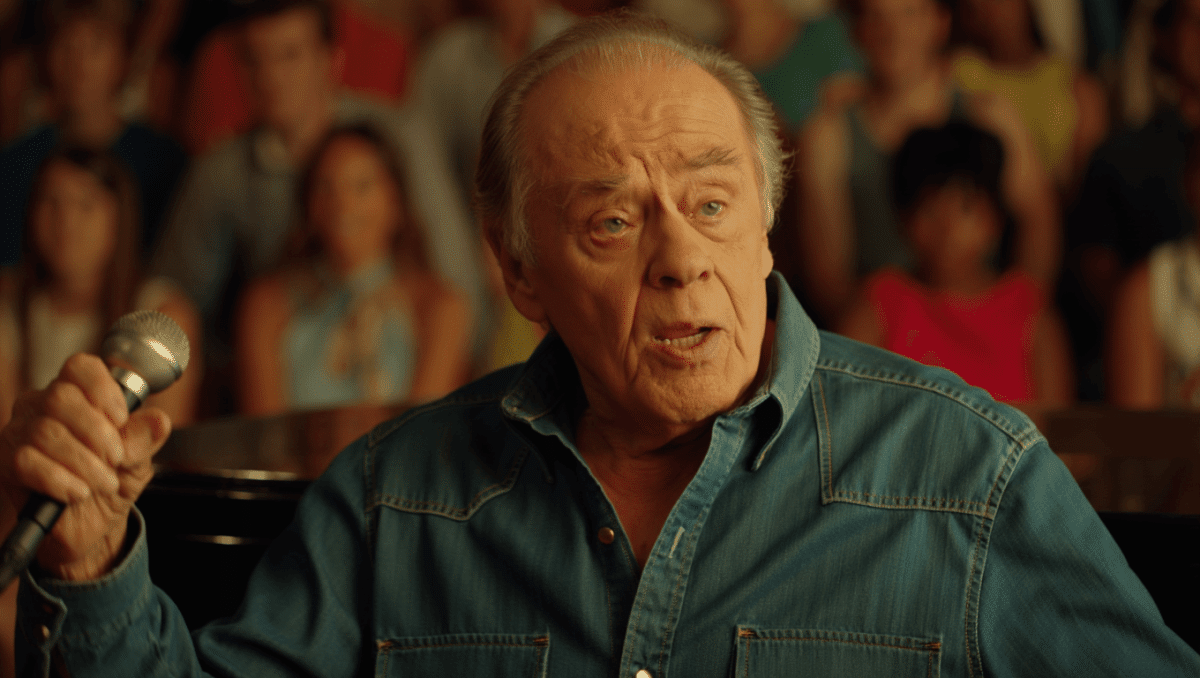
Country Joe McDonald, the Woodstock legend who urged thousands to chant antiwar anthems, has died at 84. The co-founder of Country Joe & the Fish passed on March 7, 2026, leaving behind a legacy spanning six decades of musical activism.
🔥 Quick Facts
- Death: Joseph Allen McDonald died of Parkinson’s disease in Berkeley, California, age 84
- Born: January 1, 1942 in Washington, D.C.
- Woodstock moment: Performed iconic solo set at 1969 Woodstock with the Fish Cheer
- Band founded: Country Joe & the Fish established in 1965 with Barry Melton
A Defining Voice of the 1960s Protest Movement
Country Joe McDonald transformed into a defining voice for an entire generation fighting against the Vietnam War. Born Joseph Allen McDonald on January 1, 1942, he grew up in El Monte, California, and served three years in the U.S. Navy as a teenager. This military experience deeply influenced his later work advocating for peace and veterans’ rights. McDonald moved to Berkeley in the early 1960s, becoming active in the Free Speech Movement and joining the wave of anti-war demonstrations at UC Berkeley.
In 1965, he co-founded Country Joe & the Fish with guitarist Barry ‘The Fish’ Melton. The psychedelic rock group quickly became iconic for their socially conscious lyrics and energetic performances at San Francisco venues including the Fillmore Auditorium and Avalon Ballroom.
The Iconic Woodstock Performance That Changed America
Country Joe McDonald’s most famous moment came at the 1969 Woodstock Festival on August 16. Performing solo, he delivered ‘I-Feel-Like-I’m-Fixin’-to-Die Rag,’ the anti-war anthem that remains his signature achievement. The iconic chorus repeated: ‘One, two, three, what are we fighting for?’ paired with his memorable ‘Fish Cheer’ where audiences enthusiastically called out letters spelling a profanity in protest. This moment was featured prominently in Michael Wadleigh’s landmark 1970 Woodstock documentary, cementing McDonald’s place in counterculture history forever.
The song was written in about 20 minutes for an anti-war play. McDonald explained to the New York Times in 2017 that he ‘was inspired to write a song about how soldiers have no choice in the matter, but to follow orders, but with the irreverence of rock ‘n’ roll. It was essentially punk rock before punk existed.’
Musical Career and Landmark Achievements
| Achievement | Details |
| Band Formation | Country Joe & the Fish, Berkeley, 1965 |
| Debut Album | Electric Music for the Mind and Body (May 1967), 38 weeks on Billboard |
| Solo Career | Over 40 albums recorded, 60-year career spanning 1959 to 2026 |
| Signature Song | The Fish Cheer/I-Feel-Like-I’m-Fixin’-to-Die Rag (1965) |
Country Joe & the Fish released five studio albums that influenced the entire psychedelic rock movement. Their albums ‘Electric Music for the Mind and Body’ and ‘I-Feel-Like-I’m-Fixin’-to-Die’ (both 1967) remain considered landmarks of the era. After the band dissolved in 1970, McDonald launched a prolific solo career, recording approximately 40 albums across folk, rock, and activist-driven themes.
Beyond Music: Activist and Veteran Advocate
McDonald’s commitment to social causes extended far beyond Woodstock’s legendary moment. He testified at the Chicago Seven Trial in January 1970 alongside fellow activists Norman Mailer, Dick Gregory, and Allen Ginsberg. Judge Julius Hoffman initially forbade him from singing his protest anthem in court, so McDonald recited the lyrics instead, demonstrating unwavering dedication to his message. He also joined Jane Fonda’s FTA Show in 1971, an antiwar traveling performance that put him on Richard Nixon’s infamous ‘enemies list.’
McDonald successfully led efforts to create Vietnam Veterans Memorials in both Berkeley and San Francisco. He performed at countless benefit concerts for Sword to Plowshares, Vietnam Veterans Against the War, and ceremonies at the Vietnam Veterans Memorial in Washington, D.C. In 2016, he appeared at the Vietnam War Summit at the LBJ Library alongside Secretary of State John Kerry and filmmaker Ken Burns.
‘He was a master of the piquant ballad, a scion of the sardonic sung commentary, a pioneer of the psychedelic, a wit-meister of the comic ditty, an avatar of music-as-activism, and a poet.’
— Rip Rense, Best Classic Bands writer
How Did the Woodstock Legend Leave His Mark on American Culture?
Country Joe McDonald’s legacy extends through environmental activism, artistic collaborations, and unwavering devotion to social justice. He was actively involved in the ‘Save the Whales’ movement during the mid-1970s, performing at benefit concerts with Joni Mitchell and Jackson Browne. His work with Greenpeace produced songs like ‘Blood on the Ice,’ addressing environmental destruction caused by commercial sealing. McDonald also collaborated with soundscape ecologist Bernie Krause on the 2005 album ‘Natural Imperfections,’ blending field recordings with atmospheric music. His influence appeared in The Beach Boys’ 1973 song ‘California Saga,’ which featured the lyric celebrating McDonald performing at the 1970 Big Sur Folk Festival. Throughout his life, he wrote for and supported causes from veterans’ services to animal rights, making him truly irreplaceable.
Sources
- TMZ – Breaking coverage of Country Joe McDonald’s passing on March 8, 2026
- Best Classic Bands – Comprehensive obituary with his Woodstock history and band background
- Wikipedia – Complete biography documenting his 84 years and 60-year music career











A sad moment and loss of an icon. My husband had the joy and honour of being part of his backing band (Reet Petite & Gone) when he toured the UK some 20+ years ago – and I was lucky enough to tag along. What a great guy – totally devoted to his principles and values until the end.