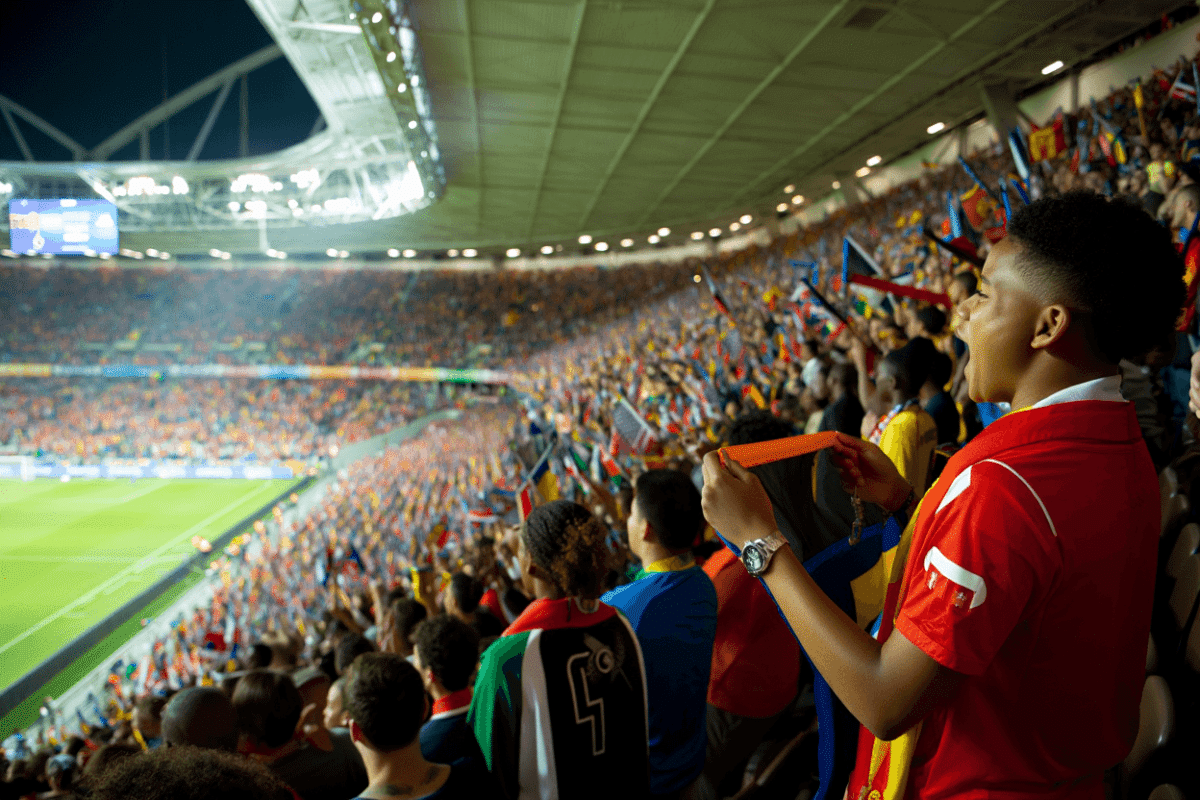
The 2026 FIFA World Cup kicks off June 11 across Canada, Mexico, and the United States, marking the first-ever tournament hosted by three nations and the first to feature 48 teams instead of the traditional 32. Over 39 days, 104 matches will determine the next world champion across 16 stadiums—11 in the US, 3 in Mexico, and 2 in Canada. This expansion fundamentally changes tournament dynamics, with 12 groups of four teams competing in a revamped format designed to enhance competition and global representation.
🔥 Quick Facts
- Dates: June 11 – July 19, 2026
- Total teams: 48 across 12 groups of 4
- Total matches: 104 over 39 days
- Stadiums: 16 across North America (11 US, 3 Mexico, 2 Canada)
- Final location: MetLife Stadium in East Rutherford, New Jersey
Breaking the 32-Team Tradition: Why Expansion Matters
FIFA’s decision to expand represents the most significant structural change in World Cup history since 1998, when the tournament grew from 24 to 32 teams. The 48-team model increases global participation, allowing 16 additional nations to compete for football’s most prestigious trophy. This expansion reflects FIFA’s commitment to expanding the sport’s reach while maintaining competitive integrity. Historically, World Cup editions have evolved cautiously—the jump to 48 teams is more ambitious than any previous expansion, fundamentally altering tournament mathematics and strategic gameplay.
The new scale offers emerging football nations genuine pathways to global recognition. Instead of watching from afar, countries previously locked out of World Cup qualification gain realistic opportunities. This democratization of the tournament aligns with modern FIFA priorities: commercial growth, geographic diversity, and brand expansion across untapped markets.
Group Stage Architecture and Qualification Strategy
The group stage format divides all 48 teams into 12 groups, with each team playing exactly three matches against every opponent in their group. The two group winners advance automatically, while eight additional teams—the best third-place finishers across all groups—earn Round of 32 berths. This creates 32 teams total in the knockout stage, preserving the traditional round of 32, round of 16, quarterfinals, semifinals, and final structure.
The qualification formula introduces strategic nuance absent from traditional group stages. Teams no longer compete simply for top-two placement; finishing third with superior goal difference becomes viable. Group compositions feature one UEFA representative, one CONMEBOL representative, and two other confederation entrants, balancing competitive strength while preventing group imbalances.
Tournament Venues and Host Nation Participation
The tournament spans 16 major stadiums across North America, featuring iconic venues and newly renovated facilities. US host cities include Atlanta, Boston, Dallas, Houston, Kansas City, Los Angeles, Miami, New York/New Jersey, Philadelphia, San Francisco, and Seattle. Mexico hosts matches in Guadalajara, Mexico City, and Monterrey, while Canada participates through Toronto and Vancouver.
The final match is scheduled for July 19, 2026 at MetLife Stadium in East Rutherford, New Jersey—giving the United States home-court advantage for crowning the champion. All three host nations qualified automatically as co-hosts, meaning Canada, Mexico, and the USA are guaranteed participation without navigating qualifying tournaments. USA begins their campaign June 12 against Paraguay at SoFi Stadium in Inglewood, California. The USA’s full schedule includes matches against Australia and Bolivia in what analysts consider a navigable group.
Favorites and Tournament Contenders
According to recent odds from May 29, 2026, Spain leads betting markets as the overall favorite, followed by England and France. The six clearest contenders are Spain, France, England, Brazil, Argentina, and Portugal—each commanding deep squad depth, recent tournament success, and elite player talent. Spain, riding momentum from their Euro 2024 championship victory, remains undefeated since winning that continental competition. France, a two-time World Cup winner within the past 28 years, brings veteran experience despite recent semifinal exits. England, fresh from Euro 2024 participation, features rising generation talent including Jude Bellingham at their creative core. Argentina, defending champions from 2022, enter as FIFA World Ranking #3 with Lionel Messi participating in his final tournament.
| Team | Group | FIFA Ranking | Recent Form |
| Spain | Group H (TBA) | #1 | Undefeated since Euro 2024 |
| Argentina | Group J (TBA) | #3 | Defending champions (2022) |
| France | Group D (TBA) | #2 | Two finals in last 8 years |
| England | Group C (TBA) | #4 | Euro 2024 finalist |
| Brazil | Group G (TBA) | #6 | Copa America 2024 runner-up |
| Portugal | Group K (TBA) | #5 | Knockout player in major tournaments |
“At this year’s tournament, there are six clear favorites: Spain, France, England, Brazil, Argentina and Portugal. Oddsmakers have these six teams pegged as the likeliest to win the entire tournament.”
— ESPN Soccer Analysis, May 26, 2026
Format Implications and Advancement Scenarios
The leap from 32 to 48 teams reshapes tournament mathematics in profound ways. Previously, advancing meant placing in top two of your group; now, 12 third-place finishers compete for 8 knockout spots, creating variable advancement criteria. A team winning 1 of 3 matches with superior goal differential could advance, whereas traditional 32-team tournaments eliminated third-place finishers entirely. Spain’s squad composition includes PSG’s Fabián Ruiz, highlighting how top European clubs supply World Cup participants. This expanded format extends group-stage tension through all matches—even mathematically eliminated teams may impact advancement scenarios for competing nations.
Tournament length increases from 28 to 39 days, placing additional physical demands on players. Recovery windows between matches narrow, fatigue compounds, and injury risks escalate. Teams managing squad rotation effectively gain strategic advantages in the knockout phase.
What Makes This World Cup Different?
Beyond expansion, the 2026 World Cup represents a watershed moment for global football. Three simultaneous hosts create logistical complexity—travel across North America extends match days, affects player recovery, and influences home-field advantage distribution. No single host nation dominates (as occurred in 2022 with Qatar), instead spreading economic benefits across borders. Media rights span three countries with distinct broadcast ecosystems, complicating scheduling but maximizing geographic reach. Fans experience unprecedented tournament accessibility—no single match location dominates, allowing supporters across the continent to attend live fixtures without international transit.
The expansion also reflects football’s evolution. Emerging nations gain legitimate platforms, experienced powerhouses cannot sleepwalk through group stages, and tactical innovation becomes crucial. Teams must win matches, not survive them—a fundamental shift from traditional tournament footballs defensive attritional approach.
Which Group Composition Poses the Greatest Challenge?
With 48 teams divided into 12 balanced groups, every team faces competitive pressure. Analysis suggests Groups E, I, and J feature particularly strong combinations of top-ranked nations—creating potential for early eliminations of strong teams at group stage. Conversely, Group A (featuring Mexico as hosts) presents navigable fixtures for co-hosts. The Round of 32 format rewards consistent performance; a team advancing as group winners faces potentially tougher Round of 32 opponents than a group runner-up, creating strategic paradoxes. Which qualifying pathway leads to an easier knockout journey—topping a weak group or finishing second in a strong one? This tension will dominate pre-tournament analysis.
Sources
- FIFA.com — Official tournament schedule, groups, teams, and stadium information
- ESPN Soccer — Format analysis, team rankings, odds updates
- USA Today — World Cup groups and qualified teams reference
- Fox Sports — Current betting odds (May 29, 2026)
- Wikipedia (2026 FIFA World Cup) — Tournament structure and venue details