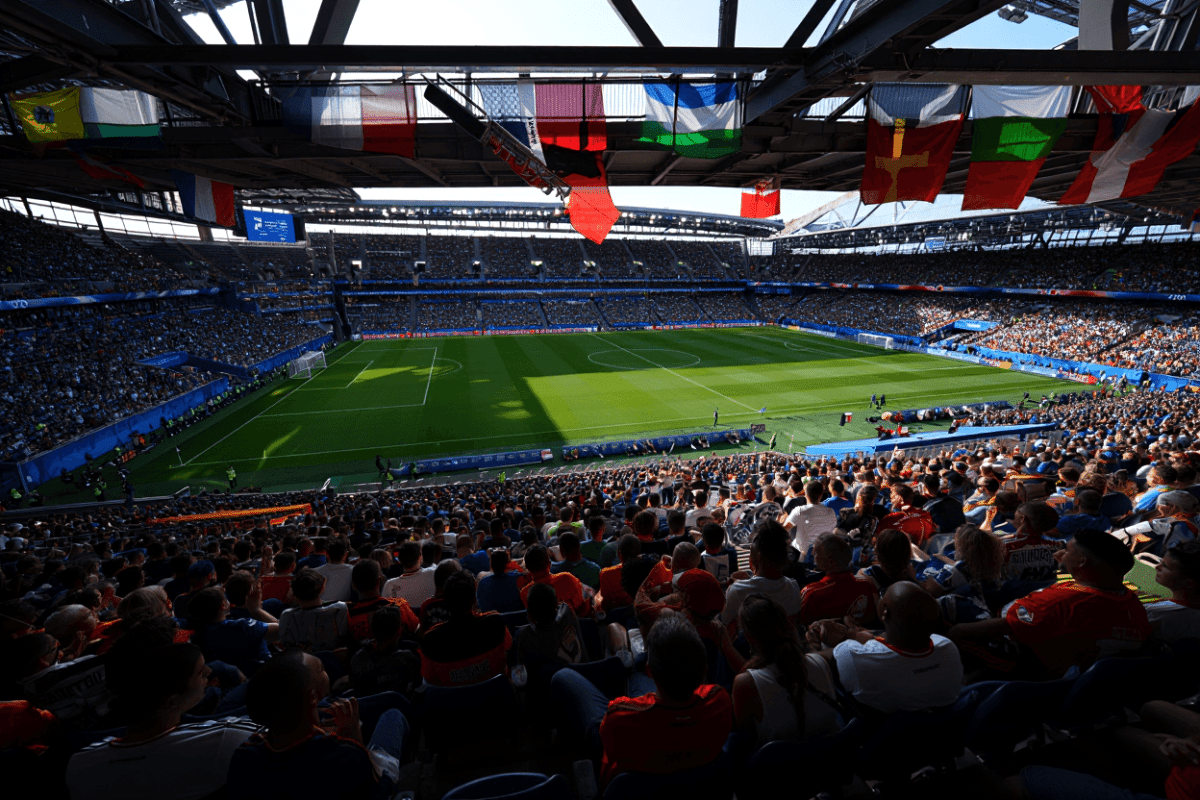
The 2026 FIFA World Cup launches on June 11 across the United States, Canada, and Mexico with a historic expansion to 48 teams competing in 104 matches across 16 stadiums. The tournament runs through July 19, making it the first World Cup co-hosted by three nations and the largest in the competition’s 96-year history.
🔥 Quick Facts
- Tournament dates: June 11 to July 19, 2026
- Opening match: Mexico vs. South Africa on June 11 at Mexico City Stadium
- Final venue: MetLife Stadium in New Jersey on July 19 at 3 p.m. ET
- Total matches: 104 (up from 64 at 2022 World Cup)
- Format: 12 groups with 4 teams each, 32-team knockout stage
A Historic Expansion: Three Nations, 48 Teams, One Tournament
The 2026 World Cup marks a fundamental shift in the tournament’s structure. For the first time since 1994, the World Cup expands beyond 32 teams, introducing 16 additional nations to the global stage. This expansion responds to decades of demand from emerging football federations while allowing qualified nations like Morocco, Portugal, Switzerland, Germany, Spain, France, Belgium, Japan, South Korea, Australia, and Iran to compete alongside established powers.
The tri-national hosting arrangement is equally unprecedented. Eleven U.S. cities (Atlanta, Boston, Dallas, Houston, Kansas City, Los Angeles, Miami, New York/New Jersey, Philadelphia, San Francisco, and Seattle) will host matches alongside three Mexican cities (Mexico City, Guadalajara, and Monterrey) and two Canadian cities (Toronto and Vancouver). This geographic distribution spans 2,000 miles across North America, creating logistical complexity but maximizing fan accessibility.
The New Format: Groups, Advancement, and Knockout Drama
The tournament structure introduces strategic variations that alter traditional World Cup dynamics. Twelve groups of four replace the familiar eight groups of four used since 2006. Each team plays three group-stage matches in a round-robin format, identical to previous tournaments. However, the advancement rules differ significantly.
The top two teams from each group automatically progress to the Round of 32, but here’s the competitive innovation: eight additional third-place teams qualify as well. This means 32 teams total advance from the group stage—double the historic 16-team knockout round standard. According to FIFA officials, this format ensures more competitive matches late in group play, as teams cannot be mathematically eliminated until their final fixture. The Round of 32 features 16 matches, followed by a traditional Round of 16, Quarterfinals, Semifinals, Third Place match, and Final.
Tournament Timeline and Host Stadium Breakdown
| Phase | Dates | Matches |
| Group Stage | June 11–24 | 72 |
| Round of 32 | June 28–July 4 | 16 |
| Round of 16 | July 5–7 | 8 |
| Quarterfinals | July 9–10 | 4 |
| Semifinals | July 14–15 | 2 |
| Third Place / Final | July 18–19 | 2 |
The 16 stadiums range in capacity from 61,000 to 82,500 spectators. MetLife Stadium in East Rutherford, New Jersey hosts eight matches including the final. SoFi Stadium in Los Angeles, Lumen Field in Seattle, Hard Rock Stadium in Miami, and Arrowhead Stadium in Kansas City each host major tournaments, with SoFi serving as the primary U.S. venue for group-stage and knockout matches. Host advantage will be minimal given the widespread distribution; Mexico and the United States as co-hosts have automatic group-stage qualification, while Canada earned the third co-host spot via the expanded qualification process.
The Opening Match and Tournament Kickoff
Mexico vs. South Africa launches the tournament on Thursday, June 11 at 3 p.m. ET (12 p.m. PT) from the iconic Mexico City Stadium (also known as Estadio Azteca). This matchup echoes history: Mexico and South Africa also competed in the opening match of the 2010 World Cup in South Africa, making this a symbolic full-circle moment. Mexico enters as the host nation with regional advantage, having qualified 45 nations alongside co-hosts Canada and USA. South Africa earned qualification through CAF (African confederation) competition, representing strong African representation alongside nations like Ivory Coast, Nigeria, Senegal, Tunisia, Cameroon, and Egypt.
The tournament’s schedule compresses three weeks of group-stage action into 14 days, with simultaneous final-group matches to prevent collusion. Teams like Argentina, France, Germany, Spain, England, Brazil, and Uruguay will compete alongside emerging nations Uzbekistan, Panama, and Jamaica. This expanded field increases unpredictability—historically, underdog performances in expanded tournaments have produced tournament upsets.
Logistical Challenges and North American Infrastructure
Hosting across three nations introduces unprecedented complexities. Travel between Toronto, Vancouver, and Mexican cities versus U.S. venues requires multi-hour flights between group matches. Time zones span Pacific (PT), Mountain (MT), Central (CT), and Eastern (ET), affecting broadcast scheduling and fan convenience. Kickoff times will be staggered between 12 p.m. ET and 10 p.m. ET to balance television viewership across North America and international audiences.
Visa and border requirements will challenge team delegations. International fans traveling from Europe, South America, and Asia must navigate U.S., Canadian, and Mexican immigration processes simultaneously. FIFA has worked with all three governments to streamline accreditation, but delays remain possible. Stadium capacities are smaller than Russia 2018 or Qatar 2022, particularly Toronto and Vancouver, which may create ticket scarcity.
Why This Format Matters: Competitive and Commercial Implications
The 48-team, 104-match structure generates approximately $5 billion in additional television rights compared to 32-team tournaments. More matches mean more advertising inventory and higher engagement from developing football nations. Commercially, broadcasters gain flexibility with 72 group-stage matches spread over 14 days, allowing multiple simultaneous matches which drive peak viewing hours.
Competitively, the expanded Round of 32 rewards consistency. Under the old format, a team could advance with one strong group-stage response and luck. Now, finishing third in your group requires competing with eleven other third-place teams for eight knockout spots. Goal differential becomes even more critical: a team winning all three group matches by 3-0 advances ahead of a team with two wins and one loss. This depth elevates the tournament’s overall competitiveness.
“This is the most inclusive World Cup ever, bringing nations and continents together on an unprecedented scale. The 48-team format reflects modern football’s global growth and ensures that more nations experience the World Cup stage.”
— FIFA Official Statement, December 2025
What Happens Next? Preparation and Expectations
From now until June 11, teams undergo final preparation camps. Coaching staffs finalize tactical systems, injury rehabilitation reaches completion, and squad chemistry solidifies. Favorites like France, Germany, Brazil, and Argentina face pressure to deliver on inflated expectations. Meanwhile, nations like Morocco and Senegal—both semifinalists in recent tournaments—hunger for breakthrough performances.
The expanded format creates narratives: Canada seeking their first knockout-stage appearance since 1986. Mexico attempting to exceed their traditional Round of 16 ceiling. USMNT (United States Men’s National Team) aiming for a quarterfinal run, historically elusive for the U.S. since 2002. Italy returns after missing 2018 and 2022, hungry to reclaim World Cup relevance. The stories compound with each team’s presence, fueling six weeks of football drama.