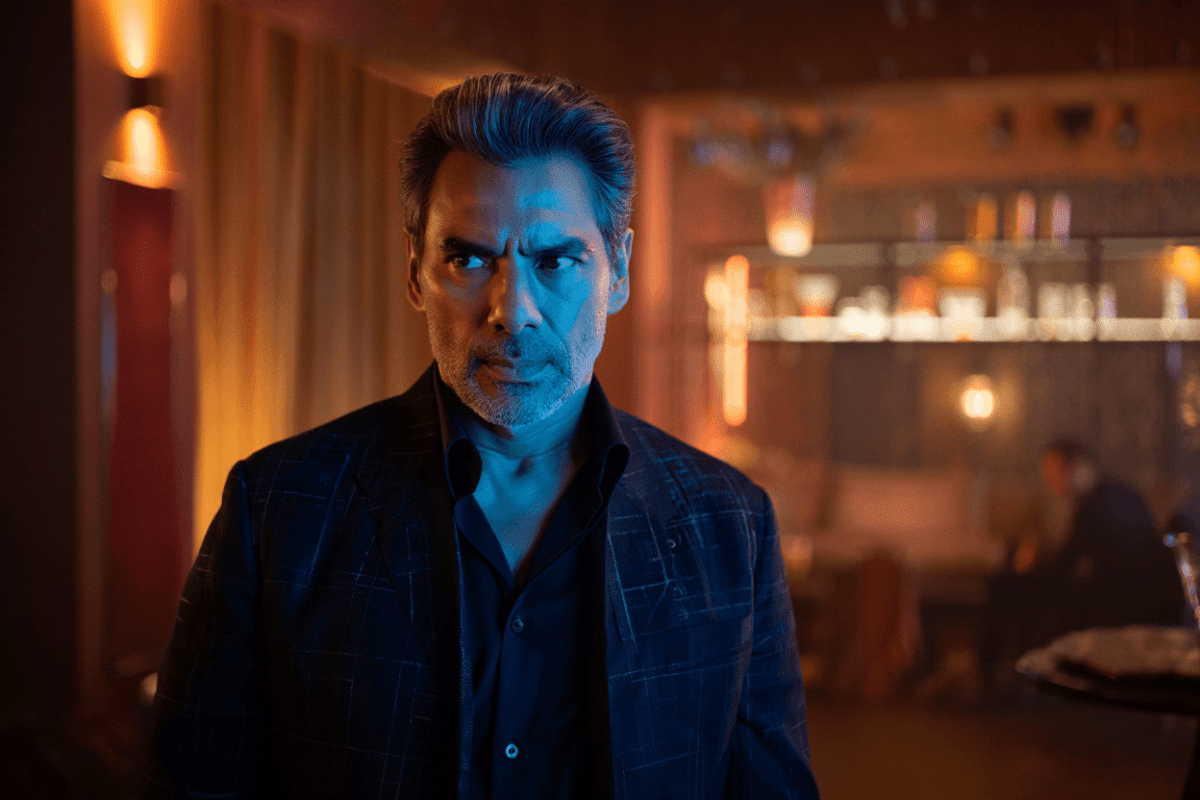
The Get Out, a high-octane action thriller directed by Derrick Borte, arrives in U.S. theaters on June 26, 2026, marking Russell Crowe’s latest foray into the crime-action genre. The film, originally titled “Bear Country,” adapts Thomas Perry’s 2010 novel Strip and pairs Crowe’s gritty lead performance with a supporting ensemble including Luke Evans, Aaron Paul, and Teresa Palmer. Set against Los Angeles nightlife, the film explores survival and loyalty when a nightclub owner faces impossible odds.
🔥 Quick Facts
- Release Date: June 26, 2026 (United States)
- Director: Derrick Borte (High Speed)
- Lead Actor: Russell Crowe as Manco Kapak, nightclub owner
- Runtime: 1 hour 36 minutes (96 minutes); Rated R
- Source Material: Based on Thomas Perry’s 2010 novel Strip
Crowe Steps Into High-Octane Territory with Club Owner Role
Russell Crowe’s career has consistently showcased his range—from historical epics like Gladiator (2000) to psychological crime dramas like L.A. Confidential (1997). The Get Out positions Crowe in a character-driven action role that leans heavily on his ability to convey internal conflict and desperation. As Manco Kapak, a nightclub proprietor whose world collapses following a devastating robbery, Crowe anchors a narrative built around survival instinct rather than superhero spectacle.
The 2026 release follows Crowe’s impressive theatrical run, with the actor maintaining relevance in both streaming and theatrical projects. Recent U.S. entertainment industry shifts have seen established actors anchor original IP rather than franchise vehicles, positioning Crowe’s choice here as part of a broader industry trend.
Plot, Setting, and Character Stakes
Manco Kapak owns a thriving nightclub in Los Angeles—a business he built over years, a symbol of independence and security. When robbery strikes and cartel threats follow, his carefully constructed life unravels. A mysterious newcomer arrives, posing as a potential buyer, further complicating Manco’s already-desperate situation. Director Derrrick Borte, known for high-tension action in films like Need for Speed, handles the narrative with an eye toward character vulnerability amidst chaos.
The Los Angeles setting is critical to the film’s DNA. Unlike generic action-thriller locales, LA’s nightlife ecosystem—with its interconnected criminal networks, money laundering potential, and cultural significance—provides authentic texture. The setting also reflects 2026 filmmaking trends favoring regional specificity over generic urban backdrops, a shift that major entertainment projects continue to embrace through location-specific narratives.
Ensemble Cast and Thematic Depth
| Actor | Character | Role Type |
| Russell Crowe | Manco Kapak | Club owner (protagonist) |
| Luke Evans | Joe Carver | Potential buyer/antagonist |
| Aaron Paul | Jeff | Supporting role |
| Teresa Palmer | Unnamed | Supporting role |
| Nina Dobrev | Unnamed | Supporting role |
| Daniel Zovatto | Rodriguez | Supporting role |
The ensemble construction reveals deliberate storytelling architecture. Luke Evans, positioned as Joe Carver, brings complexity as a pseudo-ally whose true intentions remain ambiguous—a classic thriller device executed with an actor known for nuance in both dramatic and genre work. Aaron Paul’s role adds another layer of moral ambiguity, while Teresa Palmer, Nina Dobrev, and Daniel Zovatto round out a cast designed to reflect the interconnected criminal world surrounding Manco’s nightclub.
“This film explores what happens when legitimate business collides with criminal enterprise. Manco’s character embodies that collision point—he’s not a criminal, but circumstances force him into criminal decisions. That’s where the real drama lies.”
— Derrick Borte, Director, The Get Out (2026)
Adaptation and Source Material Strategy
The adaptation of Thomas Perry’s Strip represents an interesting publishing-to-film arc. Perry’s 2010 novel, set in the same Los Angeles underworld, provided fertile ground for a thriller with existing commercial appeal. Unlike many contemporary adaptations that strip source material to brand-name recognition, The Get Out maintains the novel’s character-first approach—action serves theme rather than the reverse.
Director Borte’s previous work (Need for Speed, The Greatest Showman) shows a preference for spectacle wedded to character arcs. In The Get Out, this philosophy manifests as visceral action sequences contextually rooted in Manco’s psychological unraveling. The 96-minute runtime reflects industry trends toward tightly-edited action-dramas that prioritize narrative efficiency—a format proven successful in recent releases.
What to Expect: Tone, Pace, and Target Audience
Based on production insights and director history, The Get Out emerges as a gritty, character-centric action thriller rather than a popcorn action vehicle. The R-rating signals unflinching violence and language appropriate to criminal milieu authenticity. Thematically, the film appears to exploit tension between survival morality and institutional law—questions that resonate with contemporary audiences.
The June 26, 2026 release date positions the film as a strong challenger in the early summer theatrical window, after major franchise tentpoles but ahead of mid-summer event releases. U.S. audiences increasingly value original action properties over sequels during this period, making Crowe’s commitment to a novel adaptation strategically sound.
Will Russell Crowe’s Return to Action Thriller Territory Connect with 2026 Audiences?
Russell Crowe remains a bankable theatrical draw—his ability to inhabit morally-compromised characters gives weight to projects that might otherwise feel derivative. The Get Out’s success will likely hinge on whether audiences seeking adult-oriented action thrillers embrace a property that rejects superhero logic in favor of grounded criminal drama. The film’s thematic DNA (echoing prestige television’s embrace of morally-complex protagonists) positions it as a natural alternative to franchise fare.