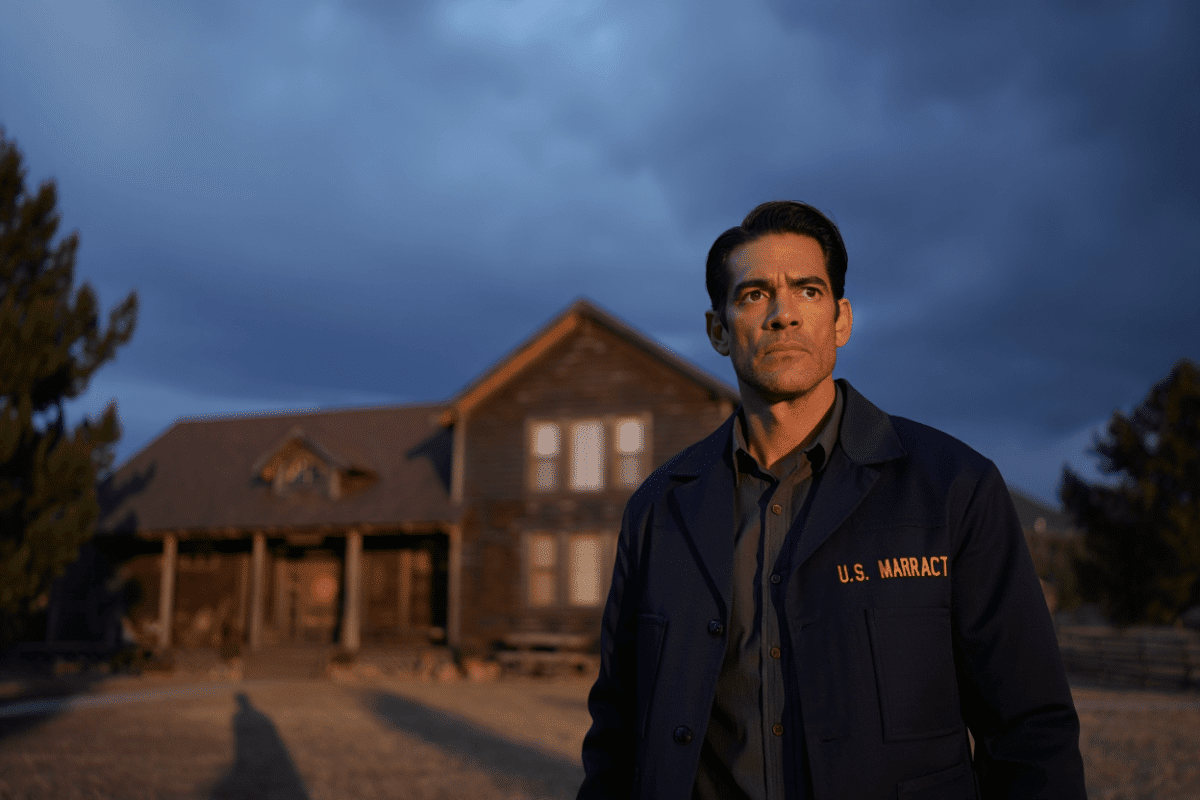
Marshals concluded its inaugural season on May 24, 2026 with an explosive finale titled “Wolves at the Door” that delivered multiple cliffhangers and shifted the trajectory of protagonist Kayce Dutton. The episode featured a coordinated assassination attempt against Broken Rock chairman Thomas Rainwater and ended with significant threats to central characters, setting up major conflicts for season 2.
🔥 Quick Facts
- Episode aired May 24, 2026 at 8:00 PM ET/PT on CBS
- Season 1 comprised 13 episodes total since March premiere
- Tate Dutton taken in shocking twist ending the finale
- Two marshals left with fates uncertain following firefight
- Series already renewed for Season 2 before finale aired
Marshals Season 1 Develops Into Conspiracy Thriller
The Yellowstone spinoff evolved significantly from its March 2026 premiere, growing from personal drama into conspiracy-driven action. Kayce Dutton, portrayed by Luke Grimes, transitioned from seeking a “ride into the sunset” at the ranch to confronting escalating threats as a U.S. Marshal. The finale represented the natural culmination of this arc, forcing the character into full protective mode as enemies converged. Season 1’s 13-episode arc built methodically toward this confrontation, with penultimate episode 12 positioning multiple players for a collision course.
The series distinguished itself from parent series Yellowstone by grounding narrative conflict in federal law enforcement operations rather than ranch ownership disputes. Broken Rock Reservation became the central location where legal, criminal, and personal interests collided. Thomas Rainwater’s leadership of Broken Rock, a faction loyal to tribal sovereignty, created natural tension with federal authority—the core conflict driving the Marshals unit’s mandate.
Finale Escalation: Assassination Attempt and Major Casualties
The climactic episode opened with Kayce attempting to negotiate property sale terms, suggesting temporary resolution. However, this respite dissolved when coordinated attackers launched assault on East Camp, the property serving as operational base for Rainwater’s group. The attack sequence escalated into intense firefighting that resulted in significant consequences for the Marshal unit itself. According to multiple sources covering the episode, two marshals faced life-threatening situations with their ultimate fates left ambiguous—a narrative choice designed to fuel season 2 speculation.
Mo Brings Plenty’s character demonstrated expanded action capabilities in the finale, protecting Tate and Rainwater as violence erupted. The episode showed how individual marshals prioritized civilian protection over their own survival. This reinforced one of the season’s core themes: federal marshals operating in Montana’s contested borderlands occupy an impossible position between tribal sovereignty, federal mandate, and personal allegiance.
The Cliffhanger: Tate’s Disappearance Changes Everything
The final sequence delivered the episode’s most significant narrative shock. According to reporting from People, Tate Dutton was taken by an unexpected party, transforming the season finale from action climax to personal devastation. This development inverts Kayce’s protective positioning—the marshal who spent episode 13 defending others becomes vulnerable through his son’s disappearance. Tom Wheeler offered to take Tate to Texas for fishing, suggesting manipulation through apparent kindness before the shocking twist.
This cliffhanger differs structurally from typical Yellowstone endings, which focused on ranch preservation and family legacy. Instead, Marshals concluded with immediate jeopardy to the protagonist’s child, forcing Kayce into reactive rather than proactive positioning for season 2. The setup suggests season 2 will center on locating Tate while managing ongoing threats to Rainwater and federal operations—a dual storyline requiring Kayce to leverage his marshal authority for personal objectives.
Cast and Crew Recognition in Major Production
The finale represented substantial production value for a CBS spinoff, requiring coordinated stunt work, special effects, and location filming across Montana settings. Lenny Hancock Jr., the show’s prop master, received tribute recognition in the season finale credits for his contributions to the production. This honors a key role often overlooked: prop masters manage thousands of details that create visual authenticity and support actor safety during complex scenes. Behind-the-scenes recognition of crew excellence reflects the production’s respect for technical craftsmanship.
Based on tributes to key crew members, the production maintained high standards across all departments. This consistency contributed to Marshals earning strong audience reception as 2026’s freshest Yellowstone universe installment, competing effectively against established series in its timeslot.
How Season 2 Might Reshape Marshals’ Direction
The finale’s cliffhangers virtually guarantee season 2 operates under different narrative rules than season 1. Rather than establishing the U.S. Marshals Service and exploring federalism themes, season 2 will likely prioritize personal rescue mission combined with the broader conspiracy investigation. This shift mirrors Yellowstone’s approach: initially treating external threats as contextual backdrop before pivoting to protagonist family survival as central motivation.
Logan Marshall-Green, who portrays Cal, the unit’s antagonistic colleague, told interviewers the finale delivers “explosive shock to the US Marshals unit.” This comment suggests Cal may face significant consequences in season 2, either through injury from the finale’s firefight or betrayal discovery. The season 2 setup creates multiple narrative hooks: identifying who orchestrated the attack, recovering Tate, determining which marshals survived, and resolving the Rainwater conspiracy.
What Questions Drive Season 2 Forward?
Will the U.S. Marshals Service pursue an official investigation into Tate’s disappearance, or must Kayce operate outside federal channels to find his son? The finale suggests institutional law enforcement may prove inadequate for personal protection—a core tension differentiating Marshals from standard procedural television. How will Kayce balance his role as U.S. Marshal with identity as Dutton family member seeking personal vengeance? This internal conflict creates space for genuine character complexity beyond surface-level action plotting.
Additionally, who specifically targeted Rainwater, and does the attack connect to broader cartel operations hinted at throughout season 1? The “wolves at the door” metaphor—referenced in the finale’s title—suggests multiple external threats converging simultaneously. Season 2 must untangle these competing dangers while exploring whether Kayce’s marshal identity ultimately proves protective or liabilities for those closest to him.
Sources
- People Magazine – Season finale recap and plot developments
- Esquire – Episode 13 finale analysis and cliffhanger breakdown
- TV Insider – Actor interviews regarding season finale shocks
- Deadline – Series renewal announcement and finale coverage
- Statesman Journal – Pre-finale episode context and preparation guide