Pride Month occurs every June, running from June 1-30, 2026, and honors the 1969 Stonewall Uprising—a pivotal moment when LGBTQ+ people resisted police persecution at the Stonewall Inn in New York City’s Greenwich Village. This annual commemoration marks the beginning of the modern LGBTQ+ rights movement and celebrates decades of progress, activism, and community resilience across America.
🔥 Quick Facts
- Pride Month dates: June 1-30 annually (all 50 US states)
- Stonewall Uprising: June 28, 1969 — police raid sparked 6 days of protests
- First Pride parade: June 28, 1970 (organized by activists including Brenda Howard)
- US LGBTQ+ population: 7.6% of all adults, approximately 30 million people
- Pride participation: 66% of LGBTQ+ adults have attended Pride events at least once
The Stonewall Uprising: A Catalyst for Civil Rights
The Stonewall Uprising began June 28, 1969, in the early morning hours when New York City police conducted a raid on the Stonewall Inn, a gay bar in Greenwich Village. At the time, homosexuality was criminalized across America, and gay establishments operated without liquor licenses—placing them in constant legal jeopardy. Police raids were routine.
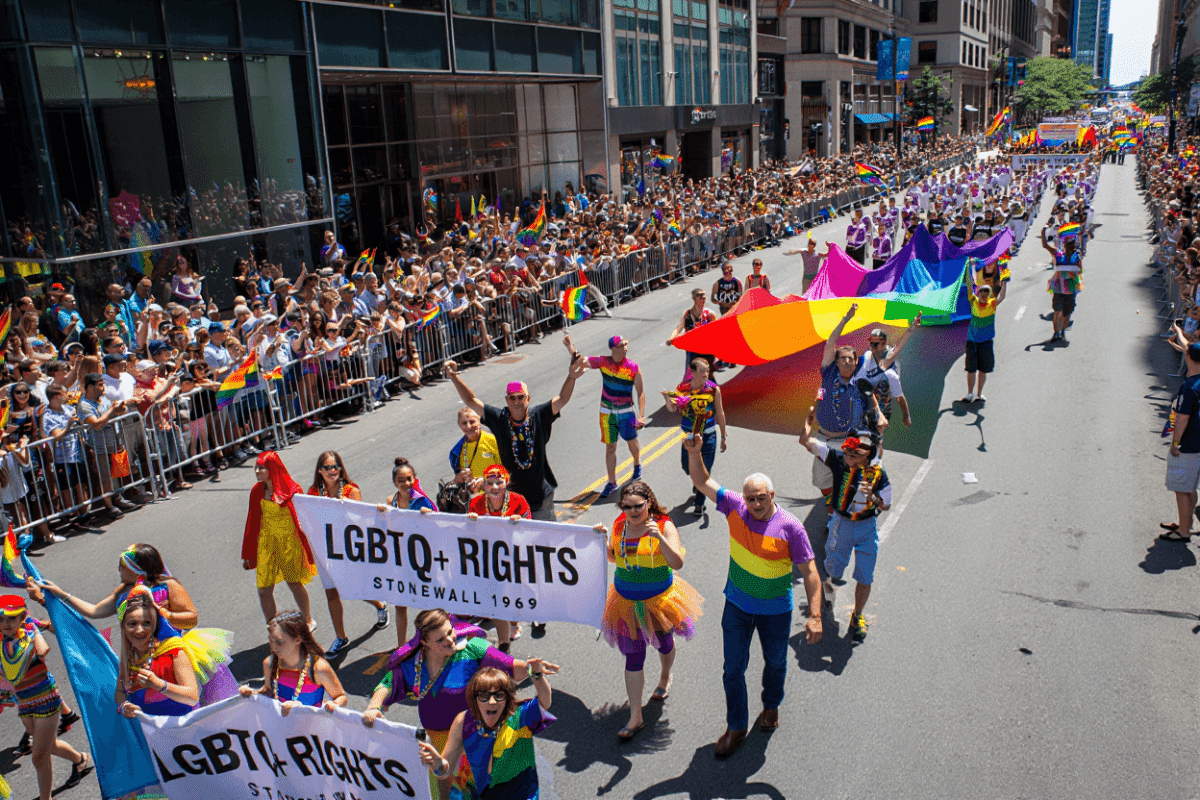
This raid proved different. Instead of accepting the harassment, patrons resisted, protested, and documented the abuse. The uprising lasted six days and sparked nationwide activism that fundamentally transformed LGBTQ+ rights discourse. Within one year, the first Pride parade took place on June 28, 1970, marching from Stonewall up Sixth Avenue in what organizers called Christopher Street Liberation Day.
The uprising was led by marginalized voices—particularly Black and Latinx transgender women and drag queens—whose courage ignited a movement. Icons like Marsha P. Johnson and Sylvia Rivera became central figures in LGBTQ+ liberation, reminding communities that Pride originated as protest, not celebration alone.
Why June? The Historical Connection
June was designated as Pride Month specifically to commemorate the Stonewall Uprising. The anniversary of those six days becomes a rallying point each year for remembrance and continued activism. What began as resistance transformed into visibility: parades, festivals, and public demonstrations of community pride and collective identity.
This month-long observance also reflects a crucial shift in American consciousness. Pride Month celebrations across major US cities now span multiple events from coast to coast, including the 56th Annual LA Pride Parade on June 14, 2026, and San Francisco Pride on June 27-28. These celebrations represent both commemoration of Stonewall’s legacy and affirmation of ongoing progress in LGBTQ+ rights.
The Demographics of Pride: Who Celebrates and Why
According to recent data, approximately 9% of US adults now identify as LGBTQ+, representing roughly 30 million people across the country. Participation in Pride events varies by identity: 77% of gay and lesbian adults report having attended Pride at least once, while 57% of bisexual adults have participated. Despite Pride’s increased visibility, 59% of LGBTQ+ adults feel at least somewhat represented by modern Pride Month celebrations.
| Group | Participation Rate (Ever Attended Pride) |
| Gay and Lesbian Adults | 77% |
| Bisexual Adults | 57% |
| Overall LGBTQ+ Adults | 66% (approximately) |
| Feel Represented by Pride Month | 59% |
| US Adults (Any Identity) | 9% identify as LGBTQ+ |
These numbers reveal important context: while Pride visibility has grown exponentially since 1969, questions remain about representation and inclusion within the community. Different LGBTQ+ identities experience varied levels of acceptance and space within mainstream Pride celebrations.
“Pride Month being recognized in June dates back to the Stonewall Riots in 1969. The roots of Pride Month observance are rooted in resistance and civil rights activism that transformed American society.”
— According to historical sources including the History Channel, American University, and the Library of Congress
Pride Month 2026: The Nationwide Landscape
June 2026 marks another year of celebration, reflection, and activism across America. Major cities are hosting dozens of parades, festivals, and cultural events throughout the month. This decentralized approach means that people living in different regions experience Pride through locally relevant celebrations tailored to their communities.
The scale is significant: Pride events in 2026 span more than 50 major cities across 38+ states, plus Puerto Rico and US territories. Cities large and small—from New York and San Francisco to mobile, Alabama, and Boulder, Colorado—host Pride festivals, many offering free admission or reduced rates for families and community members. This accessibility reflects a commitment to ensuring Pride remains a community gathering, not just a commercial spectacle.
Additionally, 71% of Americans believe brands and companies should be allowed to show LGBTQ+ support during Pride if they choose to do so genuinely. This data signals broad social approval for Pride visibility, though conversations persist about authentic allyship versus performative support.
What Pride Means Today: Progress and Persistent Challenges
Pride Month serves multiple purposes in 2026. It celebrates hard-won gains: marriage equality, workplace protections in some states, and increased cultural representation. It honors those who fought at Stonewall and throughout decades of activism. It provides community connection and visibility for LGBTQ+ people who may live in isolated areas.
Simultaneously, Pride remains a moment for remembering ongoing struggles. Discrimination in employment, housing, and healthcare persists. Violence against trans and non-binary individuals continues at alarming rates. Legal protections vary dramatically by state and region. Detailed celebrations and parade information across the US offer resources for those seeking community, but deep structural inequalities remain.
This complex reality means Pride Month carries weight beyond celebration—it remains a platform for activism, visibility, and demanding continued progress toward full equality and safety for all LGBTQ+ Americans.
Why Pride Month Matters in 2026: Looking Forward Together
Fifty-seven years after the Stonewall Uprising, June 2026 offers an opportunity for reflection. The month honors those who built the movement through resistance and courage. It celebrates communities that continue organizing for change. It provides visibility for LGBTQ+ people of all identities—particularly those in rural areas, conservative regions, and marginalized groups who may rarely see their identities affirmed publicly.
Pride’s future depends on whether it remains tethered to its activist roots while expanding its circle of inclusion. How do Pride celebrations center the voices and experiences of Black, Indigenous, people of color, transgender, non-binary, and asexual/aromantic people? How do communities balance celebration with accountability? These questions will shape what Pride Month signifies in coming years.
For now, June 2026 invites Americans—LGBTQ+ individuals and allies alike—to engage with this history, celebrate visibility, and commit to the unfinished work of creating a country where every person lives free from persecution, discrimination, and violence.
Sources
- History.com — Historical timeline of Pride Month origins and Stonewall Uprising
- National Geographic Education — The Stonewall Uprising and modern LGBTQ+ rights movement
- Pew Research Center — 2025 data on LGBTQ+ identification rates and Pride participation
- GLAAD Media Institute — 2026 Pride statistics and public opinion data
- Library of Congress LGBTQIA+ Studies Guide — Stonewall historical documentation
- National Park Service (Stonewall National Monument) — Official historical record and context
- AARP — 2026 Pride Month events and celebrations across the US