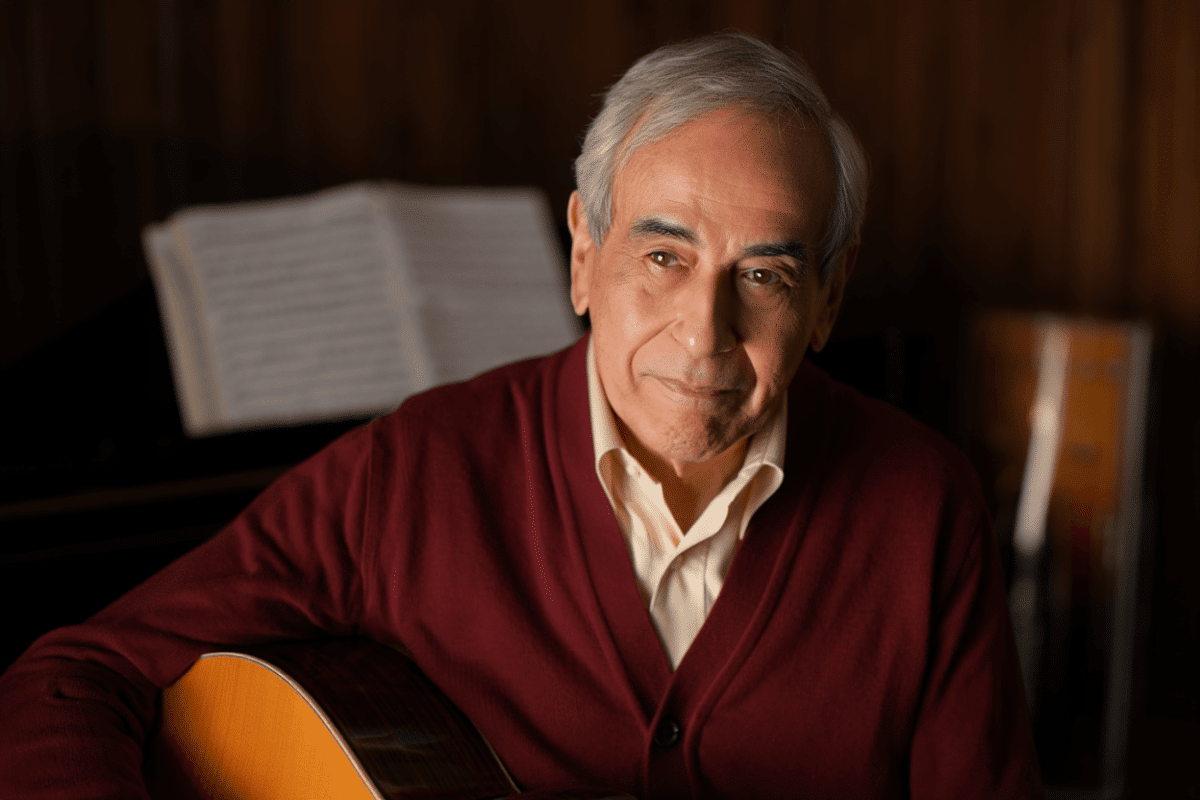
Joe Negri, one of America’s finest jazz guitarists and the beloved Handyman Negri on Mister Rogers’ Neighborhood, passed away on May 30, 2026, at age 99. A Pittsburgh native and cultural icon, Negri bridged two worlds for generations: the refined artistry of jazz and the gentle wisdom of children’s television.
🔥 Quick Facts
- Born June 10, 1926 in Pittsburgh, Pennsylvania
- Died May 30, 2026, just days short of his 100th birthday
- Performed on Mister Rogers’ Neighborhood for nearly 40 years as both musician and Handyman Negri character
- Taught jazz guitar for 49 years at the University of Pittsburgh, establishing jazz as a discipline in higher education
- Musical prodigy at age 4, touring nationally with swing bands by age 16
From Childhood Prodigy to Jazz Master
Joe Negri was born into music. As a musical prodigy at age four, he began guitar lessons and quickly demonstrated extraordinary talent. By age 8, he played with professional musicians, and by age 16, Negri was already touring nationally with swing bands, earning recognition as a first-generation bebop guitarist during jazz’s most transformative era.
His early career placed him among jazz guitar’s emerging giants. Negri’s fluid technique and sophisticated harmonic sense positioned him as a peer of legendary guitarists who shaped modern jazz. Yet unlike some of his contemporaries who pursued international fame, Negri chose to build his legacy in Pittsburgh, becoming one of the most recognized names in Pittsburgh music circles.
The Neighborhood Years: Redefining Television Education
In the late 1950s, Negri and Fred Rogers both worked in the emerging field of television. Their partnership began when Rogers created the Neighborhood of Make-Believe segment, needing a musician who could embody authenticity and craftsmanship. Negri’s role evolved into two distinct characters: himself as the owner of Negri’s Music Shop and Handyman Negri, the gentle repairman who taught children that work, music, and care for one’s craft all deserved respect.
For nearly 40 years, Negri appeared on television with a unique dual purpose. He demonstrated stringed instruments to audiences of children, introduced Fred Rogers to guest musicians including Kenny Burrell and Ellis Larkins, and modeled what it meant to be both a skilled artisan and a kind neighbor. During those episodes, millions of young viewers learned that jazz musicians were real people who cared deeply about their craft and their communities.
The Legacy of Educational Impact and Teaching
Negri’s greatest impact extended beyond television into the classroom. In 1949, he began teaching jazz guitar at the University of Pittsburgh, where he served as a professor for 49 consecutive years. This tenure was historic: Negri helped establish jazz guitar as a discipline in American higher education long before it became commonplace. He also taught at Carnegie Mellon University and Duquesne University, training generations of musicians who carried his influence forward.
His teaching philosophy mirrored his television work: excellence and character were inseparable. Students described Negri as demanding yet nurturing, a teacher who cared as much about who his students became as about the music they played. Many cited him as a turning point in their careers, crediting his mentorship with their professional success in jazz and music education.
A Career of Musical Distinction and Recognition
| Achievement | Detail |
| Professional Performance Era | Age 16 onward; touring nationally with swing bands |
| Television Appearances | Nearly 40 years on Mister Rogers’ Neighborhood; also appeared on 1959 children’s programming |
| Teaching Career | 49 years at University of Pittsburgh; also taught at Carnegie Mellon and Duquesne |
| Recording Projects | 2010 album Fly Me to the Moon with Michael Feinstein; performed at Newport Jazz Festival |
| Composition Works | “Beat ’em Bucs” (Pittsburgh Pirates fight song); Mister Rogers’ Neighborhood scores; radio/TV jingles |
| Community Role | Former Music Director at WTAE; fixture in Pittsburgh jazz scene for over 60 years |
Negri’s recording history demonstrated his continued vitality. In 2010, at age 84, he recorded the acclaimed album “Fly Me to the Moon” with the acclaimed vocalist Michael Feinstein and performed with him at the Newport Jazz Festival. This late-career work proved that Negri’s musicianship had not diminished with age; rather, it had deepened.
“Joe Negri radiates life as an art form. His contributions to music education and children’s television have left an indelible mark on American culture.”
— According to tributes from Pittsburgh cultural institutions and the Fred Rogers Institute
The Art Form and the Man: What Made Negri Enduring
Joe Negri never pursued celebrity. He rejected the philosophy that television work came at the expense of serious musicianship. Instead, he proved that Handyman Negri and jazz virtuoso could coexist as one integrated life. Generations of viewers who encountered Negri on television discovered that real craftspeople existed—people who practiced their art with genuine care, who taught because they genuinely cared about students, and who understood that beauty and integrity in work were not separate from kindness.
Negri’s 99-year life spanned a transformative period in American music and television. He witnessed the rise of bebop, the emergence of television as a cultural force, and the evolution of higher education around jazz. Through it all, Negri remained in Pittsburgh, building and teaching rather than chasing spotlight—a quiet form of excellence that defined his character.
A Legacy Approaching Its Centennial
Negri was scheduled to celebrate his 100th birthday on June 10, 2026, just 11 days after his passing. His death comes at a moment when his life’s work was being increasingly recognized by new generations discovering him through streaming archives of Mister Rogers’ Neighborhood. Negri once said that what he valued most was the opportunity to share music and craft with others—a mission he accomplished across seven decades of teaching, performing, and television.
The question now is not whether Joe Negri will be remembered. It is how fully we will honor his example: a life that proved that artistic mastery, community service, and genuine kindness need not be compromised choices, but rather expressions of the same central commitment. For a man who spent his life in a neighborhood of make-believe teaching children about friendship, his real legacy is perhaps the lasting impact he had on what it means to be a good neighbor yourself.
Sources
- TribLive (Pittsburgh Tribune-Review) — Breaking news coverage of Negri’s passing and career overview
- Wikipedia — Biographical information and death confirmation (May 30, 2026)
- Pittsburgh Symphony Orchestra — Career achievements and teaching recognition
- Mister Rogers Institute and Official Neighborhood Archives — Television career documentation
- University of Pittsburgh School of Music — Teaching tenure and jazz education legacy
- Vintage Guitar Magazine and Jazz Times — Professional musicianship analysis and interviews