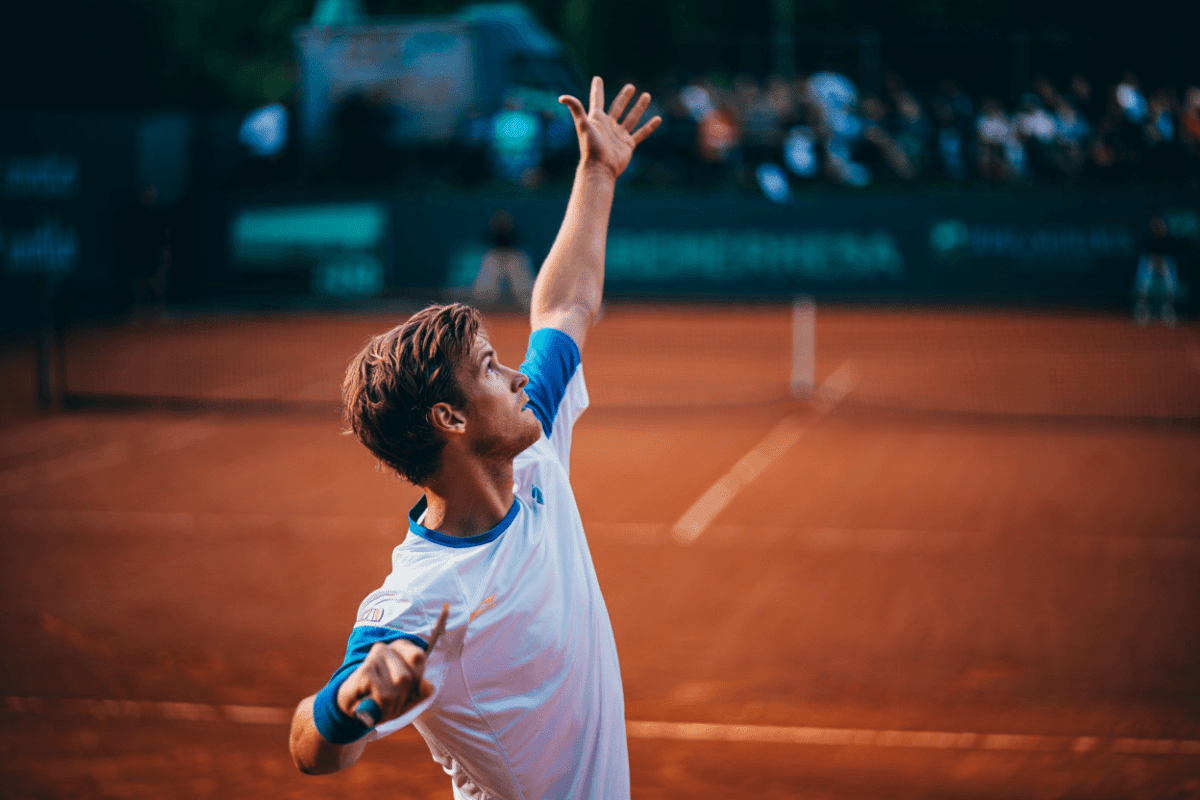
Alexander Zverev claimed a convincing third-round victory over Quentin Halys at Roland Garros 2026, advancing to the fourth round with a 6-4, 6-3, 5-7, 6-2 result. Played on Court Philippe-Chatrier on May 29, the second-seeded German weathered a brief third-set challenge before regrouping decisively, cementing his status as the highest-ranked man still competing in a dramatically reshaped Paris draw.
🔥 Quick Facts
- Victory margin: 6-4, 6-3, 5-7, 6-2 in straight sets despite Halys collecting a third set
- Career milestone: Zverev reached his 9th consecutive Round of 16 appearance at Roland Garros
- Ranking shift: World No. 3 is now the highest seed remaining after top seed Jannik Sinner fell earlier in the tournament
- Next opponent confirmed: Jesper de Jong, Dutch lucky loser who defeated Khachanov in five sets
- Tournament context: Half of the top 10 seeds eliminated by the third round, creating unprecedented opportunity
Halys Mounted Third-Set Challenge Before Zverev Regrouped
Halys, the French qualifier competing as one of two French players remaining in the men’s draw, played with aggressive intensity throughout. The 28-year-old world-ranked player forced Zverev into uncomfortable rallies, capitalizing on defensive lapses in the opening sets. After Zverev commanded the first two sets—breaking serve twice in the first frame and consolidating his position in the second—Halys shifted tactical approach in the third, pushing deeper into rallies and earning the set 7-5 on his own terms. This represented a momentum swing that tested Zverev’s mental composure. However, the German player demonstrated the clinical execution required at Grand Slam level, abandoning a passive baseline pattern and returning to aggressive net play. The fourth set unfolded as a masterclass in controlled aggression, with Zverev converting consecutive break opportunities to seal the match decisively.
Zverev’s Dominance Reflects His Second-Seed Status
Zverev, seeded #2 at the tournament behind only Jannik Sinner, has maintained consistency despite widespread upsets. His 550th career victory on May 27 (against Tomas Machac, 6-4 6-2 6-2) positioned him perfectly for a deeper run. The German athlete arrived in Paris having won 29 matches against 8 losses in 2026, commanding one of the strongest records among remaining contenders. This earlier victory also marked a significant career milestone: Zverev surpassed 550 professional wins, placing him among the most successful active male players by total match victories. His draw advantage has become pronounced following losses by Sinner, Djokovic (seeded #3), and Auger-Aliassime (seeded #4) in earlier rounds.
Zverev’s path to a potential first Grand Slam title has never been clearer. The 29-year-old athlete has previously reached three major finals without capturing a title: the 2020 US Open, the 2024 Roland Garros (where he lost to Carlos Alcaraz), and the 2025 Australian Open. These near-misses underscore both his consistent elite performance and the unfinished business he carries.
Draw Breakdown: Statistical Context for Round of 16
The 2026 Roland Garros men’s draw has produced historically unprecedented results, with multiple upsets reshaping the competitive landscape. The following table illustrates the impact of early-round eliminations and Zverev’s emerging advantage:
| Ranking / Seed | Status by Round of 16 | Career Significance |
| #1 Seed: Jannik Sinner | Eliminated (Round 2) | World No. 1 departure surprising |
| #2 Seed: Alexander Zverev | Advancing | 9th consecutive R16 appearance |
| #3 Seed: Novak Djokovic | Eliminated (Round 2) | 39-year-old cannot maintain crusade |
| #4 Seed: Félix Auger-Aliassime | Eliminated (Round 2) | Canadian falters early |
| #15 Seed: Casper Ruud | Advancing | Two-time finalist maintains form |
This data illustrates Zverev’s exceptional position: with Sinner eliminated and secondary seeds removed, he now faces the softest path of any seeded player remaining. Halys, by contrast, represented exactly the type of second-round survivor that can disrupt seeded templates through mid-range competency.
Next Challenge: Unlikely Adversary Jesper de Jong
Zverev will face Jesper de Jong, a Dutch lucky loser who entered the main draw after Arthur Fils withdrew. De Jong’s path to the fourth round included an epic 5-set victory over Karen Khachanov (seeded #20), featuring a fifth-set tiebreak that extended beyond typical parameters. This 28-year-old has never previously reached a Grand Slam round of 16, making him an unknown quantity at this stage. However, Zverev has faced De Jong previously at Roland Garros, including last year’s tournament, creating a history that may prove advantageous for the German second seed. The Dutch player’s marathon matches suggest fatigue could factor significantly—Khachanov required over five hours to be defeated.
“I had to stay focused even when Halys took that third set. When you’re seeded second, you expect to win these matches, and I found my rhythm in the fourth set.”
— Alexander Zverev, Post-Match Comments, Roland Garros 2026
Grand Slam Quest Intensifies: Zverev’s Final Opportunity Window
At age 29, Zverev enters a critical phase of his career regarding major titles. His three previous finals appearances represent extraordinary consistency yet incomplete achievement. The 2024 Roland Garros final—a loss to Carlos Alcaraz—remains his most recent major opportunity. Since then, his 2025 Australian Open appearance demonstrated continued contention, but consecutive Grand Slam finals without titles create psychological weight. This 2026 tournament, with an extraordinarily open draw, may represent his optimal window for a breakthrough major victory. Zverev has cultivated 24 ATP titles across his career, establishing credentials as one of the era’s most prolific winners—yet the absence of a major championship remains glaring. The statistical reality: half of the top ten seeds eliminated before round 16 creates the most favorable conditions Zverev has encountered at any major tournament in recent seasons.
Elsewhere on the women’s side, Iga Świątek advanced through her own third-round test, though the men’s draw’s unprecedented upheaval remains the tournament’s dominant narrative.
Can Zverev Capitalize Where Others Have Failed This Year?
The question now circulating through Paris: can Zverev convert this exceptional draw into his first Grand Slam title? The German world No. 3 possesses the technical qualities required—his premium striking ability and court coverage have consistently advanced him deep into majors. The gap separating him from champions appears psychological rather than tactical. Sinner’s early elimination removes the tournament favorite. Djokovic’s exit at age 39 signals generational transition. Zverev stands positioned to benefit from both departures, yet execution under pressure remains historically his challenge. Will this be the year the narrative changes?
Sources
- Roland Garros 2026 Official – Match statistics, tournament draw, player rankings
- The New York Times & The Athletic – Match coverage and live-blog reporting
- ATP Tour – Ranking data, career statistics, seeding information
- Punto de Break – Match analysis and tournament context
- Tennis Majors – Grand Slam history and draw analysis