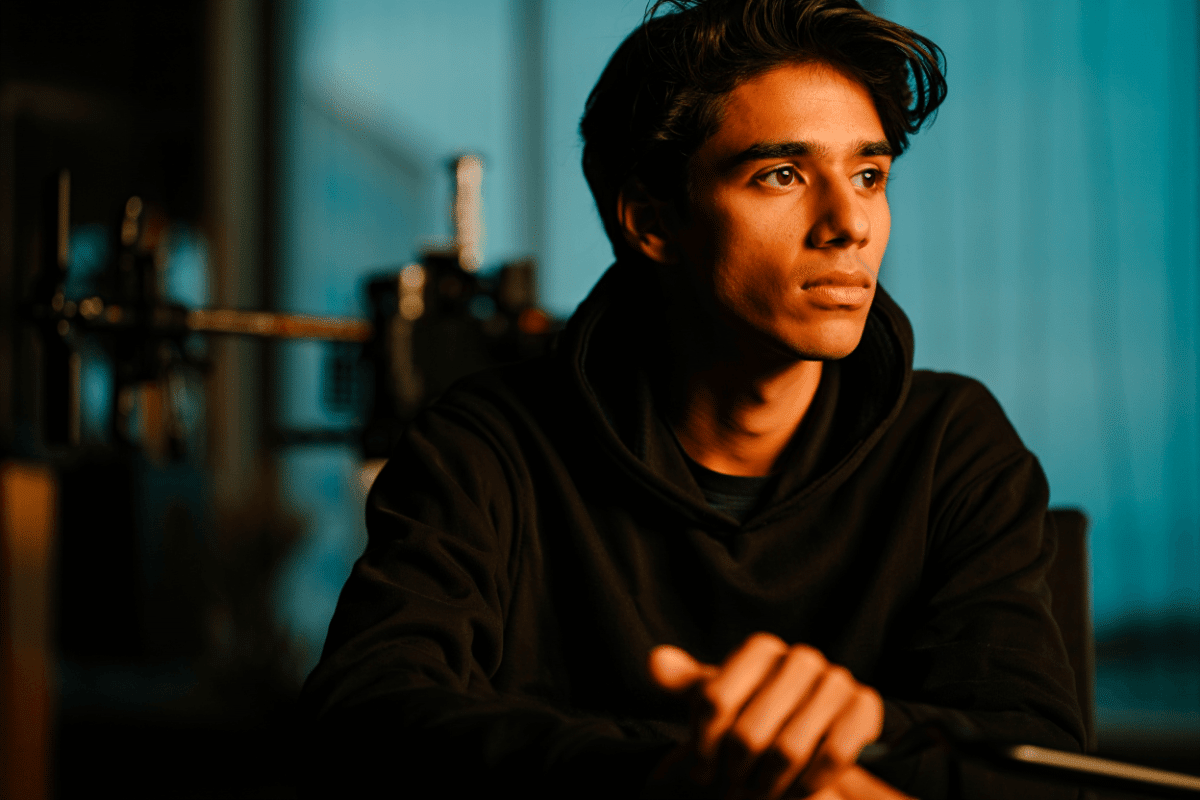
Curry Barker, the 26-year-old director behind the breakout horror film “Obsession,” has secured a $10 million deal from a major Hollywood studio—before pitching a single idea for his next project. The unprecedented offer reflects the current state of indie filmmaking: proven talent can now command studio backing based on track record alone, bypassing traditional pitch meetings entirely.
🔥 Quick Facts
- Curry Barker secured a $10 million studio deal for his next original film without any prior pitch.
- “Obsession” cost $750,000 to produce and earned over $100 million globally, generating a return of more than 13,000%.
- The filmmaker is 26 years old from Mobile, Alabama, and rose to prominence through YouTube short films.
- “Anything But Ghosts,” his next project, will exist in the same universe as Obsession and will address the first film’s ending.
- Barker shot “Obsession” in just 20 days before its May 2026 theatrical release through Focus Features.
From YouTube Shorts to Studio Deals: Barker’s Unconventional Rise
Curry Barker’s path to a $10 million offer defies the typical Hollywood trajectory. Unlike most filmmakers who attend film school or spend years climbing the ladder, Barker built his reputation on YouTube, where he uploaded short horror films and comedy sketches before transitioning to theatrical releases. This trajectory mirrors a larger shift in modern filmmaking: digital platforms now serve as launching pads for creators entering traditional media.
When “Obsession” premiered at the Toronto International Film Festival in September 2025, Barker was just 25 years old. The film’s success—combining critical acclaim with box office dominance—positioned him as one of Hollywood’s hottest directing talents before his 26th birthday. This timing matters: studios now recognize that young, digitally-native directors understand audience engagement in ways traditional filmmakers often miss.
The Economics of Obsession: Budget vs. Reality
The $750,000 budget that produced a $100+ million global grosser has become the case study dominating industry conversations. Barker’s achievement compresses decades of career progression into months, forcing studios to rethink how they evaluate directorial talent. When a filmmaker delivers a 13,000%+ return on investment on a micro-budget, asking them to pitch before greenlighting their next project becomes almost absurd from a financial perspective.
The film’s structure was similarly efficient: shot in just 20 days, “Obsession” showcased discipline and technical mastery. No reshoots, no cost overruns, no studio interference—the kind of execution that would justify a blank check from any executive. The $10 million offer represents less than 10% of Obsession’s global haul, making the investment rational even before Barker presents a concept.
Industry Context: Why Pitch-Free Deals Are Becoming Standard
The $10 million offer without a pitch isn’t merely a vote of confidence; it signals a fundamental change in how studios evaluate risk. Traditionally, filmmakers present detailed plans: story, cast, budget, timeline. Studios then decide based on pitch quality, star power, and franchise potential. Barker’s deal inverts this model—his directorial execution becomes the collateral, eliminating the need for elaborate presentations.
This shift reflects horror’s renaissance in independent cinema. Recent successes like “Iron Lung” (which made $50 million on a $3 million budget) have shown that unconventional approaches often outperform expensive studio tentpoles. Studios recognize that low-budget horror directors—especially younger ones with proven track records—operate with creative freedom that big-budget executives cannot match. The pitch meeting is replaced by the box office.
| Metric | Obsession | Industry Average (Horror) |
| Production Budget | $750,000 | $15–25 million |
| Domestic Gross | $78.3 million | $40–60 million |
| Global Gross | $100+ million | $70–90 million |
| Return on Investment (ROI) | 13,000%+ | 200–400% |
| Director Age at Release | 25–26 | 35–45 |
| Production Timeline | 20 days | 60–90 days |
Barker’s numbers shatter benchmarks across every category. His budget was 1/20th the typical horror film cost, yet his gross exceeded most theatrical releases. His age—younger than most first-time feature directors by a decade—compounds the narrative. Studios aren’t just funding the next Barker project; they’re investing in the future of efficient, digitally-literate filmmaking.
“Within weeks of Obsession’s $90 million global run, a major studio offered Curry Barker $10 million for his next original film before he had written or pitched anything. This reflects a seismic shift in how studios evaluate directorial talent.”
— Industry observers and trade analysts, based on multiple studio reports
What’s Next: “Anything But Ghosts” and the Shared Universe Strategy
Barker has already announced his next project: “Anything But Ghosts,” a horror film that will exist in the same fictional universe as “Obsession.” During a post-screening Q&A, Barker revealed that the new film will address the ending of Obsession, hinting at narrative connections that will appeal to fans of the first film while remaining accessible to newcomers.
This strategy—building a shared horror universe from a debut film—is typically reserved for franchise studios like Marvel or Universal’s Dark Universe. Yet a 26-year-old YouTuber-turned-filmmaker is now operating at that scale. The decision shows remarkable confidence: instead of pivoting to a completely new project, Barker is doubling down on the world he created, potentially multiplying the appeal to audiences invested in Obsession’s mythology.
The $10 million budget for “Anything But Ghosts” now carries different expectations. With “Obsession” breaking box office records, investors will anticipate similar returns. Barker faces the pressure of a sequel without the built-in franchise machinery—but his track record suggests he thrives under such conditions.
What This Means for Independent Filmmakers Everywhere
The Curry Barker phenomenon raises critical questions about the future of filmmaking careers. If a $750,000 film can generate $100+ million in returns, why would studios continue bankrolling $200 million superhero projects with uncertain ROI? If a 26-year-old with no formal training can secure $10 million without pitching, what advantage does a film school degree actually confer?
For emerging filmmakers, the lesson is clear: execution beats credentials, and audience engagement trumps studio politics. Barker didn’t attend a prestigious film program (though he may have—his exact educational background remains private). He built a portfolio on YouTube, proved his ability to deliver under constraints, and let his work speak louder than any pitch deck could.
However, this model isn’t accessible to everyone. Barker had resources and technical knowledge to produce quality shorts before his theatrical debut. The DIY route requires capital, equipment, and an existing audience—luxuries not all aspiring filmmakers possess. His success creates both opportunity and a misleading template: self-made filmmaking is possible, but it’s not a guaranteed path for all creators.
Will the Studio Gamble on Barker Pay Off Again?
The $10 million offer carries implicit pressure. Studios betting this amount without a pitch are banking on repeatable success. Will “Anything But Ghosts” match Obsession’s cultural impact and box office trajectory? Second films are notoriously difficult—sophomore slumps plague even established directors. Barker’s second feature will determine whether his rapid rise reflects genuine directorial brilliance or beginner’s luck.
Industry observers will watch closely. If “Anything But Ghosts” performs strongly, Barker’s no-pitch deal becomes a template that studios offer other promising young directors. If the film underperforms, it may stanch the flow of blank-check deals for unproven filmmakers. Either way, Barker has already altered the conversation about how talent is evaluated in modern Hollywood.