The United States marks its most significant milestone in 2026 as the nation celebrates 250 years of independence beginning June 24. The focal point is the Great American State Fair, a 16-day national exposition on the National Mall in Washington, D.C. running from June 25 through July 10. The Trump administration announced that Trump will headline the opening ceremony on June 24, transforming what was originally envisioned as a concert-driven celebration into a major political statement during America’s semiquincentennial year.
🔥 Quick Facts
- The Great American State Fair runs June 25 – July 10, 2026 on the National Mall—a 16-day exposition marking America’s 250th birthday.
- Trump headlines opening ceremony June 24, 2026 after multiple musical performers withdrew from the event.
- Five of nine headline performers have dropped out, including rock legend Bret Michaels, Milli Vanilli, and other acts.
- July 4, 2026 marks the semiquincentennial date—exactly 250 years after the signing of the Declaration of Independence.
- Freedom 250 nonprofit organizes the event with support from the Trump administration and private partnerships.
The Semiquincentennial Moment: America at a Cultural Crossroads
The United States turns 250 years old in 2026—a historic milestone that government officials describe as “the most important in our country’s history.” Unlike typical anniversary celebrations, this semiquincentennial carries outsized political significance. The Great American State Fair represents the Trump administration’s flagship initiative for the year-long commemoration, positioning Washington, D.C. as the epicenter of celebrations leading up to July 4, 2026.
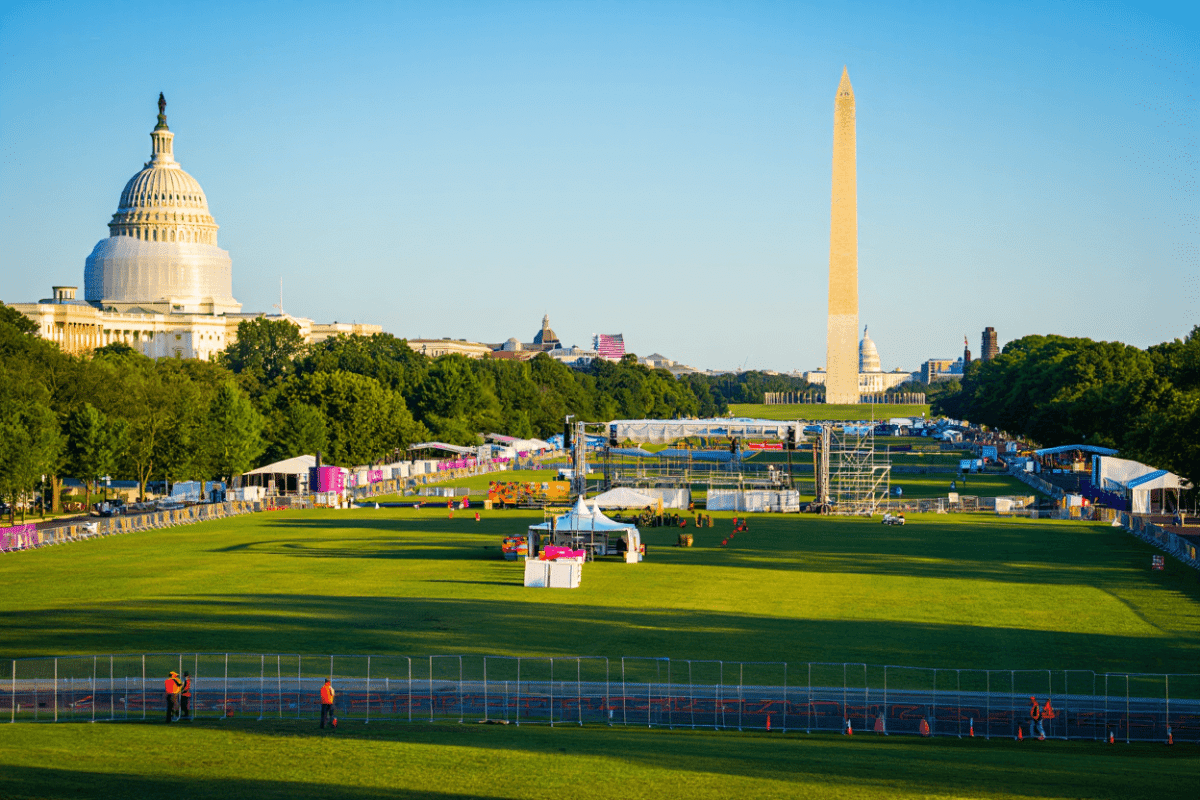
The concept originated as a “World’s Fair-style celebration” featuring music, food, arts, and cultural programming across the National Mall’s iconic expanse—from the U.S. Capitol to the Washington Monument. However, the event has evolved significantly since its announcement, with major musical withdrawals reshaping its character in recent weeks.
The Performance Exodus and Trump’s Pivot to Political Rally Format
The fair faced a unprecedented performer exodus in late May when multiple artists unexpectedly withdrew. Bret Michaels, the legendary Poison frontman, publicly dropped out on May 29, citing unspecified concerns. His departure followed withdrawals by Milli Vanilli, whose appearance was particularly controversial given the group’s lip-syncing scandal of the late 1980s.
Initially, the fair boasted an ambitious lineup including Vanilla Ice, C+C Music Factory, Flo Rida, Martina McBride, and The Commodores. According to reports from NBC News and CBS News, five of the nine originally announced headline acts withdrew—a roughly 56% cancellation rate that raised questions about the event’s cultural relevance and execution. Some artists publicly declined to participate without elaborating reasons, while others cited scheduling conflicts.
Rather than postpone or restructure, Freedom 250—the nonprofit organization behind the event—announced that Trump would headline the opening ceremony himself on June 24. According to spokeswoman Danielle Alvarez, quoted in CBS News and AP News coverage: “As the nation prepares to commemorate 250 years of independence, the President looks forward to kicking off the Great American State Fair celebration.”
Event Dimensions and Programming Structure
Great American State Fair Overview
| Element | Details |
| Dates | June 25 – July 10, 2026 (16 days) |
| Opening Ceremony | June 24, 2026 – Trump headline |
| Location | National Mall, Washington, D.C. (Capitol to Washington Monument) |
| Organizer | Freedom 250 nonprofit (White House partnership) |
| Expected Content | Music, arts, food, cultural exhibitions, interactive experiences |
| Semiquincentennial Target Date | July 4, 2026 (250th anniversary of Declaration) |
The Great American State Fair spans the entire National Mall, one of America’s most recognizable outdoor spaces. According to Washington.org, the fair represents the largest such exposition in the nation’s capital since convention centers became the norm. The 16-day duration exceeds typical state fairs, which average 7 to 10 days.
Unlike regional state fairs focused primarily on agriculture and competitions, this celebration integrates art installations, drone performances, and large-scale visual experiences expected to rival major international exhibitions. The National Park Service manages site logistics, ensuring visitor safety and crowd management for estimated attendance in the hundreds of thousands.
National Significance and Broader America 250 Framework
July 4, 2026 represents a uniquely significant date in American history. The nation last celebrated a semiquincentennial in 1876, when America marked 100 years with the Philadelphia Centennial Exposition—an event that shaped industrial progress narratives and national identity for decades. The 2026 semiquincentennial arrives amid greater cultural fragmentation and political polarization, making consensus-building on commemoration more challenging than previous anniversaries.
America250 and Freedom 250 represent separate but complementary initiatives. America250 is a bipartisan nonprofit promoting distributed celebrations across all 50 states, while Freedom 250—backed by the Trump administration—focuses on flagship events like the Great American State Fair. This dual structure reflects both coordination and tension between federal and decentralized commemoration efforts.
“On July 4, 2026, America will celebrate the most important milestone in our country’s history—250 years of American Independence. This Great American State Fair embodies the spirit of American ingenuity, diversity, and progress.”
— White House Statement, Freedom 250 initiative, May 30, 2026
Political Implications and Future Expectations
Trump’s decision to headline the opening ceremony transforms the fair into a campaign and political messaging platform, according to political analysts quoted by NBC News and The Hill. The June 24 opening date precedes the July 4 semiquincentennial by precisely 10 days, allowing sustained media coverage and political advantage through the symbolic climax. Some commentators note the unprecedented use of anniversary celebrations for partisan political purposes.
Remaining performers include The Commodores and select hip-hop and country artists, though schedules remain partially incomplete as of late May 2026. The uncertainty surrounding the musical lineup raises questions about whether the fair will emphasize entertainment and cultural programming or pivot further toward political and ceremonial content.
The scale of performer withdrawals—roughly 56% of announced acts—suggests broader cultural reluctance to participate in politically controversial celebrations. This pattern echoes earlier instances where artists declined White House invitations or public appearances tied to specific administrations.
What Does America’s 250th Year Mean for Citizens and Visitors?
For Americans, the Great American State Fair offers unprecedented access to National Mall-spanning experiences during a singular historical moment. Many visitors will likely attend regardless of political affiliation, recognizing the rarity of bicentennial and semiquincentennial celebrations. The 16-day duration provides extended opportunity compared to typical one-day commemorations.
The broader America 250 movement includes OpSail 2026, historical reenactments, traveling exhibits, and regional celebrations across every state. This distributed approach ensures that citizens unable to visit Washington can participate in meaningful commemorations locally. Colonial Williamsburg, Philadelphia’s historic district, Boston, Virginia, and numerous other heritage sites are mounting substantial programming.
Yet the political polarization surrounding the Trump-led fair raises questions about national unity. Presidential anniversaries traditionally emphasize shared identity over partisan interests, but 2026 appears to challenge that convention. How Americans navigate celebrating national achievement while negotiating contemporary political divisions may define the semiquincentennial’s cultural legacy.
Sources
- CBS News – Trump to kick off Great American State Fair after several musicians cancel (May 30, 2026)
- Reuters – Trump to headline 250th anniversary fair opening after performers drop out (May 30, 2026)
- NBC News – Trump announces rally after artists pull out of 250th anniversary celebration (May 30, 2026)
- AP News – Trump to headline Great American State Fair for nation’s 250th anniversary after artists drop out (May 30, 2026)
- The Washington Post – Trump to headline Great American State Fair after music acts cancel (May 31, 2026)
- USA Today – Who’s in? Who’s out? See the lineup so far for Freedom 250 State Fair (May 28, 2026)
- Forbes – Five Acts Pull Out Of Trump’s ‘Great American State Fair’ (May 29, 2026)
- White House – Freedom 250 official initiative
- America250.org – United States Semiquincentennial official planning
- Washington.org – Great American State Fair event listing (May 30, 2026)