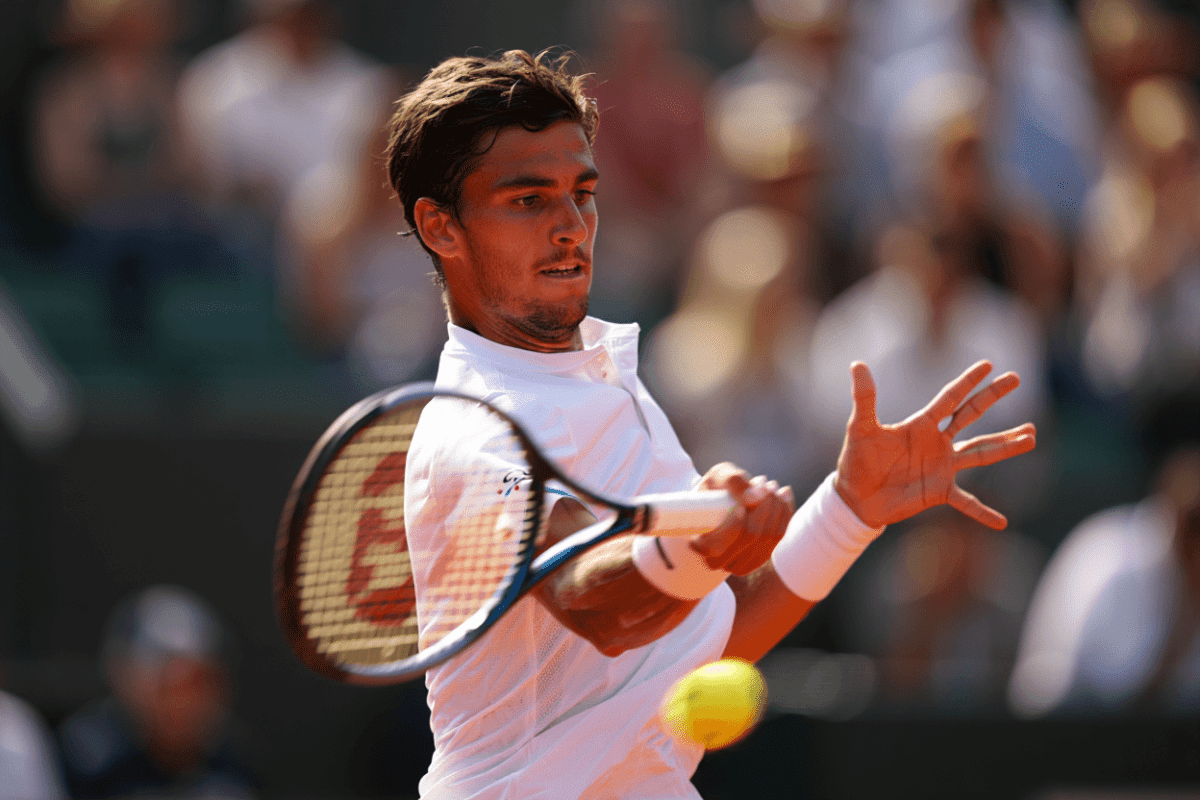
Felix Auger-Aliassime, the No. 6 seed at Roland Garros, faces Brandon Nakashima (ranked No. 35) in Saturday’s third-round match at the French Open. The Canadian enters this matchup with a 6-4 clay record on the 2026 season, while Nakashima seeks to overcome a 45.2 percent career winning percentage on the red clay surface. Both players battled through marathon encounters in the second round—Auger-Aliassime’s 4-hour 16-minute victory over Burruchaga and Nakashima’s 4-hour 35-minute triumph against Roberto Bautista Agut—setting up this high-stakes Round of 32 showdown.
🔥 Quick Facts
- Auger-Aliassime leads head-to-head 1-0 after defeating Nakashima at the Firenze Open 2022 indoors
- Nakashima’s clay record stands at 19-23 career matches, highlighting the surface challenge
- Both players completed four-plus hour marathons in their respective R2 matches
- Auger-Aliassime has claimed one ATP title in 2026 with 23 total wins this season
- Match begins Saturday, May 30 at 11:15 AM Paris time under clay court conditions
Auger-Aliassime’s Clay Momentum and Rising Form
Felix Auger-Aliassime’s journey through Roland Garros reflects a player hitting stride on clay at precisely the right moment. With a 65.5 percent win rate across all surfaces in 2026, the Montreal native has shown consistent depth this season. His 6-4 clay record—the strongest component of his overall 23-10 tally—demonstrates that the slowness of Roland Garros suits his power game.
The match against Burruchaga exemplified Auger-Aliassime’s ability to absorb pressure and close matches in extended formats. Coming from a set down again, he displayed mental resilience that has become his trademark on clay, where longer rallies allow his 193-centimeter frame to dominate from baseline positions. His serve consistency—87.4 percent protection rate on holding serve—gives him a commanding advantage against opponents like Nakashima.
Nakashima’s Underdog Path and Clay Struggles
Brandon Nakashima arrives in the third round as a dangerous underdog having upset higher seeds, but his clay court pedigree tells a different story. While his 6-2 7-5 6-2 demolition of Bautista Agut—a seasoned clay performer—was impressive, Nakashima’s 45.2 percent career clay record (19-23) reveals a persistent weakness on the surface.
The 24-year-old American thrives on hard courts where his powerful baseline game and pace dictate rallies. Clay demands patience, movement, and slide control—areas where Nakashima has historically struggled. His 56.0 percent 2026 win rate overall dips significantly when restricted to slower courts. The fatigue from his 4-hour 35-minute marathon against Agut compounds this challenge, leaving physical reserves depleted before facing a rested and fresher opponent.
Head-to-Head Context and Tactical Breakdown
| Matchup Factor | Auger-Aliassime | Nakashima |
| ATP Ranking | No. 6 (Career High: No. 5) | No. 35 (Career High: No. 29) |
| 2026 Record (Clay) | 23-10 overall / 6-4 clay | 15-11 overall / 19-23 career clay |
| Height / Weight | 193 cm / 88 kg | 188 cm / 83 kg |
| Head-to-Head Record | Leads 1-0 (Firenze 2022) | Trails 0-1 |
| Previous Round Time | 4 hours 16 minutes vs Burruchaga | 4 hours 35 minutes vs Agut |
| Serve Hold Protection | 87.4% hold rate | Solid on hard courts, weaker on clay |
The previous encounter at Firenze 2022 occurred on indoor hard courts—a surface neutral to both players. Saturday’s matchup on clay erases that neutrality entirely. Auger-Aliassime has adapted his game specifically to clay, showing he can absorb the slower pace and build points methodically. Nakashima, conversely, prefers to dictate early with pace and aggression—tactical elements clay courts suppress.
Fatigue as a Quarterback Stat
Both players endured nearly identical marathon sequences in the second round, yet context matters significantly. Auger-Aliassime bested Burruchaga, a player ranked lower and less physically imposing. Nakashima battled Roberto Bautista Agut, a veteran clay expert with decades of experience on the surface. This suggests Nakashima invested more tactical and emotional energy defending against clay-specific patterns. His body chemistry—post-match—likely carried more depletion than Auger-Aliassime’s.
The one-day turnaround between round matches rarely permits full recovery. Nakashima must contend with shortened preparation time, potential muscle soreness, and diminished movement sharpness. These marginal deficits compound on clay, where recovery position and court geography demand premium athleticism.
What Victory Means for Each Contender
For Auger-Aliassime, advancing to the quarterfinals represents a career milestone at Roland Garros. His No. 5 career ranking (achieved in November 2025) reflects consistent top-tier performance, yet Grand Slam quarterfinal breakthroughs remain elusive. A victory Saturday moves him within two matches of the final four—positioning him to contest for a major tournament breakthrough.
For Nakashima, this represents a David-versus-Goliath scenario. Upsetting the No. 6 seed on clay—his weakest surface—would signal genuine evolution as a complete competitor. However, the obstacles are substantial: ranking deficit, surface mismatch, fatigue accumulation, and historical head-to-head disadvantage all point toward an Auger-Aliassime victory.
Can Nakashima’s Serve Disrupt the Narrative?
Tennis narratives occasionally surrender to serve dominance. Nakashima’s one credible pathway requires converting first-serve percentage into early breaks. If he captures early set momentum through aggressive serving and dictation, the fatigue factor diminishes. Conversely, Auger-Aliassime’s 87.4 percent hold rate suggests Nakashima will struggle to generate break opportunities, especially under clay conditions that neutralize power.
The match outcome hinges on whether Nakashima can establish rhythm and pace early, or whether Auger-Aliassime’s clay-adapted baseline positioning stifles aggressive shot-making from the start. Given Auger-Aliassime’s height advantage, serve protection, and surface comfort, expect the Canadian to control the narrative and advance to the quarterfinals.
“Both players have shown they can grind through extended matches, but clay court fitness favors the player who dictates baseline exchanges. Auger-Aliassime has the ranking, the surface comfort, and the mental freshness to advance.”
Prediction Analysis, via Sports Interaction (May 28)
Sources
- Roland-Garros Official – Third Round Men’s Singles match information and bracket
- ATP Tour – Player rankings, career records, and head-to-head statistics
- ESPN Tennis – 2026 season records and player biographical data
- Sports Interaction – Third-round preview and contextual analysis
- TennisStats – Surface-specific win percentages and detailed match history