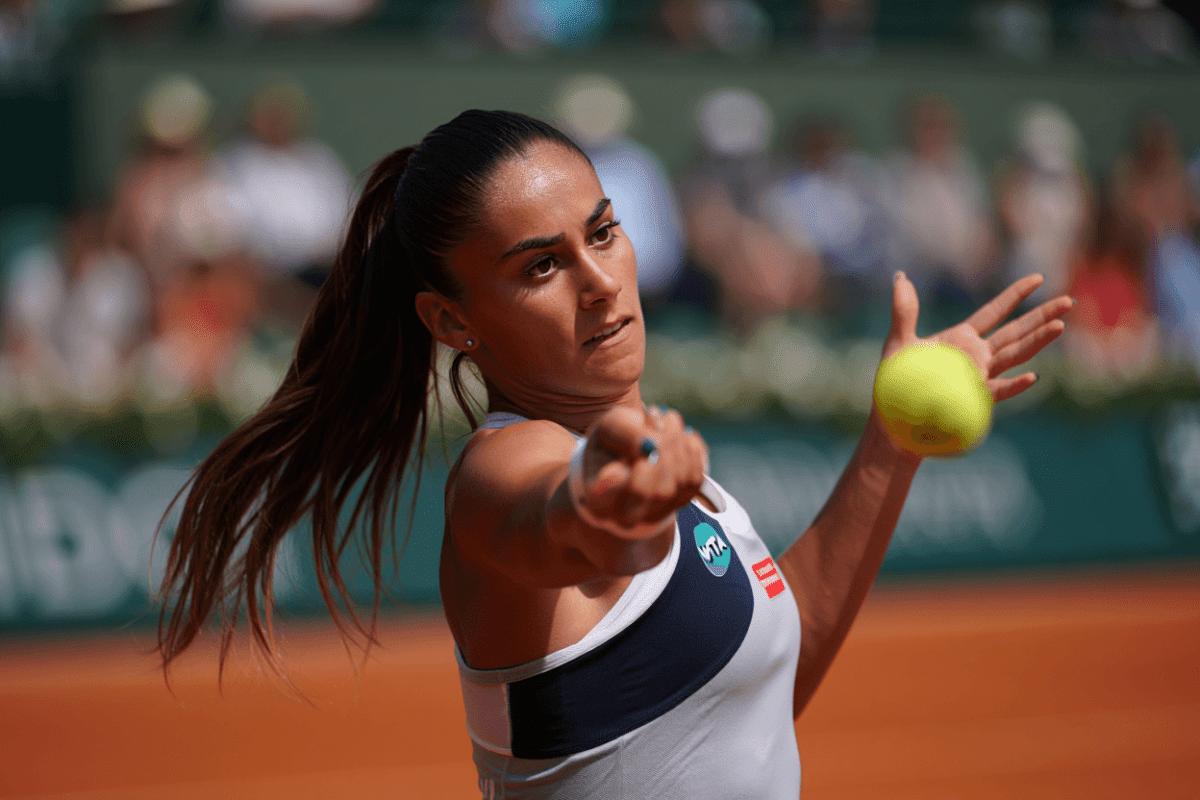
Aryna Sabalenka faces Daria Kasatkina in the third round of the 2026 French Open on May 30 at Court Suzanne-Lenglen in Paris. The world No. 1 brings an exceptional 29-3 record into 2026, dominating this season on all surfaces. Kasatkina, ranked 53rd, has struck clay-court form at precisely the right moment, capturing her first WTA title in two years just days before Roland Garros. Their rivalry strongly favors Sabalenka, but Kasatkina’s recent momentum and tactical discipline present the most legitimate test the Belarusian has faced so far this fortnight.
🔥 Quick Facts
- Sabalenka’s 2026 record stands at 29-3, the highest winning percentage on the WTA tour this season
- Sabalenka leads their head-to-head matchup 7-2, with decisive recent wins in multiple finals
- Kasatkina beat Paula Badosa 6-1, 7-5 in the second round, her biggest victory of the season
- This is Sabalenka’s fifth match in Paris, having not yet dropped a set in the tournament
- Match time: 10:00 UTC / 6:00 AM ET on May 30 at Court Suzanne-Lenglen
Why This Match Matters: Sabalenka’s First Real Challenge
Sabalenka has been nearly unstoppable at Roland Garros 2026. The Belarusian did not drop a set through her first two rounds, dispatching both opponents with surgical precision on the red clay. However, Kasatkina represents a qualitatively different opponent — one who has rediscovered her rhythm on this surface at the exact right moment. The Russian’s first-round victory over Zeynep Sönmez (6-4, 6-4) showed controlled tennis, and her demolition of 10th-seeded Paula Badosa demonstrated that Kasatkina can elevate her level against elite competition.
For Sabalenka, the stakes are clear: she is targeting her first Roland Garros title. Despite holding the world No. 1 ranking and winning multiple Australian Opens, Paris has eluded her. Sabalenka’s clay-court technique has evolved significantly since her early career struggles on the surface, and this fortnight suggests she has finally cracked the code for sustained success at Garros.
The Head-to-Head Edge and Recent Form
Sabalenka dominates this matchup historically, leading 7-2 in their career meetings. Moreover, their recent encounters have been decidedly one-sided in the Belarusian’s favor. At the 2023 US Open quarterfinals, Sabalenka defeated Kasatkina 6-1, 6-3 — a crushing performance that illustrated the gap between these two competitors at peak form. On Berlin grass in June 2024, Sabalenka prevailed again, 6-1, 6-4.
However, context matters. Kasatkina’s two victories against Sabalenka came in earlier years of their rivalry when the Russian was ranked higher and Sabalenka’s game was less refined. Today, Kasatkina faces a significantly stronger, more experienced version of the world No. 1. That said, Kasatkina has demonstrated in this tournament that she possesses the tactical discipline and shot-making to trouble top-ranked players.
Statistical Comparison and Key Metrics
| Metric | Sabalenka | Kasatkina |
| 2026 Record | 29-3 (90.6%) | 13-9 (59.1%) |
| Current Ranking | World No. 1 | No. 53 |
| Roland Garros 2026 Sets Lost | 0 | 1 (lost in R2 tiebreak) |
| H2H Record | 7-2 (78%) | 2-7 (22%) |
| Career Titles | Multiple Grand Slams | 8 WTA Titles |
| Best Garros Result | Seeking first title | SF (2022) |
Sabalenka’s dominance across all statistical categories is evident. Her 90.6% win rate in 2026 ranks among the best starts to a season in recent WTA history. Kasatkina’s 59.1% record, while respectable, underscores the wide margin separating these two competitors at their current level. Notably, Kasatkina has reached a Grand Slam semifinal before — she advanced to the French Open semifinals in 2022 — suggesting she possesses the resilience and technique to extend this match.
“Kasatkina’s win against Badosa was genuinely impressive—6-1, 7-5 is a statement on clay. But Sabalenka is playing at a different level entirely this season. The question isn’t whether Kasatkina can win points; it’s whether she can string enough together to take a set.”
— Tennis analyst commentary from Roland Garros coverage, May 2026
Tactical Angles and Court Positioning
Kasatkina’s baseline game relies on court placement and angle variation — she moves her opponent side-to-side and constructs points methodically. This approach can frustrate aggressive hitters, but against Sabalenka’s powerful forehand and improving clay footwork, the Russian must execute flawlessly. Early break chances will prove crucial for Kasatkina; if she trails in a set, climbing back into a match against Sabalenka is historically difficult.
Sabalenka will target Kasatkina’s backhand side, looking to force defensive returns and capitialize on shorter balls. The world No. 1’s serve has become a weapon on clay, generating free points and limiting rallies where the Belarusian might cede the initiative. If Sabalenka controls the opening exchanges — breaking early or holding at love — the match could shift decisively in her favor.
One strategic avenue for Kasatkina involves drawing Sabalenka forward with slice backhands and drop shots, testing the Belarusian’s court coverage. Sabalenka has occasionally been vulnerable to sharp angles, particularly early in matches. However, executing this plan consistently against such a dominant server would demand near-perfect precision.
What’s at Stake for Each Player
Sabalenka’s narrative at Roland Garros 2026 is about redemption. She has never won the French Open despite multiple deep runs, and her transformation into a credible clay-court threat this season suggests this could be her year. A quarterfinal appearance would validate her surface-specific preparation, while a finals berth would rank among the year’s biggest sporting achievements.
For Kasatkina, advancing means more than geographic progression. A victory over the world No. 1 in Paris would signal her return as a major-tournament threat and vindicate her clay-court training regimen. Kasatkina reached the semifinals here in 2022, proving she can peak at this event. However, beating Sabalenka on this form would require near-perfect execution and possible fortune in key moments.
Additionally, Kasatkina’s prize-money standing for 2026 depends on deep runs at majors. A third-round exit leaves her with limited opportunities to climb back into the rankings before the grass season and North American swing.
Will Kasatkina’s Recent Title Change the Narrative?
Daria Kasatkina won her first WTA title in over two years in May 2026, just days before Roland Garros. This achievement speaks to renewed confidence and tactical sharpness. Clay is her preferred surface historically, and the timing of this breakthrough could provide psychological momentum. However, winning a lower-tier WTA event differs vastly from upsetting the world No. 1 at a Grand Slam in front of thousands of spectators.
Momentum is real in tennis, but it is fragile. Sabalenka has had entire seasons to acclimate to her new status as favorite, while Kasatkina faces this match still adjusting to renewed opportunities. The gap in experience and composure at clutch moments remains the decisive factor.
Key Storylines to Watch
First set control will determine the tone of this match. If Sabalenka breaks early and closes the first set 6-1 or 6-2, the psychological advantage becomes insurmountable. Conversely, if Kasatkina steals the first set or keeps it competitive at 6-4, she enters the second frame with restored belief.
Serve efficiency rates merit close attention — Sabalenka’s ace count and first-serve percentage should hover above 70% to maintain her dominance. If Kasatkina breaks Sabalenka even once per set, the Russian’s compact basestrokes might generate enough rallies to create opportunities.
Double-fault counts matter too. Both players occasionally struggle with pressure moments, and free points matter on clay, where rallies tend to be longer and unforced errors more consequential.
The Verdict: Sabalenka Favored, But Kasatkina Has Tools
All objective metrics point to a Sabalenka victory. Her 29-3 record, world No. 1 ranking, perfect set record through two rounds, and 7-2 head-to-head advantage form an overwhelming case for the Belarusian. Kasatkina, while improved, remains a 50+ ranked player facing the sport’s most dominant current performer on her surface.
However, tennis on clay carries inherent unpredictability. Kasatkina’s recent title, her semifinal experience at this event, and Sabalenka’s relative inexperience at winning majors provide narrow pathways to an upset. If Kasatkina plays the tennis of her life — consistently aggressive, error-free, and tactically precise — Sabalenka will face her toughest test of the tournament.
Expect a Sabalenka victory in straight sets, likely 6-3, 6-4 or similar, barring a surprising Kasatkina performance. The real story to watch is whether Kasatkina can salvage at least one competitive set, proving she belongs in this conversation longer than surface-level metrics suggest.
Sources
- WTA Tennis Official – Match records, rankings, and player statistics
- Outlook India Sports – Live match coverage and real-time updates from Roland Garros 2026
- Last Word On Sports – Match analysis and expert predictions
- Tennis Tonic – Head-to-head historical records and prediction data
- Flashscore – Live scoring and match tracking