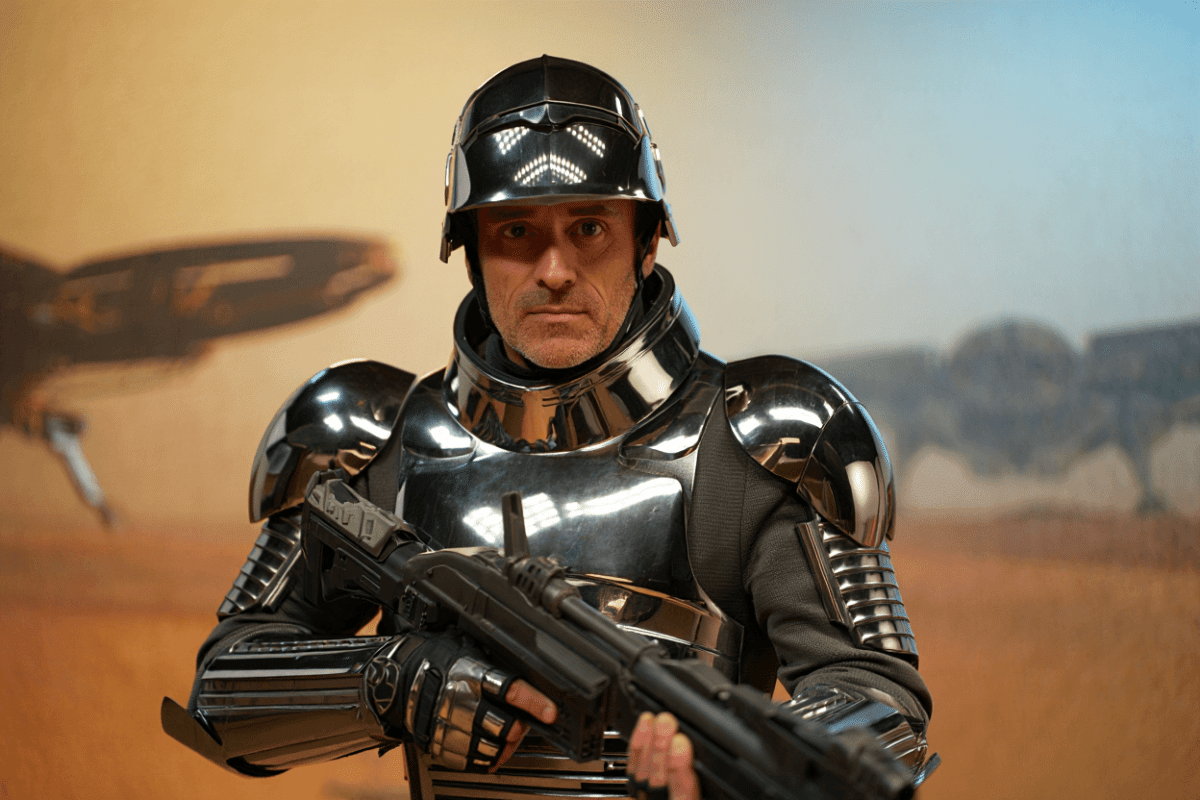
Star Wars: The Mandalorian and Grogu earned $98 million domestically and $165 million worldwide during its opening weekend (May 22-26, 2026), securing the number-one position at the US box office. The film represents the franchise’s theatrical return after a seven-year absence since The Rise of Skywalker (2019). However, by its second weekend (May 29-30), the film faced significant competition from lower-budget releases, experiencing a 69% domestic drop to an estimated $40 million. Directed by Jon Favreau and starring Pedro Pascal as the titular bounty hunter, the film brought back the fan-favorite duo to theaters with a production budget of $166.4 million—making it Disney’s most cost-efficient live-action Star Wars theatrical release to date.
🔥 Quick Facts
- Released May 22, 2026 — first Star Wars theatrical film since The Rise of Skywalker (2019)
- Opening weekend: $98M-$102M domestically, $163M-$165M globally (four-day holiday frame)
- Production budget: $166.4 million — lowest budget Star Wars film under Disney ownership
- Directed by Jon Favreau with Pedro Pascal returning as the Mandalorian and Grogu as the co-lead
- Second weekend drop: 69% to approximately $40 million, losing #1 position to Obsession
Return of Star Wars Following Seven-Year Theatrical Absence
The theatrical release of The Mandalorian and Grogu marked a significant milestone for Lucasfilm and Disney+. Following the divisive reception of the Sequel Trilogy (2015-2019), the franchise abandoned theatrical releases in favor of streaming content, remaining absent from cinemas for more than seven years. The decision to return with a film based on the Emmy-nominated television series represented a strategic pivot toward IP already proven successful on Disney+. According to sources, Favreau scripted the film alongside writer Dave Filoni, ensuring continuity with the show’s mythology while expanding the story for a theatrical audience. The May 22 release date marked a traditional launch window for Star Wars properties, coinciding with the Memorial Day weekend — historically one of the strongest moviegoing periods in North America.
Pedro Pascal’s Prominent Role and Character Development
Pedro Pascal‘s casting as the returning lead of the film underscored Disney’s confidence in the character. In a recent interview, Pascal stated that the film “will be one of the greatest adventure movies in the canon of all of cinema,” highlighting his personal investment in the project. Unlike the television series, where the actor typically performed in costume with limited facial visibility, the theatrical release afforded directors greater opportunities for character depth and emotional nuance. BBC coverage noted that “Grogu is real star of new Star Wars film, says Pedro Pascal,” emphasizing that the dynamic between the Mandalorian and his Force-sensitive companion remained central to the narrative. The supporting cast included Sigourney Weaver as Colonel Ward, Jeremy Allen White as Rotta the Hutt, and veteran voice actor Steve Blum returning as Garazeb “Zeb” Orrelios. The ensemble represented a blend of franchise returning voices with notable Hollywood talent, signaling Disney’s commitment to production scale.
Production Logistics and Jon Favreau’s Directorial Vision
Director Jon Favreau oversaw production with cinematographer David Klein, shooting entirely in Los Angeles over 92 days between late June and late November 2025. The $166.4 million production budget placed the film below typical Star Wars theatrical costs — The Rise of Skywalker (2019) cost $275 million, while Solo: A Star Wars Story (2018) carried a $275 million price tag. Favreau emphasized the film as a “big-screen episode” of the Disney+ series, prioritizing character continuity over visual spectacle. A notable sequence involved an AT-AT fight filmed as a continuous take, demonstrating the director’s commitment to practical choreography. The film received a $21.75 million California tax credit, effectively reducing the net production cost. At 2 hours and 12 minutes in runtime, the film maintained tighter pacing compared to many contemporary blockbusters.
| Metric | Value | Comparison |
| Production Budget | $166.4 million | Lowest Disney Star Wars film |
| Opening Weekend (Domestic) | $81.7M–$102M | 12th best Memorial Day opening ever |
| Global Opening | $163M–$165M | Below pre-Disney Star Wars films |
| Estimated Second Weekend Drop | 69% decline | Steeper than Solo (51% second weekend drop) |
| Runtime | 2 hours 12 minutes | Efficient pacing for blockbuster standard |
| MPAA Rating | PG-13 | Family-friendly positioning |
“Director Jon Favreau knew there was a responsibility in being the director who would bring Star Wars back to movie theaters after seven years.”
— Variety, May 22, 2026
Industry Analysis: What Second Weekend Decline Reveals About Franchise Momentum
The 69% second-weekend drop raised significant questions about core franchise appeal. Business Insider analysis attributed underperformance partly to Disney’s TV strategy, noting that streaming saturation may have diluted theatrical urgency. A low-budget horror film titled “Obsession” captured the number-one position by weekend two, marking the first time a major Star Wars theatrical release lost the top spot so quickly after opening. By comparison, Solo: A Star Wars Story (2018) experienced a 51% second-weekend decline before leveling out. The Mandalorian and Grogu’s steeper drop suggested potential frontloading toward franchise loyalists rather than broader audience appeal. Rotten Tomatoes noted that families drove the opening weekend, contrasting with the core fanbase’s more measured engagement, particularly following critical reception that emphasized the film as “just good enough to make you wish it were better.” Industry observers suggested that streaming familiarity with the characters did not necessarily translate to repeating theatrical visits, a concerning trend for franchise longevity.
What This Performance Means for Star Wars’ Theatrical Future
The $166.4 million production cost against a global gross trajectory raises profitability questions whether the film can generate sufficient international returns (particularly in China, where pre-release data showed moderate interest). Industry analysts calculated that theatrical releases typically require 2.5-3x multipliers on production budgets to achieve profitability when accounting for marketing expenditures (estimated at $100+ million). By late May, the film was tracking toward a $400-450 million global range, potentially falling short of break-even thresholds for a flagship franchise property. Disney’s decision to invest $166.4 million in a theatrical Star Wars continuation — considerably lower than pre-Disney trilogy costs — reflected cautious optimism. However, the sharp second-weekend decline signaled that streaming success does not automatically guarantee theatrical box office legs. Going forward, Lucasfilm may reconsider the theatrical vs. direct-to-Disney+ strategy for future projects, particularly if the film’s final domestic-to-international ratio leans heavily toward domestic underperformance. The franchise’s 2019 box office struggles with The Rise of Skywalker ($1.07 billion globally despite massive budgets) had already prompted strategic reassessment; this release’s modest opening suggests that audience fatigue and franchise recalibration remain active dynamics within the Star Wars portfolio.
Can Star Wars Regain Its Theatrical Dominance in 2026?
The May 22 release date provided a strong seasonal advantage, yet the film’s inability to maintain #1 position beyond opening weekend raises fundamental questions about franchise health. The Mandalorian series accumulated Emmy nominations and critical praise on Disney+, yet theatrical translation proved partially limited. Some analysts attributed the outcome to “preview fatigue” — audiences had already consumed extensive trailers, behind-the-scenes content, and promotional material across multiple platforms, reducing the discovery element traditionally associated with theatrical releases. The competing landscape — including “Obsession” and upcoming releases like “Backrooms” (a low-budget horror film expected to earn $70+ million) — demonstrated that audiences increasingly fragment across diverse genre offerings rather than clustering around single franchises. For Star Wars’ future theatrical prospects, success will depend on either: (1) demonstrating substantial international legs in markets like Asia and Europe, (2) producing films with distinct genres or creative voices beyond franchise formula, or (3) allowing significant cooldown periods between theatrical releases to rebuild anticipation. The seven-year gap between theatrical Star Wars films should have generated substantial pent-up demand; that it did not suggests deeper audience sentiment shifts than typical franchise cycles experience.
Sources
- Deadline — Box office tracking, opening weekend figures, and industry analysis
- Variety — Director Jon Favreau interviews and production details
- The Hollywood Reporter — Critical review and performance assessment
- Box Office Mojo — Historical Star Wars franchise box office data
- BBC — Pedro Pascal interview regarding Grogu’s prominence in the film
- Business Insider — Strategic analysis of Disney+ impact on theatrical performance
- Forbes — Second weekend box office performance and competitive positioning