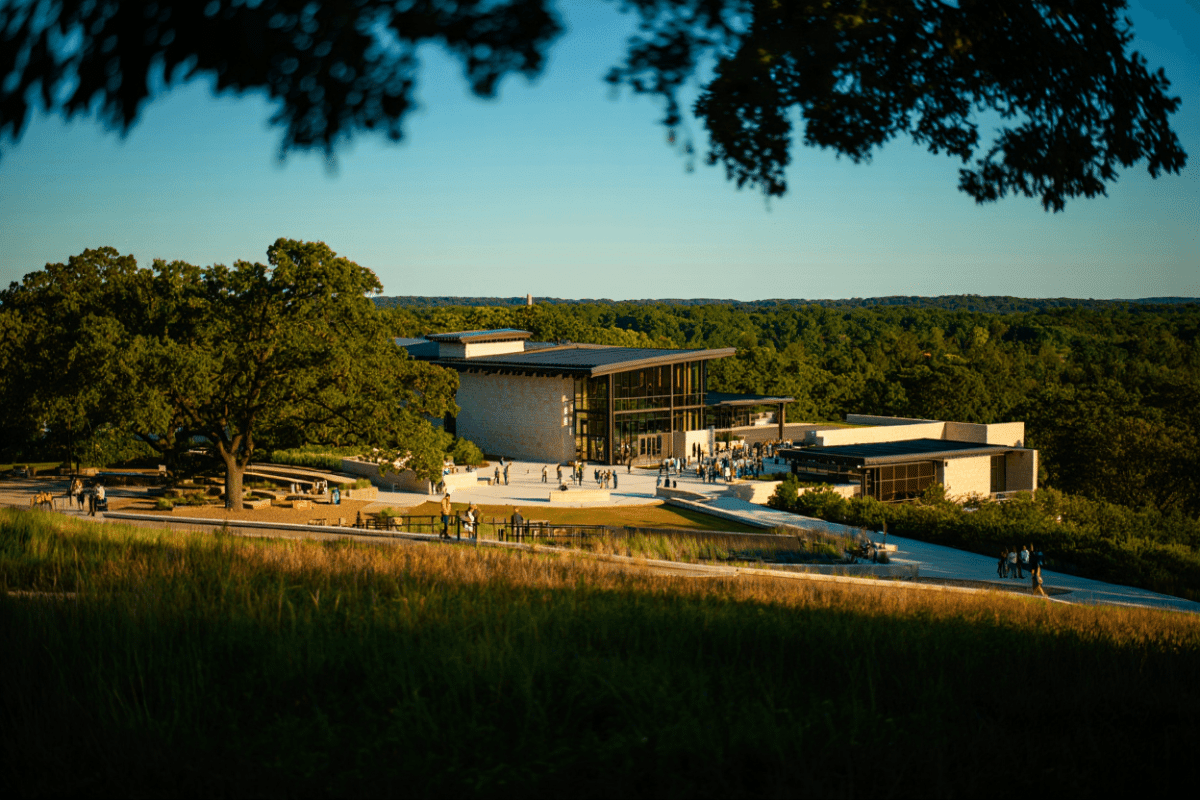
Crystal Bridges Museum of American Art opens its 114,000-square-foot expansion to the public June 6-7, 2026, marking the largest growth in the institution’s 15-year history. Founded by philanthropist Alice Walton, this $150 million expansion increases the overall museum size by 50 percent—from 200,000 to 314,000 square feet—and introduces an entirely reimagined gallery experience across Bentonville, Arkansas. The project, designed by internationally renowned architect Moshe Safdie, represents a fundamental shift in how American museums integrate art, architecture, and landscape together.
🔥 Quick Facts
- Expansion opens June 6-7, 2026 — weekend celebration with art, music, live performances
- 114,000 new square feet — adds 50% to existing facility capacity and visitor experience
- Total museum size reaches 314,000 square feet — one of America’s largest art museum footprints
- Designed by Moshe Safdie — same architect who designed original 2011 building and its landscape integration
- $150 million investment — demonstrates sustained commitment to American art accessibility and community engagement
How Crystal Bridges Changed Small-Town America
When Crystal Bridges Museum of American Art opened in November 2011, few anticipated how profoundly one institution could transform a regional city. Founded by Alice Walton, the daughter of Walmart founder Sam Walton, the museum arrived with a radical commitment: free admission for all visitors. This decision alone redefined expectations about art accessibility in America. The building itself, nestled on 120 lush acres in Bentonville, was designed by Moshe Safdie—the same architect who created Montreal’s iconic Habitat 67. Safdie’s approach prioritized landscape integration over monumental architecture, creating a structure that appeared to emerge organically from the Ozark hillside.
Over 15 years, the museum grew from a regional art destination into a nationally recognized institution, attracting hundreds of thousands of annual visitors. The collection expanded significantly, spanning five centuries of American art—from pre-Columbian works through contemporary pieces. Free admission, combined with world-class programming and exhibitions, positioned Crystal Bridges as a model for how philanthropic art institutions could serve broader communities.
The Expansion’s Vision: Dialogue Between Art and Nature
Moshe Safdie’s expansion deepens the museum’s core philosophy rather than abandoning it. According to Safdie Architects’ official statement, the 114,000-square-foot addition extends the museum’s dialogue between art, architecture, and nature. The new construction introduces two major new galleries, expanded educational facilities, dedicated studio spaces for artists-in-residence programs, and enhanced community gathering areas. Rather than creating a single monolithic structure, Safdie designed the expansion as a series of elegant pavilions—mirroring the original building’s philosophy of individual spaces connected through landscape.
The expansion also adds more than 200 artworks to the museum’s collection through recent acquisitions and donations, including significant works acquired specifically for the new gallery spaces. New features include an expanded café (replacing the current restaurant, Eleven), contemporary art studios, flexible gallery configurations, and outdoor spaces designed for year-round programming.
What the Numbers Reveal About Growth and Scale
| Metric | 2011 Opening | 2026 After Expansion |
| Total Square Footage | 200,000 sq ft | 314,000 sq ft (+57%) |
| New Space Added | — | 114,000 sq ft |
| Campus Acreage | 120 acres | 120 acres (integrated) |
| Admission Cost | Free | Free (unchanged) |
| Investment in Expansion | — | $150 million |
| New Works in Collection | ~2,500 | ~200 major recent acquisitions |
The expansion’s scale reflects a broader shift in American museum culture. For decades, institutions competed to maximize exhibition space; Crystal Bridges now prioritizes quality of visitor experience over raw square footage. The 50% facility increase does not translate to a 50% increase in galleries. Instead, new space accommodates artist residency studios, community learning spaces, outdoor terraces, and flexible programming areas. This calculation demonstrates sophisticated museum planning—expanding capacity while maintaining the intimate, landscape-integrated experience that distinguished the original design.
“This expansion allows us to honor our founding mission—making exceptional American art accessible to all—while offering deeper, more nuanced storytelling across five centuries of our nation’s creative achievements.”
— Alice Walton, Founder and Board Member, Crystal Bridges Museum of American Art (May 2026)
What the June Opening Weekend Signals for Arts Institutions
The June 6-7 grand opening celebration represents something larger than one museum’s milestone. This expansion opens at a moment when American arts institutions face complex pressures: rising operational costs, shifting visitor demographics, and questions about accessibility and equity. Crystal Bridges’ approach—maintaining free admission while doubling available space—directly challenges the assumption that cultural institutions must restrict access to generate revenue. Events during opening weekend will include live performances, artist conversations, new exhibition reveals, and community engagement activities free to all visitors. No tickets required. No timed entry restrictions.
The expansion also signals confidence in regional arts infrastructure. Beyond Bentonville, the museum anchors Northwest Arkansas artistic presence across Fayetteville and the broader region. The 120-acre campus generates estimated hundreds of millions in economic impact annually through tourism, cultural spending, and associated development. Alice Walton’s continued investment demonstrates belief that art and public space can sustain small-town vitality.
Will the Expansion Match the Original Building’s Impact?
Moshe Safdie’s 2011 design became instantly iconic—a building that transcended its regional context to influence global museum architecture discourse. Can the 2026 expansion replicate that cultural resonance? Industry observers note that second phases often disappoint; they can feel like additions rather than integrated wholes. Yet Safdie’s commitment to continuing pavilion-based design mitigates this risk. By avoiding a single dramatic gesture and instead expanding the original’s architectural language, the expansion may succeed where many additions fail—feeling inevitable rather than appended. The test arrives June 6 when thousands visit simultaneously for the first time.
Beyond architecture, questions remain about collection narrative. The original Crystal Bridges presented American art chronologically across five centuries; the new galleries’ organizational logic has not been publicly detailed but will prove crucial to interpretive success. Additional viewing questions linger: How will the museum manage the psychological scale of 314,000 square feet? Will expanded space feel like luxury or dispersal for visitors seeking concentrated curatorial excellence?
Sources
- Crystal Bridges Museum of American Art (Official) — Expansion announcements, opening dates, construction details
- Safdie Architects — Design philosophy, architectural specifications, landscape integration approach
- Fast Company (May 29, 2026) — “Billionaire Urbanism: How Walmart Heir Alice Walton Transformed Bentonville”
- ART News Magazine — Expansion impact analysis and collection acquisitions
- The Art Newspaper (September 2025) — Opening ceremony details and gift announcements
- Architectural Record — Moshe Safdie video documentation of expansion vision