Backrooms opens in theaters across the United States on May 29, 2026, bringing the internet’s most infamous liminal space horror concept to the big screen. With an impressive 88% Certified Fresh rating on Rotten Tomatoes and a runtime of 1 hour 45 minutes, this A24 film represents a watershed moment for digital folklore entering mainstream cinema. The film comes from 20-year-old director Kane Parsons, who becomes A24’s youngest director ever—and he built this cinematic vision from his own wildly popular YouTube web series that launched in 2022.
🎬 Quick Facts
- Release Date: May 29, 2026 (Wide theatrical release)
- Rotten Tomatoes Score: 88% Certified Fresh with 104 reviews
- Director: Kane Parsons, age 20 (A24’s youngest director)
- Runtime: 1 hour 45 minutes
- Rating: R (Language, violent content, bloody images)
From Internet Folklore to A24 Horror: The Backrooms Phenomenon
The Backrooms phenomenon originated in 2019 on 4chan before evolving into a sprawling collaborative horror mythology. The concept centers on accidentally “no-clipping” out of reality—a term borrowed from video game glitches—and becoming trapped in an impossibly large labyrinth of identical, decaying rooms. Unlike traditional horror that relies on jump scares or visible monsters, Backrooms taps into something subtler: the dread of isolation, endless repetition, and spaces designed for transition rather than permanence. These are airports, offices, storage facilities—locations so mundane they feel unsettling precisely because they’re familiar. Director Kane Parsons first encountered the concept when he created his own web series at age 16, transforming the folklore into serialized episodes that accumulated millions of views. A24 took notice, green-lighting a theatrical adaptation with Parsons directing. The studio’s bet on this young creator reflects a broader trend in horror: Gen Z audiences now drive box-office demand for experimental, atmospheric cinema over traditional scares.
Critical Reception: Horror Cinema That Defies Explanation
Early reviews position Backrooms as an intellectual entry in horror—ambiguous, disorienting, and intentionally unsettling. The Guardian described the film as “icily disturbing horror that rewrites the genre rulebook,” while Variety called it “experimental horror that comes out of the margins.” Critics consistently emphasize that Parsons prioritizes atmosphere and abstract dread over plot mechanics. The film trades narrative clarity for pure environmental immersion—viewers navigate abstract spaces alongside protagonist Clark (played by Chiwetel Ejiofor), a therapist whose patient vanishes into the Backrooms. Rather than explain what’s happening, the film embraces the incomprehensibility of the experience. 88% on Rotten Tomatoes signals strong critical consensus with 104 reviews factored in. The film’s “Certified Fresh” designation means the critical community largely endorses it, despite—or perhaps because of—its refusal to provide tidy answers. This represents A24’s continued success in marketing art-house horror to mainstream audiences.
Cast, Technical Approach, and Liminal Space Execution
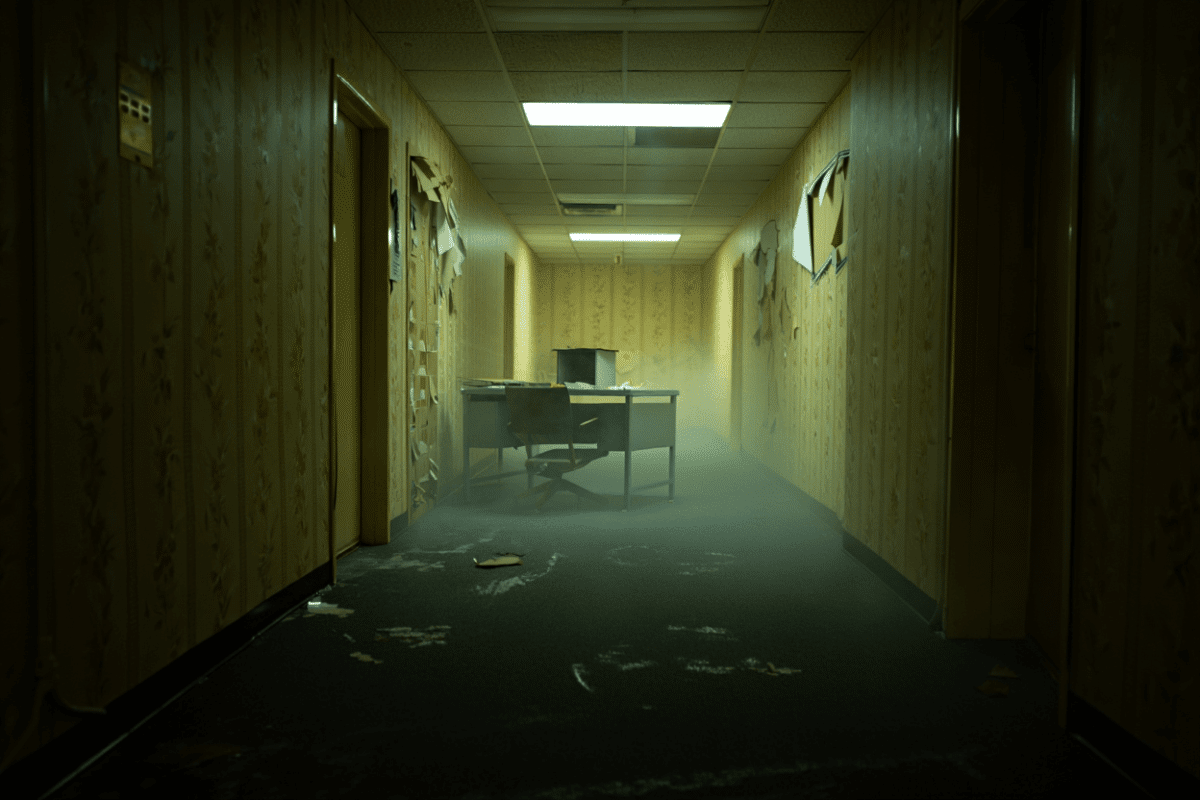
The ensemble features substantial performances from established actors anchoring Parsons’ directorial vision. Chiwetel Ejiofor leads as Clark, with Renate Reinsve playing Mary, Mark Duplass as Phil, and Finn Bennett as Bobby. Notably, Parsons both directed and co-scored the film—a rare dual role indicating auteur-level control over tone and pacing. The production benefited from a 30,000 square foot practical set built by A24, allowing Parsons to construct the Backrooms’ impossible geometry tangibly rather than relying on heavy post-production effects. This commitment to practical environments creates the uncanny realism that drives the film’s effectiveness. Cinematography emphasizes fluorescent lighting, yellowed wallpaper, and maze-like corridors that loop back on themselves. The sound design—crucial to the genre—compounds isolation through sparse, punctuated audio. Parsons‘ youth as a director enables authentic digital literacy; his generation grew up immersed in internet folklore, granting the adaptation inherent cultural fluency that older filmmakers might not capture instinctively.
Liminal Space Horror: Why These Ordinary Spaces Terrify
Liminal space—geometric or transitional environments that evoke unease—emerged as a distinct aesthetic around 2018-2019, but Backrooms became its defining example. These are spaces designed for passage, not dwelling: hotel hallways, parking garage levels, empty office buildings. They carry a distinctly nostalgic, uncanny quality because we recognize them from memory yet never stop to examine them. The horror of liminal spaces functions psychologically rather than viscerally. Empty departure lounges and endless corridors don’t contain physical threats; they threaten the self through isolation and temporal dissolution. Backrooms as a concept weaponizes this aesthetic at scale—trapping characters in an infinite, dimension-defying maze where escape appears impossible and other inhabitants represent unknown threats. Critics note that Backrooms the movie leans into abstraction over exposition; the film doesn’t explain the Backrooms’ rules or origin. Instead, Parsons commits fully to experiential nightmare logic. This approach distinguishes the film from conventional horror tentpoles and aligns it with art-house sensibilities that audiences increasingly seek.
A24’s Youth-Focused Horror Strategy and Implications for Cinema
Backrooms arrives amid A24’s intentional pivot toward young creators and digital-native storytelling. The studio’s bet on Parsons at 19 (when the project was greenlit) signals confidence in next-generation filmmakers who understand internet culture natively. A24’s slate reflects this philosophy: acquiring projects from YouTube, TikTok, and alternative media ecosystems before traditional gatekeepers do. Backrooms succeeds commercially because it translates parasocial attachment from digital platforms—audiences already know Parsons and his web series—into theatrical currency. The 88% Rotten Tomatoes score validates that the film holds up cinematically; it’s not merely a YouTube adaptation cashing in on existing fandom but a substantive horror work. This success could reshape how studios evaluate digital creators and whether internet folklore merits theatrical investment. May 29, 2026 represents a genuine inflection point: the moment mainstream cinema fully embraced born-digital horror mythology and proved Gen Z audiences would show up for experimental, atmosphere-driven horror made by peers who speak their cultural language.
“The Backrooms is a strong horror movie because it takes a simple idea of getting stuck in an endless, empty place and turns it into something tense and profoundly unsettling without needing conventional scares.”
— Multiple critics reviewing the film, May 2026
What Does Backrooms’ Success Mean for Horror and Independent Filmmaking?
If Backrooms performs as critically and commercially expected, it reshapes how the industry evaluates digital creators. Parsons spent years building audience trust and technical proficiency on YouTube before A24 offered resources to scale his vision. This pathway—establish fandom online first, then transition to big-screen production—could become a standard pipeline for emerging talent. The film’s 88% critical approval despite its deliberately obscure narrative suggests critics and audiences distinguish between genuine artistic vision and exploitation of trends. Backrooms commits to its abstract horror premise entirely, refusing to simplify the concept for mainstream palatability. That integrity—combined with A24’s marketing muscle and practical set work—validates experimentation. For horror specifically, Backrooms potentially redirects the genre away from franchise-dependent, scare-focused productions toward atmosphere-driven, thematically coherent experiences. The film’s success would signal that audiences crave psychological horror and immersive strangeness over predictable jump-scares and familiar monsters. For independent filmmakers, Backrooms serves as case study: establish your voice online, cultivate audience loyalty, and pitch established studios with tangible proof of concept. May 29 opens a cinema of new possibilities.