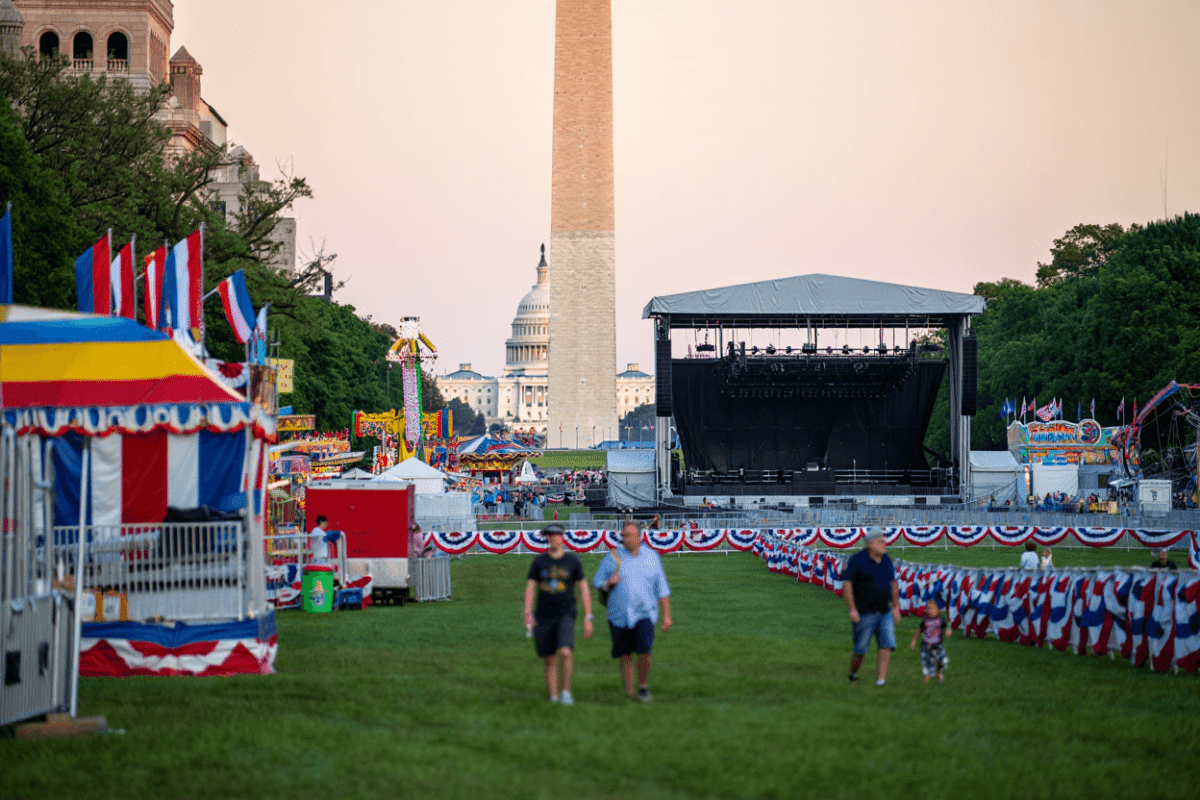
Freedom 250 announced the initial lineup for the Great American State Fair on May 27-28, 2026, unveiling a diverse roster of legacy artists set to perform at the National Mall in Washington, D.C. from June 25 through July 10. The 16-day celebration of America’s 250th birthday was designed to unite all 56 U.S. states and territories through entertainment, carnival activities, and patriotic festivities. However, within hours of the announcement, multiple headliners began withdrawing, citing undisclosed political ties and concerns about the event’s partisan connections.
🔥 Quick Facts
- Young MC, Morris Day, and The Commodores withdrawn within 24 hours of lineup announcement
- Initial lineup included 15+ major performers across multiple genres spanning five decades
- Event runs June 25-July 10, 2026 at the National Mall in Washington, D.C.
- Goal: celebrate U.S. 250th anniversary with all 56 states and territories represented
- Organizations cited concerns about undisclosed political involvement with the celebration
The Initial Star-Studded Lineup
The Freedom 250 organization unveiled an ambitious entertainment roster designed to appeal across generational lines and musical genres. Country superstar Martina McBride, 1990s hip-hop sensation Flo Rida, and Vanilla Ice—known for the 1990 platinum hit “Ice Ice Baby”—anchored the initial announcement. Legacy acts including The Commodores, Morris Day and the Time, C+C Music Factory, and Milli Vanilli rounded out a lineup intended to celebrate pop, funk, R&B, and rap contributions to American culture. Rock legend Bret Michaels of Poison was also listed, alongside contemporary artists like Ludacris and Shinedown. The announcement emphasized the event’s non-partisan framing, with organizers highlighting a mission to “unite and celebrate” the nation’s heritage.
The timing—just months before the July 4, 2026, sesquicentennial of the Declaration of Independence—positioned the Great American State Fair as a marquee destination event on the National Mall. Officials promised carnival rides, culinary experiences, military tributes, and educational pavilions representing all 50 states plus territories. The first publicly announced wave of performers suggested a festival designed for maximum cultural breadth and mass appeal.
The Rapid Artist Exodus Citing Political Concerns
Complications emerged swiftly. Within hours of the announcement, rapper Young MC—best known for the 1989 hit “Bust a Move”—announced his withdrawal via Instagram, stating that artists had not been informed about “any political involvement with the event.” Young MC characterized the booking as a “bait-and-switch,” indicating organizers had downplayed partisan connections during initial recruitment. Morris Day and the Time followed suit shortly after, denying earlier reports that Morris Day had initially denied involvement but ultimately confirming the band’s exit from the lineup.
By May 28-29, the withdrawal cascade accelerated. The Commodores released a statement via Instagram declaring they “will not be performing” and emphasizing their longstanding principle that “our music has always been our voice” and their choice to avoid “public affiliation with any single political party.” Country artist Martina McBride cited a “misleading” characterization of the event, and rap legend Ludacris also pulled out. C+C Music Factory initially signaled withdrawal but later reversed course, deciding to remain part of the event. Contemporary acts Shinedown, Carter Faith, and Morgan Wade similarly distanced themselves, with some offering no public explanation.
Industry observers noted a pattern: artists and their management teams had apparently discovered political sponsors or organizers linked to the celebration after the initial booking. The organizers’ assertion that the event remained “non-partisan” directly contradicted artist complaints about political involvement, suggesting a significant disconnect between public communications and private briefings provided to performers during recruitment.
On-the-Ground Impact and Remaining Roster
| Status | Artist/Group | Genre |
| Confirmed | Vanilla Ice | Hip-hop / Pop |
| Confirmed | Flo Rida | Rap / Pop |
| Confirmed | C+C Music Factory | Hi-NRG / House |
| Confirmed | Bret Michaels | Rock |
| Withdrawn | Young MC | Hip-hop |
| Withdrawn | Morris Day & The Time | Funk / Rock |
| Withdrawn | The Commodores | Funk / Soul |
| Withdrawn | Martina McBride | Country |
| Withdrawn | Ludacris | Hip-hop |
The replacement and contingency planning stage remained opaque as of May 29. Freedom 250 organizers had not publicly announced substitute performers, though internal discussions likely accelerated to fill the void created by high-profile cancellations. The remaining confirmed acts—primarily Vanilla Ice, Flo Rida, C+C Music Factory, and Bret Michaels—represented a significantly scaled-down version of the originally announced celebration. National Mall event logistics complicated matters further, as the venue’s booking schedules required confirmed performer commitments months in advance, limiting spontaneous replacement options.
“The artists were never told about any political involvement with the event. Our music is our voice, and we choose not to publicly affiliate with any single political party.”
— Artist statements collected from Instagram and media outlets, May 2026
Broader Implications for Celebratory Government Events
The Freedom 250 controversy highlighted a persistent tension within large-scale patriotic celebrations: how to structure bipartisan or non-partisan events when supporters and sponsors may carry partisan affiliations. The sesquicentennial was positioned as a moment for national unity, yet the rapid exodus of major performers suggested significant portions of the entertainment industry viewed the event’s framework as politically compromised.
Historical precedent offered limited guidance. Previous quadrennial inaugurations and Independence Day observances had navigated similar challenges, but the scale of the Great American State Fair—a 16-day continuous celebration with participation from all 56 state and territorial delegations—was unprecedented. The organizational scope required partnerships with corporations, government entities, and promotional agencies whose individual stakeholders held diverse political viewpoints. When those divergent interests became publicly apparent, artists interpreted the revelation as evidence of undisclosed political direction.
Event organizers maintained that all withdrawals resulted from “misunderstandings” or “last-minute scheduling conflicts.” However, artist statements contradicted this framing consistently. The strategic coordination of announcements across multiple acts within a 24-to-48-hour window suggested information sharing within entertainment industry networks—word that the event carried political baggage spread rapidly among managers, agents, and performers themselves.
Will Additional Cancellations Follow, or Will Remaining Performers Anchor the Fair?
As of May 29, 2026, the question hanging over Freedom 250 remained whether the initial exodus represented the full extent of planned withdrawals or merely the first wave. Several dynamics could determine the outcome. First, if remaining confirmed acts faced their own pressure campaigns or new information about the event’s political architecture, additional withdrawals remained possible. Second, Freedom 250 organizers’ ability to recruit replacement performers of comparable stature—within weeks of the announcement—would substantially impact public perception of the celebration’s viability. Third, broader cultural reception of the event would hinge on whether the remaining lineup could sustain meaningful attendance and media engagement across 16 consecutive days at a major national venue.
The Great American State Fair was designed as a flagship component of the America 250 commemorative program. Other major planned events—including the Freedom 250 Grand Prix (an NTT IndyCar race scheduled for August 22-23, 2026)—suggested organizational capacity to execute complex, multi-week celebrations. Yet the rapid artist exodus signaled that reputation and public trust were fragile resources that could erode swiftly when political controversies surfaced.
Industry insiders predicted that Freedom 250 would ultimately proceed, but with a transformed character: less of a “greatest hits” revival spanning five decades and more of a hybrid programming strategy that focused on remaining artists while integrating local performers, marching bands, choral groups, and non-musical entertainment. The state pavilions and carnival activations could potentially insulate the event from its music lineup challenges, allowing the fair to proceed as designed even if the concert series became a secondary rather than primary draw.
Sources
- Freedom 250 Official Announcement – First wave of star-studded entertainment, May 27-28, 2026
- Variety – Young MC and Morris Day artist departure coverage
- Rolling Stone – Young MC “Bait-and-Switch” interview and commentary, May 28, 2026
- USA Today – Music lineup announcement and subsequent artist withdrawals
- The Commodores Official Instagram – Non-partisan affiliation statement, May 28, 2026
- Billboard, CNN, NBC Washington, CBS News – Multi-day coverage of artist cancellations and event logistics