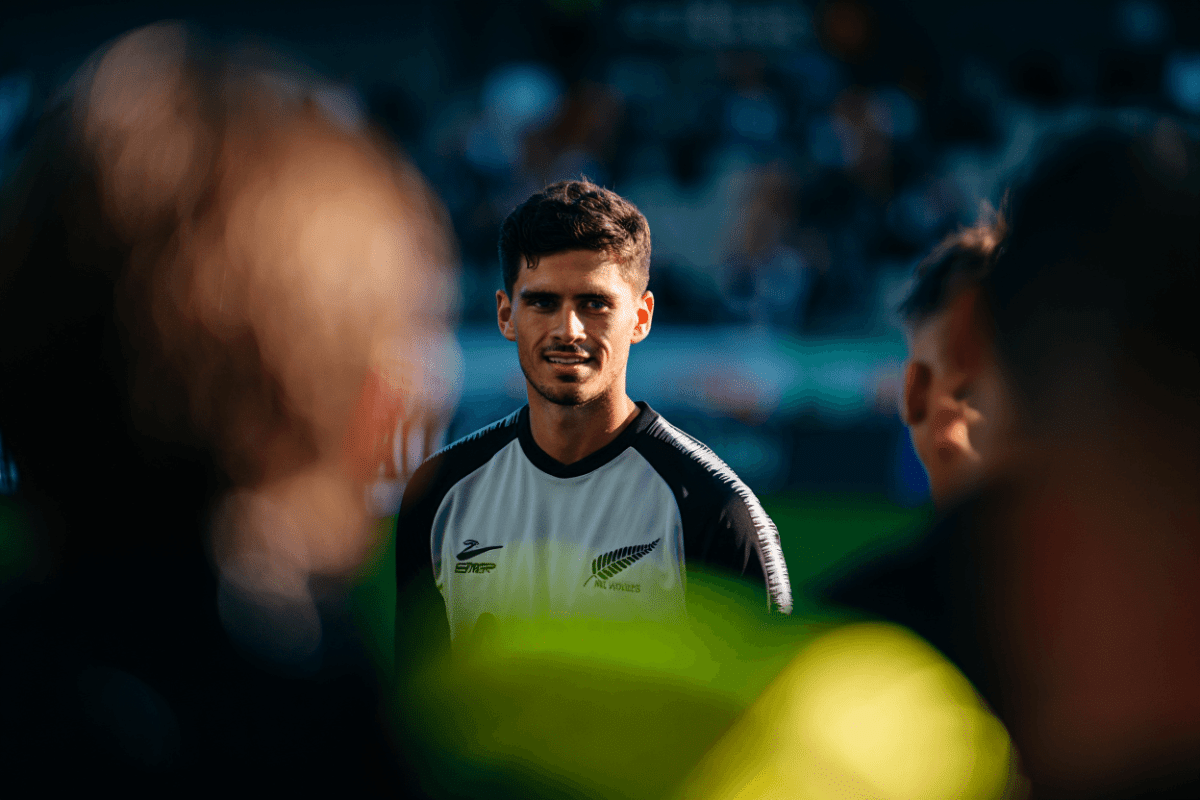
Tim Payne, a relatively unknown New Zealand All Whites defender, gained approximately 400,000 Instagram followers in 24 hours after an Argentine influencer’s viral campaign. The Wellington Phoenix player saw his account grow from just 4,715 followers to over 660,000 in days, becoming one of sports’ most explosive social media growth stories ahead of the 2026 FIFA World Cup.
🔥 Quick Facts
- Payne started with 4,715 Instagram followers before the viral moment
- Argentine influencer Valen Scarsini (elscarso) created the viral video highlighting Payne
- Followers reached 660,000+ in less than 48 hours, surpassing New Zealand PM
- World Cup 2026 kicks off June 11 in Mexico City with 48 teams competing
- Campaign highlighted Payne as “World Cup’s least known player” for a unified fanbase
The Unlikely Rise of a World Cup Underdog
Tim Payne exemplifies how social media can transform an athlete’s profile in unprecedented ways. Before May 27, 2026, the All Whites defender operated in relative obscurity—a veteran player competing at the national level but without significant celebrity presence online. The Wellington Phoenix squad member’s anonymity became the catalyst for something extraordinary: a grassroots social media movement designed to rally international supporters behind the overlooked player.
Approaching the 2026 World Cup, major tournament storylines typically center on superstar strikers and international marquee names. With World Cup fever building and global audiences preparing for the spectacle, Payne’s emergence as a cult hero challenged conventional marketing narratives. His story represents the democratizing power of digital platforms, where authenticity and relatability can outpace traditional celebrity economics.
How the Argentine Influencer Campaign Went Viral
Valen Scarsini, a prominent Argentine content creator known on Instagram and TikTok as “elscarso,” orchestrated the campaign with surgical precision. Scarsini created a video presenting Payne as football’s most underrated player—someone without the marketing machinery of elite clubs yet facing the world’s biggest stage. The influencer’s message resonated powerfully: international fans should unite behind an athlete nobody had heard of, transforming a statistical curiosity into a movement.
Scarsini identified Payne as the “least known” World Cup player, using data showing his minimal social media presence compared to teammates and international peers. This strategic positioning created urgency—a finite window to support a genuine underdog before tournament kickoff. The World Cup 2026 starts June 11 in Mexico City with expanded 48-team format, making the timing of Payne’s emergence particularly resonant for global audiences seeking non-traditional narrative arcs.
Social Media Growth: Numbers That Tell the Story
The acceleration of Payne’s follower count demonstrates exponential viral mechanics in real-time. Starting from 4,715 followers on May 26, his account exploded with organic engagement, reaching approximately 400,000 new followers within 24 hours. By May 28, the total had climbed to 660,000+, creating a compounding effect where increased visibility attracted more followers.
| Metric | Date/Status | Notes |
| Starting Followers | May 26, 2026 | 4,715 followers |
| 24-Hour Growth | May 27-28, 2026 | 400,000 new followers |
| 48-Hour Total | May 28, 2026 | 660,000+ followers |
| Growth Multiple | 2 Days | 140x increase in follower base |
| Followers vs NZ PM | May 28, 2026 | Outpaced New Zealand Prime Minister’s account |
For context, 660,000 followers represents extraordinary reach for an athlete outside elite club infrastructure. Most international football players accumulate such numbers over years through major tournament performances, endorsements, and media exposure. Payne achieved the milestone in 48 hours through organic campaign momentum—a testament to how authenticity and underdog narratives drive engagement in 2026’s social media landscape.
“In group G, in New Zealand, there is Tim Payne. He really is the least known. He doesn’t even have 5000 followers. I want to make a movement where everyone follows him because he’s the main character of this World Cup.”
— Valen Scarsini, Argentine Influencer (@elscarso)
The Strategic Brilliance Behind the Campaign
Scarsini’s approach demonstrates sophisticated understanding of social incentives. Rather than promoting another elite player already saturated with followers, he identified a genuine gap: a World Cup participant with virtually no social currency. The campaign’s genius lay in inverting traditional celebrity economics—obscurity became the selling point. Supporters could feel they discovered and elevated Payne rather than following established stars.
This mechanic tapped into underdog psychology, where audiences derive satisfaction from supporting overlooked talent. The movement gained momentum across Spanish-speaking regions, where followers created fan content, songs, and memes celebrating Payne’s unlikely rise. Cross-platform amplification through TikTok, Instagram Reels, and Twitter extended reach beyond Scarsini’s direct audience, creating a self-propagating cycle of engagement.
What This Means for Athletes and Social Media Strategy
Payne’s growth serves as a case study in viral authenticity. Unlike manufactured celebrity endorsed through brands and PR agencies, this movement emerged organically. The story’s resonance—a 4,715-follower player reaching 660,000—created shareable narrative momentum that traditional marketing budgets struggle to replicate. Athletes contemplating social strategy should note that uniqueness and relatability often outperform polish.
The campaign also highlights international fanbase mobilization ahead of major tournaments. With World Cup 2026 expanding to include 48 teams across three nations, marketing opportunities extend beyond traditional power-player channels. Support communities form around unexpected figures, creating genuine engagement that supersedes algorithm-driven promotion. Payne’s story suggests future campaigns may deliberately identify overlooked participants, leveraging social platforms to level competitive narratives.
Can This Momentum Impact Tournament Performance?
Whether Payne’s viral status translates to enhanced World Cup performance remains an open question. Mental pressure can accompany sudden fame—elevated expectations, media scrutiny, and social media commentary may distract from on-field focus. Conversely, genuine supporter backing can elevate athlete confidence and create home-field advantage psychology, even for visiting nations.
Football history offers mixed examples. Some players thrive under pressure from unified fanbases, while others struggle with amplified scrutiny. The 2026 World Cup will provide the definitive test. If Payne performs well and New Zealand succeeds in group G, the campaign becomes a textbook example of how social media can generate authentic competitive advantage. His narrative arc—from anonymous player to global symbol—represents exactly the kind of compelling storyline the expanded tournament format should produce.
Sources
- Reuters – Breaking coverage of Tim Payne’s viral Instagram growth and Argentine influencer campaign
- Straits Times – Detailed reporting on the social media phenomenon and Valen Scarsini’s role
- NZ Herald – In-depth analysis of the All Whites defender’s unexpected rise to prominence
- Stuff.co.nz – Comprehensive FIFA World Cup coverage and campaign timeline
- A-Leagues – Official Wellington Phoenix context and player background