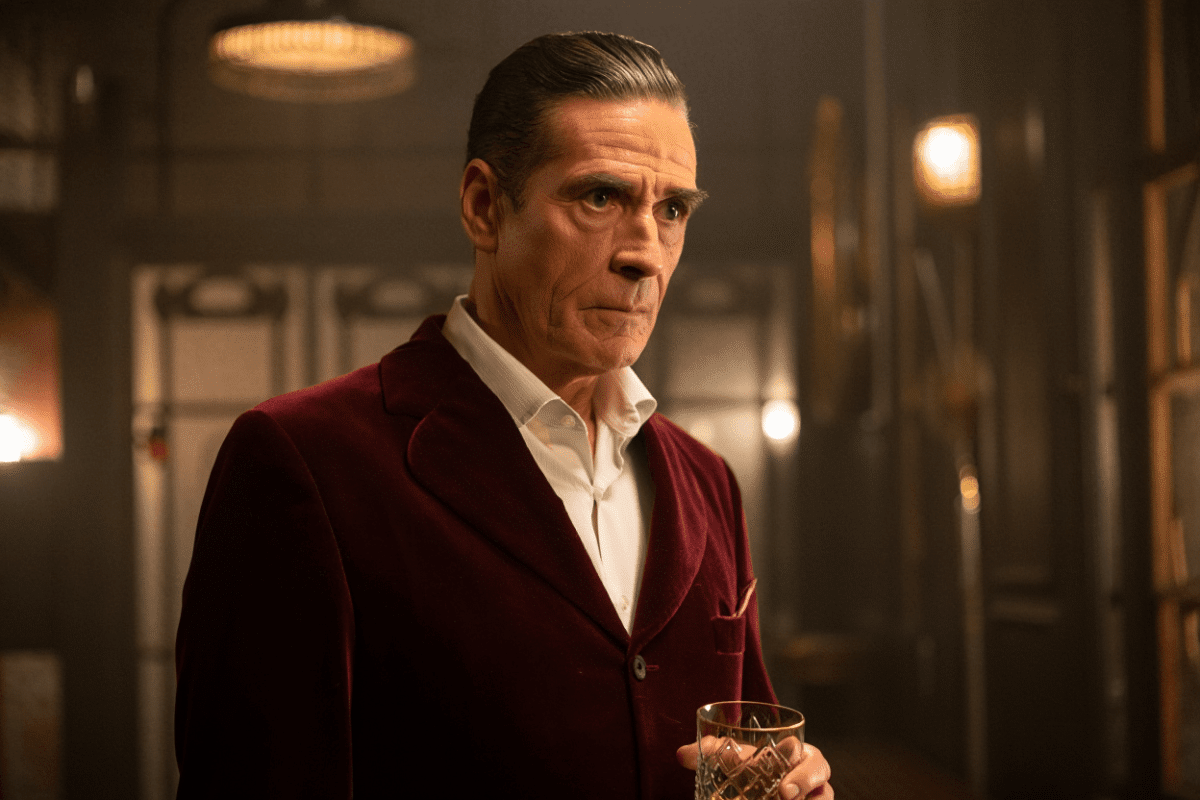
Spider-Noir officially launched on Prime Video on May 27, 2026 at 12 a.m. PT (3 a.m. ET), bringing all 8 episodes of the first season to global audiences. Nicolas Cage stars in his first lead television role as Ben Reilly, an aging private investigator grappling with his past as a web-slinging superhero in 1930s Manhattan, making this Marvel adaptation a landmark entry into prestige superhero television.
🔥 Quick Facts
- Release date: May 27, 2026 on Prime Video (May 25 on MGM+)
- Total episodes: 8 episodes available immediately at launch
- IMDB rating: 8.3/10 with 2,496+ user ratings
- Viewing options: Both “Authentic Black & White” and “True-Hue Full Color” formats available
- Created by: Oren Uziel for MGM+ and Amazon Studios
Nicolas Cage’s Spider-Noir: Aging Detective Meets Marvel Legacy
Nicolas Cage, the Academy Award-winning actor known for roles ranging from arthouse cinema to blockbuster spectacle, takes on his first lead television role with Spider-Noir. The series positions Cage as Ben Reilly, a once-heroic web-slinger now reduced to running a struggling private investigation agency in Depression-era Manhattan. This casting marks a significant moment for both Cage’s career trajectory and the superhero television landscape—elevating the genre through a major film star’s commitment to serialized storytelling.
The show’s premise draws directly from the acclaimed Spider-Verse comics, where Spider-Noir exists as an alternate-Earth version of Spider-Man shaped by 1930s noir aesthetics and hardboiled detective sensibilities. Unlike traditional superhero narratives focused on origin stories or world-saving threats, Spider-Noir centers on an antihero confronting mortality, obsolescence, and moral compromise—themes that align perfectly with Cage’s natural acting strengths.
Cast Ensemble and Character Breakdown
Beyond Cage, Spider-Noir assembles a distinguished lineup of supporting players tasked with populating its 1930s New York landscape. Lamorne Morris plays Robbie Robertson, a newspaper editor who becomes entangled in Reilly’s dangerous world. Li Jun Li portrays Cat Hardy, a complex ally with her own agenda. Karen Rodriguez rounds out the core cast as Janet Ruiz, a character crucial to the season’s central conflicts.
The villain roster features Abraham Popoola as Lonnie Lincoln/Tombstone, the street-level crime boss serving as a primary antagonist. Brendan Gleeson, the Irish character actor known for intensity and gravitas, steps into the role of Silvermane—the mob kingpin representing old-money organized crime. Jack Huston completes the villain ensemble as Flint Marko, reimagined as Sandman for this iteration, a morally ambiguous enforcer driven by desperation rather than pure malice.
The Dual Format Experiment: Black & White Versus Color
One of the most distinctive features of Spider-Noir is its dual-viewing format, a creative decision that honors the character’s comic-book origins while offering contemporary audiences choice. All 8 episodes are available in both “Authentic Black & White” and “True-Hue Full Color” versions on Prime Video, allowing viewers to experience the 1930s Manhattan setting through either nostalgic monochromatic cinematography or vivid color grading.
The black-and-white format deliberately evokes classic film noir cinema from the era depicted—The Maltese Falcon, Double Indemnity, Out of the Past. This version enhances atmospheric lighting and shadow work while removing the distraction of color, demanding viewer engagement through performance and dialogue. The full-color rendering, conversely, reveals production design details and period costumes while maintaining visual accessibility for modern audiences less accustomed to monochromatic media. Neither format functions as a “correct” version; rather, both serve different aesthetic and narrative purposes.
1930s Manhattan: Setting as Character
The Depression-era New York City setting becomes essential to Spider-Noir’s identity, distinguishing it fundamentally from mainstream Marvel properties typically set in contemporary times or fantastical realms. The 1930s positioning provides historical weight—economic desperation, organized crime dominance, moral ambiguity—and limits Cage’s superhero abilities. A masked vigilante with web-slinging powers becomes paradoxically less powerful when removed from skyscrapers and modern infrastructure, forced to operate as a street-level operative dependent on wits rather than superhuman reflexes or gadgetry.
Production design mirrors the aspirations of prestige television, with sets, costumes, and practical effects reflecting authentic Depression-era aesthetics throughout. Unlike animated Spider-Verse films that stylized this period, Spider-Noir‘s live-action approach grounds its world in tangible, lived-in environments—speakeasies, tenement apartments, precinct stations, and rain-slicked streets where moral compromise happens in conference rooms rather than through cosmic-level threats.
Reception and Critical Response
Early critical reactions to Spider-Noir have proven substantially positive, with the series currently holding an 8.3/10 rating on IMDB based on over 2,496 user ratings—a notable achievement given the divisive reception many superhero projects generate. Critics have specifically praised the noir atmosphere, Cage’s committed performance, and the series’ willingness to embrace character-driven storytelling over spectacle.
The show’s success signals potential industry shift toward casting major film talent in prestige-focused streaming productions, validating the investment from both MGM+ and Amazon Studios in respecting genre material through serious production values and acclaimed performers.
What Comes Next for Spider-Noir?
Netflix and Prime Video have already indicated interest in additional seasons, with statements from Cage suggesting openness to continuation if the current arc concludes satisfactorily. The 8-episode structure of season one suggests a complete first narrative arc rather than a setup for extended mythology, meaning its ending provides genuine closure while leaving room for character exploration should renewal occur.
The broader question remains whether Spider-Noir can sustain its noir aesthetic and character focus across multiple seasons, or whether the inherent constraints of the 1930s setting and grounded tone create narrative limitations that eventually exhaust storytelling possibilities. Early episode reception suggests the creative team has thought carefully about this balance, but only subsequent season performance will confirm whether Spider-Noir represents a sustainable new brand for Marvel television or a limited-run prestige event.
Does Spider-Noir Signal a New Era for Marvel Television?
The success of Spider-Noir raises intriguing questions about Marvel Studios and Sony’s streaming strategy. By committing serious resources to character-driven crime drama rather than world-building spectacle, Spider-Noir suggests the superhero genre may finally be developing mature television alternatives to the action-heavy template that dominated the 2020s. Will this prestige approach—exemplified by Cage’s casting and noir atmosphere—influence future Marvel properties toward restraint and complexity? Or does Spider-Noir remain an exception, valued precisely because it operates outside established franchise formulae?
Sources
- Prime Video Press Release – Official series description and launch timing
- IMDB – User ratings, cast information, and episode details
- Decider – Critical review and streaming availability analysis
- Variety – Production background and creative direction
- BBC News – Dual-format viewing options explanation