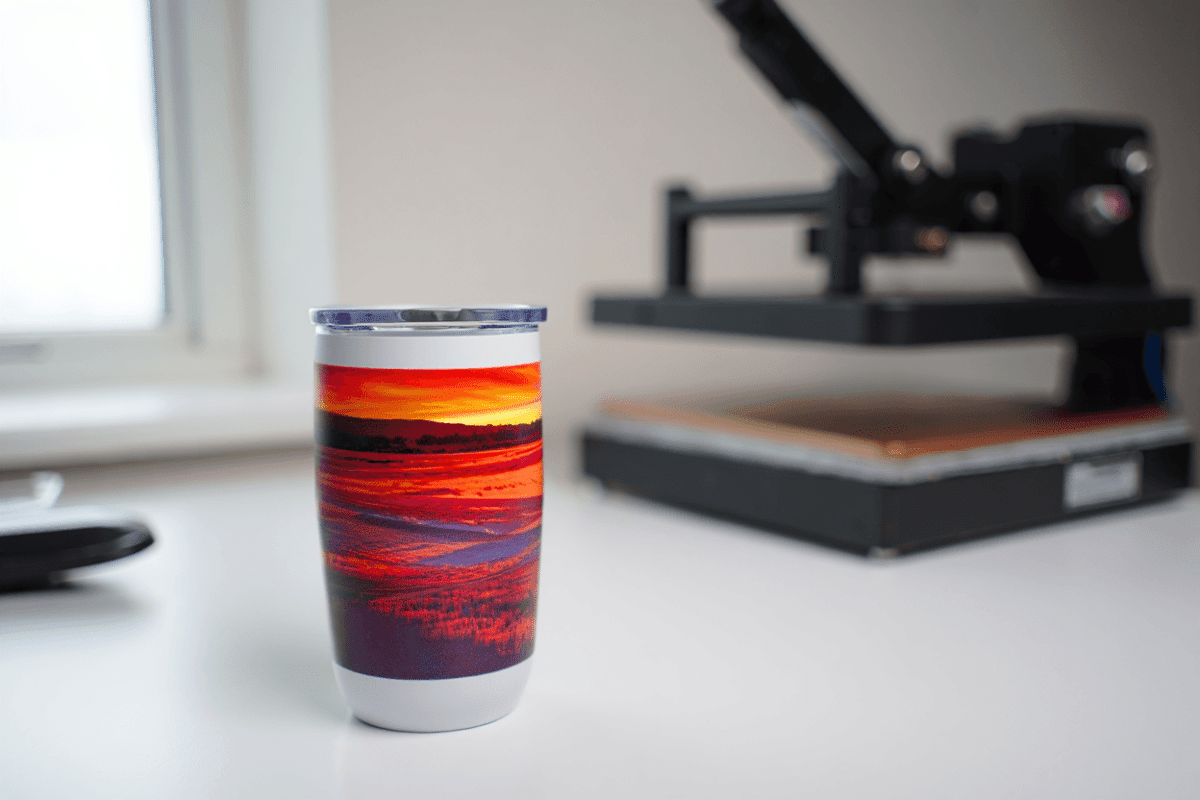
Elk Grove Village Public Library hosts sublimation tumbler workshops on Wednesday, May 27, 2026, from 5:30 PM to 8:00 PM CDT in the Makerspace. Participants learn the heat transfer process to personalize tumblers with custom photos and designs—a hands-on introduction to commercial-grade printing techniques that are trending in home crafting.
🔥 Quick Facts
- Event Date & Time: Wednesday, May 27, 2026, 5:30 PM–8:00 PM (CDT)
- Location: Elk Grove Village Public Library Makerspace
- Optimal Heat Press Settings: 350°F–380°F for 45 seconds per side
- Registration: Required; one time slot per participant
What Is Sublimation Printing?
Sublimation is a digitally-driven printing process that uses heat and pressure to transfer color dye directly from specialized paper onto polyester, ceramics, and other substrates. The mechanics are precise: solid dye particles transform into gas under heat, then re-solidify into the material’s surface, bonding at the molecular level. Unlike screen printing or vinyl transfer, sublimation produces no tactile layer—the design becomes integral to the product surface.
The process requires three elements: a sublimation printer using dye-based inks, specialized sublimation transfer paper, and a heat press capable of sustained, even temperature. This combination enables crafters to produce museum-quality, full-color designs with infinite gradients and photographic detail—advantages that traditional methods cannot match.
The Tumbler Workshop Experience at Elk Grove Village
The Elk Grove Village Makerspace workshop guides beginners through the complete cycle. Participants bring or select a photo, learn print preparation on a sublimation printer, and then execute the heat transfer on a blank tumbler using the facility’s professional press. Instructors emphasize alignment precision: centering the design vertically and ensuring even pressure distribution prevents ghosting—a common artifact where transferred color appears faint or blotchy.
Each session accommodates a single participant to ensure dedicated attention. The library’s makerspace model reflects a broader trend in public libraries offering advanced fabrication tools, from laser cutters to embroidery machines, making professional-grade equipment accessible to communities that otherwise lack the capital investment.
Technical Standards for Tumbler Sublimation
Industry best practices dictate specific parameters for sublimation results:
| Parameter | Recommended Setting | Notes |
| Heat Press Temperature | 350°F–380°F | Stainless steel tumblers; adjust within range for substrate type |
| Duration Per Side | 45 seconds | Both front and back require separate transfer cycles |
| Pressure Setting | Firm (consistent) | Uneven pressure causes color bleeding or incomplete transfer |
| Paper Alignment | Centered | Prevents white margins or misalignment on cylindrical surface |
| Cool-Down Period | Allow 30+ seconds | Prevents warping; dye solidifies permanently during cooling |
The 350°F to 380°F range represents the optimal sublimation window. Below 350°F, the dye does not fully sublimate, resulting in pale, washed-out colors. Above 380°F, the polyester coating may scorch or degrade, creating visible discoloration. Each tumbler’s composition slightly differs—professional crafters test small batches to calibrate their specific press’s hot spots and temperature variance.
Why Sublimation Tumblers Remain Popular in 2026
Custom tumblers consistently rank among the top-selling sublimation products for home-based crafters and resellers. The demand reflects several advantages: low inventory costs (blank tumblers cost under $5 wholesale), rapid production cycles (two minutes per tumbler), and high perceived value among consumers who view personalized tumblers as wedding favors, corporate gifts, or vacation souvenirs. The craft appeals to both hobbyists and small business operators seeking flexible, low-startup-cost income streams.
Libraries like Elk Grove Village democratize access to this earning potential by providing equipment, instruction, and a cost-free workspace. Rather than purchasing a heat press ($300–$1,000), participants test the craft immediately and develop foundational skills before deciding whether to expand into commercial production.
Preparing for Your Workshop Session
Participants benefit from prior planning. Select a high-resolution image (minimum 300 DPI)—smartphone photos often lack clarity at tumbler scale. Choose centered compositions that translate well to cylindrical geometry; busy, edge-heavy designs may lose visual impact when wrapped. Bring multiple image options to decide which translates best during the session. The Makerspace environment encourages experimentation, so arriving with flexibility rather than rigid expectations ensures the best learning outcome.
Understanding color management ahead of time prevents disappointment. Sublimation reproduces colors accurately, but screen colors sometimes appear more vibrant than printed results due to monitor calibration differences. Professionals often desaturate their designs by 10–15% before printing to account for this perceptual shift.
What Happens Next: From Workshop Knowledge to Personal Projects?
Workshop completion opens several paths. Many participants create personalized tumblers as gifts or keep-sakes, refining their techniques through repeat practice. Others explore related sublimation projects—t-shirts, mugs, phone cases, or hard surface items like ceramic tiles. Some transition to home-based businesses, especially as equipment prices continue declining and online marketplaces make direct-to-consumer sales accessible. The Elk Grove Village workshop serves as an entry point into a craft ecosystem where creativity and market opportunity converge.
Sources
- Elk Grove Village Public Library – Official event listing and registration details
- Stainless Depot Company – Sublimation heat press settings and technical specifications
- Printful & Printify – Sublimation printing process documentation and best practices
- Wikipedia & Industry Sources – Dye-sublimation printing technology and chemical process explanation