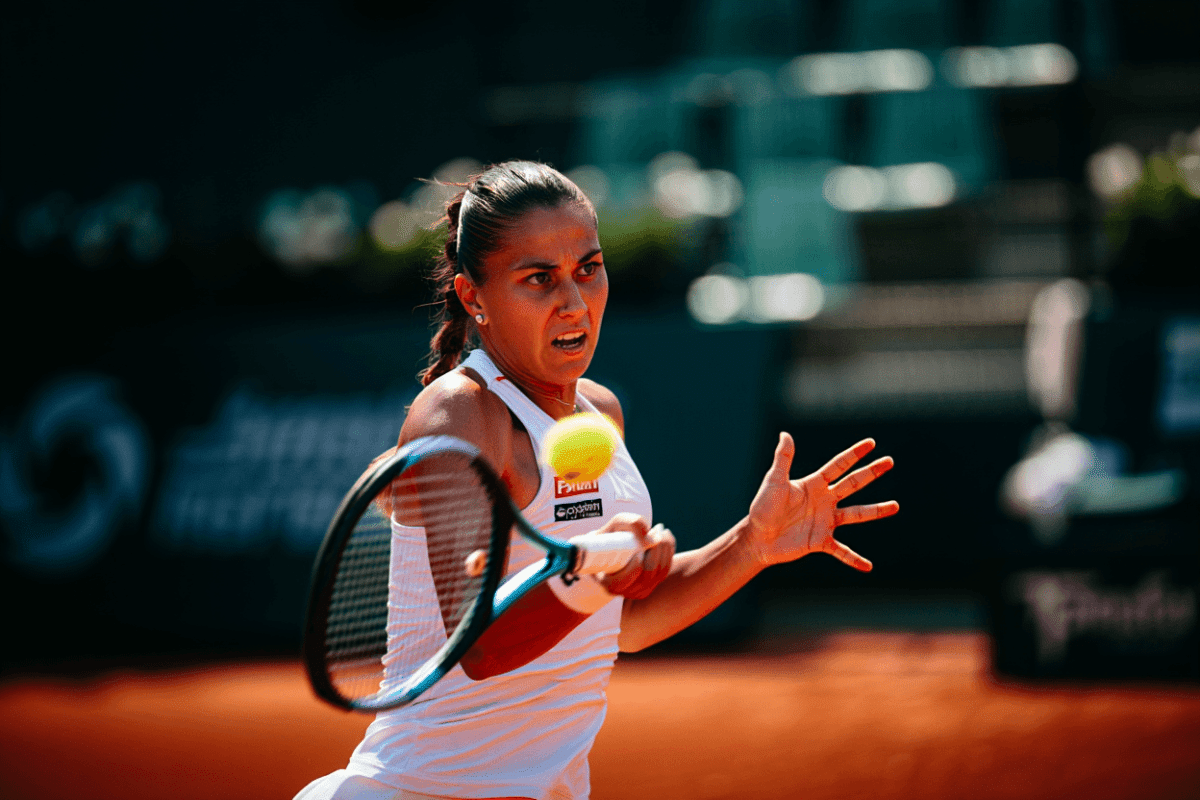
Jasmine Paolini faces Solana Sierra in the second round of Roland Garros 2026 on May 27, with the Italian seeded 13th looking to extend her strong form in Paris. The match takes place on Court Suzanne-Lenglen starting at approximately 6:50 AM PST, marking the first career clash between these two rising forces in women’s tennis.
🔥 Quick Facts
- Paolini defeated Yastremska 7-5, 6-3 on May 25 to reach the second round.
- Sierra is ranked 68th in the WTA, with a career-high of 63rd set in February 2026.
- This is their first professional head-to-head meeting at the French Open.
- Paolini was the 2024 Roland Garros finalist and carries deep tournament experience.
Paolini’s Path Back to Form: First Round Victory Signals Intent
Paolini’s first-round win over Dayana Yastremska reflected the composure expected from a seeded player with 2024 final experience. The 7-5, 6-3 scoreline demonstrates her ability to break down opponents in straight sets—a critical skill on the red clay of Roland Garros. However, the context matters: Paolini enters this tournament on the heels of a foot injury sustained in Rome, where she and doubles partner Sara Errani withdrew from defending their 2025 doubles title. Her return to competition was timed carefully, and the clean victory should alleviate concerns about her physical readiness for a two-week Grand Slam.
In the first set against Yastremska, Paolini was forced to dig deep, saving multiple break points before closing out 7-5. The second set saw her dominate the baseline exchanges, particularly on the forehand side where she dictated rally patterns. This quality of play—mixing aggressive forehands with solid serve placement—will be essential against Sierra, who possesses a versatile game built on court coverage and consistency.
Sierra’s Breakthrough: The Upset Over Raducanu and Rising Ranking Trajectory
Solana Sierra, at just 21 years old, has demonstrated why her career-high ranking of 63rd (achieved February 2026) is not coincidental. Her first-round victory over Emma Raducanu—a former Grand Slam finalist—signals a player coming into her own at a crucial stage of development. Sierra currently holds WTA ranking 68, meaning her seed ranking in the Roland Garros draw reflects her recent momentum rather than her historical profile.
What distinguishes Sierra’s game is her movement and return-of-serve efficiency. The Argentine’s approach limits unforced errors and forces opponents to construct points methodically rather than dominating from the first shot. Against Raducanu, this translated into a first-round upset that has caught the attention of analysts and tournament observers. On clay, where court coverage becomes even more critical, Sierra’s mobility is a genuine tactical advantage—one that could trouble Paolini if the Italian fails to execute her aggressive game plan.
Statistical Matchup: Experience vs. Momentum
| Factor | Jasmine Paolini | Solana Sierra |
| Current WTA Ranking | 13th | 68th |
| Career-High Ranking | 4th | 63rd (Feb 2026) |
| 2026 Win-Loss Record | 12-6 | 14-15 |
| Grand Slam Finals (Career) | 1 (Roland Garros 2024) | 0 |
| First-Round Opponent | Dayana Yastremska (WTA 42) | Emma Raducanu (WTA 50) |
| Head-to-Head Record | 0-0 (Never Met) | 0-0 (Never Met) |
The statistical gulf between seeding and ranking tells a critical story. Paolini’s recent career-high ranking of 4th demonstrates Peak-level play in 2025, while Sierra remains a rising prospect hunting her breakthrough performances. Paolini’s 12-6 record in 2026 shows consistency, though Sierra’s 14-15 mark indicates a player still developing consistency at the elite level. The Grand Slam context heavily favors Paolini: she has navigated deep runs in major tournaments, while Sierra‘s victory over Raducanu is her statement moment on the Grand Slam stage.
“Paolini arrives at Roland Garros as a runner-up from last year, but she’s coming back from a foot injury in Rome. Sierra is the story—she just beat Raducanu and shows the kind of mobility on clay that could really test Paolini’s patience in rallies.”
— Reported analysis from WTA observers and tennis media commentary
Tactical Implications: Clay Court Mastery vs. Emerging Versatility
The red clay of Roland Garros tilts the match narrative toward both players’ strengths and weaknesses. Paolini, despite her relatively low stature at 5’4″ (1.63m), has built her game around aggressive short-range hitting and strong slice work—tools that work exceptionally well on clay. Her 2024 final run proved her ability to win tight matches on this surface. However, the recovery time required after her Rome injury creates uncertainty about her movement patterns over extended rallies.
Sierra’s strength lies in her willingness to engage in baseline warfare. A right-handed player with consistent groundstrokes, Sierra can wear down opponents through systematic point construction rather than explosive power. If Sierra can maintain this patience while minimizing errors—as she did against Raducanu—she may force Paolini into a style of play where the Italian’s foot concerns become more apparent in the third set.
Playoff Implications: Second Round as Tournament Indicator
Beyond individual stakes, this second-round match signals positioning for the remainder of the tournament. Paolini’s path toward a potential rematch scenario with top seeds like 2nd seed Elena Rybakina (who plays on the same Court Suzanne-Lenglen today) depends on navigating Sierra cleanly. A straight-sets victory restores Paolini’s confidence; a lengthy, grinding win could expose her physical limitations and influence how she approaches her quarterfinal positioning.
For Sierra, a victory would represent the signature win that propels her toward sustained top-64 status and increased confidence in major tournaments. The Argentine has the game to compete at this level, but converting momentum from a first-round upset into progress through the second round is a critical developmental step for young players.
Can Sierra Deliver Another Major Upset, or Will Paolini’s Experience Prevail?
The answer hinges on three variables: Paolini’s mobility and confidence from her Rome injury, Sierra’s ability to convert her first-round upset momentum into sustained performance, and the clay court specificity that rewards either player’s strengths. Paolini has the experience and ranking advantage; Sierra has the upset result and tactical flexibility. This second-round encounter delivers a legitimate tennis storyline where both outcomes remain plausible based on recent form and tactical dynamics.