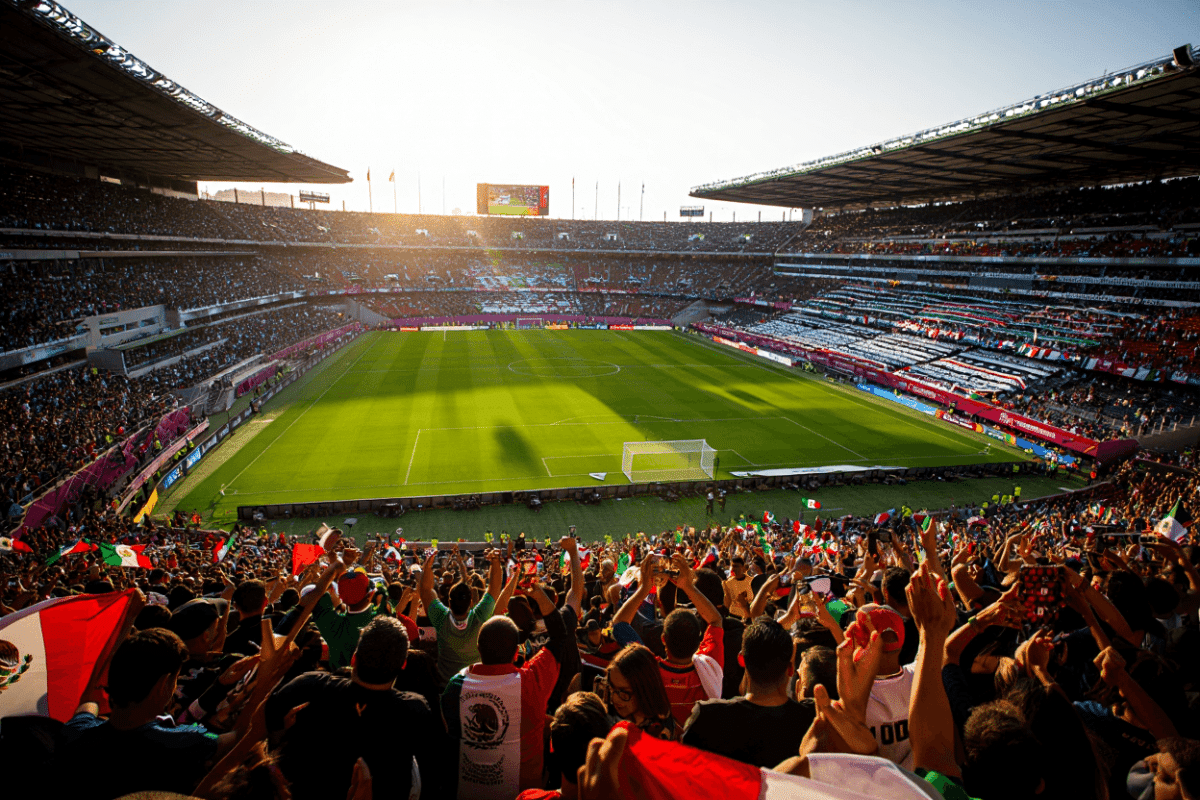
The FIFA World Cup 2026 makes history on June 11 with its largest tournament format ever, as Mexico faces South Africa at the iconic Estadio Azteca in Mexico City. This inaugural match launches the first 48-team World Cup—an unprecedented expansion from the traditional 32-team format—featuring 104 matches across 16 stadiums in three host nations. The tournament runs through July 19, with matches staged in 11 U.S. cities, three Mexican venues, and two Canadian locations.
🔥 Quick Facts
- June 11, 2026 — Tournament begins with Mexico vs. South Africa at Estadio Azteca
- 48 teams divided into 12 groups of four, marking first expansion beyond 32
- 104 total matches across 16 host cities in USA, Canada, and Mexico
- July 19, 2026 — Final match at MetLife Stadium in New Jersey
- 32 teams qualify for knockout round from group stage
Historic Tournament Format: Why 48 Teams Changes Everything
The 2026 World Cup represents the biggest structural shift in tournament history. For 80 years, FIFA maintained either 16 or 32-team formats. This edition introduces 12 groups of four teams, replacing the traditional eight groups of four. Each team plays three group-stage matches, identical to previous tournaments, but the expanded field means an additional 16 nations compete. The format guarantees more competitive matches early in the tournament and increases qualification opportunities for historically underrepresented regions.
This expansion reflects FIFA’s strategic shift toward global inclusivity. According to the governing body, the 48-team model democratizes participation, allowing emerging football nations to compete alongside traditional powerhouses. The Group A slot features Mexico, South Africa, Korea Republic, and Czechia—a mix that showcases this philosophy in action.
The North American Triple-Host Model and Stadium Strategy
For the first time in World Cup history, three nations jointly host the tournament. The United States provides 11 stadiums across cities including Los Angeles, New York/New Jersey, Dallas, Atlanta, and Seattle. Mexico contributes three venues: the iconic Estadio Azteca (hosting the opening match), Estadio Guadalajara, and another Mexico City location. Canada rounds out the hosts with two venues in Toronto and Vancouver.
The 16-stadium footprint spans approximately 2,000 miles across North America, requiring unprecedented logistics. 39 of the 48 teams will establish training bases in the United States, while teams from South America and Africa have training facilities confirmed in Mexico and Canada. This distribution requires coordinated travel itineraries and creates unique home-field advantages for teams stationed near their group matches.
Tournament Structure and Qualification Path Explainer
Understanding the 2026 format is crucial for following the action. Groups are seeded strategically: Canada, Mexico, and the United States occupy top seeds given their host-nation advantage. The top two teams in each group automatically advance to the Round of 32 (knockout stage), but FIFA implemented a critical tiebreaker rule: the eight best third-place teams also qualify. This rule ensures 48 teams total reach the knockout phase—a significant change from the 32-team format, where only 16 teams competed in knockouts.
| Tournament Component | Details |
| Total Teams | 48 (16 increase from 32-team format) |
| Group Stage Format | 12 groups of 4 teams each |
| Matches Per Team (Group) | 3 matches (round-robin) |
| Total Group Matches | 36 matches across all groups |
| Knockout Qualification | Top 2 per group + 8 best 3rd-place teams = 32 teams |
| Knockout Matches | Round of 32 through Final = 68 matches |
| Tournament Dates | June 11 — July 19, 2026 (39 days) |
| Final Venue | MetLife Stadium, East Rutherford, NJ |
“For the first time in FIFA World Cup history, a new benchmark will be set as three spectacular opening ceremonies unfold across Mexico City (June 11), Toronto and Los Angeles (June 12), as Canada, Mexico and the United States come together to launch the greatest show on earth.”
— FIFA Official Statement, May 2026
What the Expanded Field Means for Competition and Viewership
The 48-team expansion fundamentally alters competitive dynamics. In the 32-team era, 16 nations were locked into knockout play; now 32 teams reach this stage, creating more diverse matchups and fewer guaranteed upsets. Teams ranked outside the top 20 globally gain realistic qualification pathways. For U.S. fans, this expansion increases American national team participation in knockout rounds and potentially extends group-stage stakes. The USA faces Paraguay, Australia, and Panama in Group D, with matches distributed across June 12-22 across multiple U.S. venues.
Broadcasters see opportunity in expanded viewership. Groups featuring underdogs generate compelling narratives. The eight best third-place teams tiebreaker creates dramatic final-day group-stage finishes, as teams mathematically eliminated can still qualify via this route. This rule pushes marginal teams to play aggressively even after elimination from direct advancement paths.
Opening Schedule and Stadium Legacy: Estadio Azteca Makes History
The Estadio Azteca becomes the first stadium globally to host three FIFA World Cup opening matches—previously in 1970 and 1986. This achievement underscores Mexico’s central role in football and the venue’s architectural and cultural significance. The stadium, built in 1966, has hosted major international events and maintains Olympic-standard facilities with 87,523 capacity.
For U.S.-based fans, eight kickoff times span ET and PT zones. The Mexico vs. South Africa match at Estadio Azteca begins at 3:00 PM ET / 12:00 PM PT, allowing afternoon American viewership. The USA’s opening match vs. Paraguay follows on June 12 at SoFi Stadium in Los Angeles, California, demonstrating FIFA’s strategy to concentrate early matches in prime U.S. timezones to maximize television audiences.
Will the 48-Team Format Prove Competitive or Dilute Play?
Critics argue that expanding to 48 teams risks creating non-competitive group-stage matches where winners are determined before kickoff. FIFA statisticians counter that mathematically, a third-place team can still qualify, forcing weaker teams to play attacking football. The eight team cutoff is narrow enough that a strong third-place finish requires at least one win or multiple draws. This creates strategic calculus where defensive tactics offer no advancement guarantee.
The format succeeds or fails based on quality of play in Group A through Group L. Host nations Canada, Mexico, and USA enjoy home-field advantage, but international broadcasters will scrutinize whether lesser-ranked teams stay competitive. Early group matches will signal whether the 48-team model maintains match quality or produces predictable outcomes and one-sided scorelines.
Sources
- FIFA Official — Tournament format, opening match details, host cities, and stadium information
- Yahoo Sports — 2026 World Cup schedule, qualified teams, group assignments, and match dates
- ESPN — Format structure, tournament tiebreakers, and knockout-stage qualification rules
- USA Soccer — USMNT fixture schedule, USA team grouping, and opening ceremony information