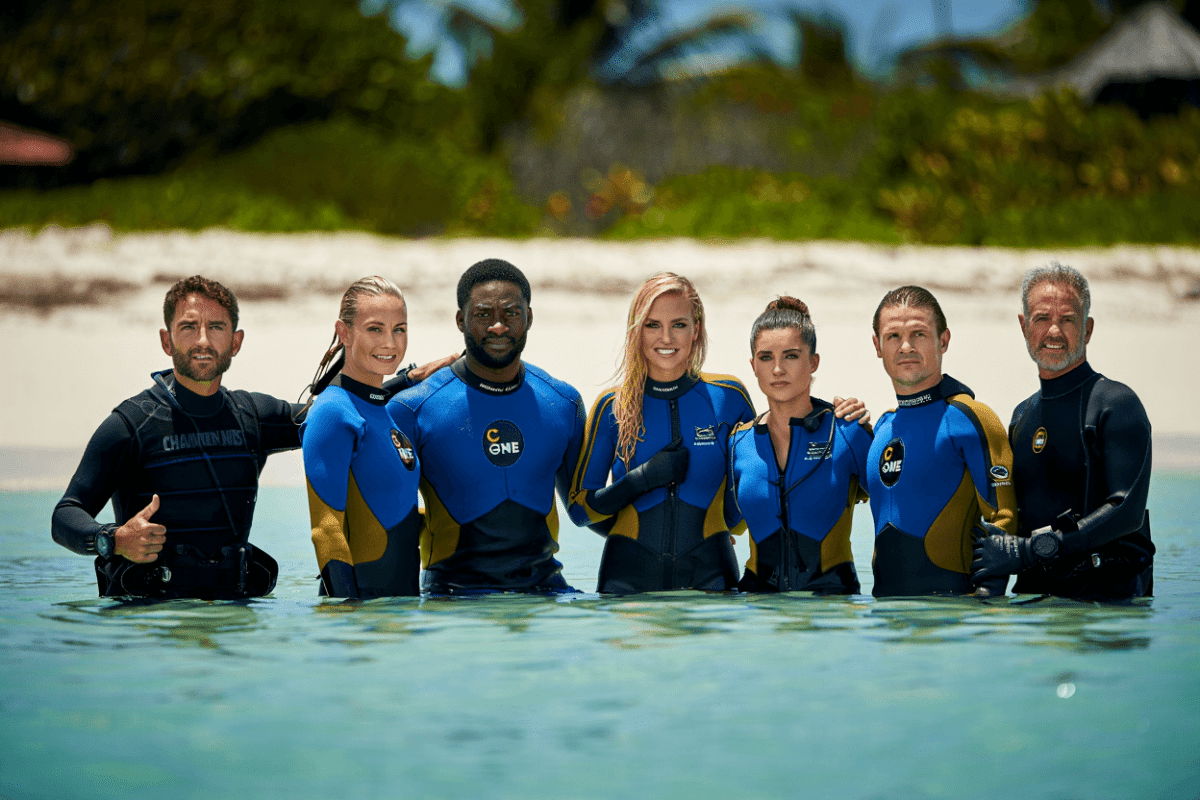
Channel 9 premieres Shark, a high-octane reality series, this Sunday, May 31, 2026, at 7:00 PM with six Australian celebrities venturing into the crystal-clear waters of the Bahamas to face their greatest fears. The production takes place in Bimini, home to approximately 40 shark species, where participants encounter some of nature’s most formidable predators, including bull sharks, hammerhead sharks, and tiger sharks. Guided by shark expert Paul de Gelder—a conservation advocate who survived a bull shark attack—and shark researcher Annie Guttridge, the celebrities undergo an immersive educational experience designed to transform public perception of these animals.
🔥 Quick Facts
- Premiere: May 31, 2026 at 7:00 PM on Channel 9 and 9Now
- Location: Bimini, Bahamas—home to 40 shark species
- Six celebrities paired with world-renowned shark experts
- Scheduled weekly episodes following premiere night
- New event series format, never attempted before on Australian television
A Groundbreaking Format for Australian Reality Television
Shark represents a bold departure from conventional celebrity reality television. Rather than isolating contestants in manufactured scenarios, the series places six high-profile Australians—each with their own documented fears—directly into natural shark habitats. The Bahamas location was deliberately chosen for its ecological significance; Bimini ranks among the world’s most biodiverse shark environments, with documented populations of bull sharks, hammerheads, tiger sharks, reef sharks, and nurse sharks. This setting creates authentic circumstances where celebrity participants must genuinely confront primal human fear—a core premise that distinguishes the program from theatrical competitions.
The series builds on recent entertainment trends toward immersive celebrity experiences, though with a conservation-focused narrative. The show explicitly aims to reshape how Australians perceive sharks, positioning these apex predators not as monsters but as complex organisms within fragile marine ecosystems.
The Celebrity Cast: Olympics to Entertainment
Ariarne Titmus headlines the lineup as the four-time Olympic gold medalist from Tokyo and Paris, bringing elite athletic credentials to the challenge. Despite dominance in aquatic environments, Titmus has publicly acknowledged her shark anxieties. She joins fitness influencer and entrepreneur Tammy Hembrow, whose social media following exceeds 15 million followers. Television personality Scott Cam brings decades of on-screen experience as a media veteran, while Lynne McGranger—best known for her three-decade tenure in Home and Away—recently won a Logie Award, Australia’s highest television honor. The cast rounds out with rugby league legend Sam Thaiday, whose 22-year NRL career included multiple championship victories, and acclaimed actor Matt Nable, recognized for roles in international productions.
This demographic mix—spanning professional athletes, entertainment veterans, and digital influencers—ensures varied emotional responses and narrative tension. Each participant enters with distinct expertise in their respective fields but shares a common vulnerability when facing apex predators in their natural domain.
Expert Leadership: Changing Shark Narratives
The series’ success hinges significantly on Paul de Gelder and Annie Guttridge, positioned not as entertainment hosts but as conservation educators. De Gelder‘s credibility stems from his extraordinary personal history: in 2009, while on a counter-terrorism Navy operation in Sydney Harbour, a bull shark attacked him in murky waters, resulting in the loss of his hand and leg. Despite this traumatic incident, de Gelder became an international shark conservation advocate, regularly appearing on Discovery Channel’s Shark Week and producing multiple documentaries focused on protecting marine species. His memoir, Uncaged, chronicles his journey from survivor to champion of shark education.
Annie Guttridge contributes scientific authority as a shark researcher and photographer with published studies on shark behavior and jaw mechanics. Together, they model a philosophy central to the show: understanding sharks requires direct engagement, not avoidance. This expert-driven narrative approach mirrors recent entertainment successes that emphasize factual learning within compelling storytelling frameworks.
Schedule and Episode Structure
| Detail | Information |
| Premiere Date | Sunday, May 31, 2026 |
| Premiere Time | 7:00 PM ET / 4:00 PM PT |
| Broadcast Platforms | Channel 9 and 9Now (streaming) |
| Subsequent Episodes | Monday at 7:30 PM on Channel 9 |
| Format | Weekly event series |
| Filming Location | Bimini, Bahamas |
| Total Shark Species | Approximately 40 species in region |
The premiere episode airs Sunday evening, with subsequent episodes continuing on Monday nights at 7:30 PM, establishing a predictable viewing schedule. 9Now provides on-demand streaming access, allowing viewers to watch at their convenience and positioning the series for both traditional television audiences and digital viewers. This dual-platform strategy reflects Channel 9’s commitment to securing viewership across demographics while competing with streaming services.
Conservation Mission: Beyond Entertainment
Shark distinguishes itself through an explicit conservation advocacy angle. Public perception of sharks remains profoundly shaped by Jaws and sensationalized media coverage, with many Australians viewing these animals primarily as threats rather than ecological necessities. Research consistently demonstrates that sharks maintain ocean ecosystem balance by regulating fish populations and removing weak or diseased specimens. The series aims to counterbalance decades of negative cultural narratives by showcasing the scientific reality: unprovoked shark attacks remain statistically rare, with fewer than 100 incidents globally annually, while humans kill an estimated 100 million sharks per year.
By pairing celebrity vulnerability with expert guidance, Shark creates a framework where fear transitions into understanding. Participants are not positioned as warriors conquering apex predators but as learners gaining perspective on organisms essential to marine conservation. This narrative approach carries implications beyond entertainment, potentially influencing policy discussions around shark protection in Australian waters.
“Australians have a deep, complicated relationship with sharks. People wouldn’t believe what we’re doing here. This is raw, it’s real and it’s going to be life-changing for everyone involved.”
— Paul de Gelder, Shark Expert and Series Host
What This Premiere Means for Australian Television
The arrival of Shark signals Channel 9’s strategic pivot toward event-driven programming designed to generate water-cooler conversation and social media engagement. The network faces intensifying competition from streaming services and global content providers, requiring increasingly distinctive local content with high production values and emotional stakes. By investing in a series that combines celebrity vulnerability, authentic danger, and educational substance, Channel 9 positions itself as capable of producing television that rivals international productions while maintaining cultural relevance to Australian audiences.
The dual-night premiere structure (Sunday night followed by Monday continuation) represents a deliberate ratings strategy. Sunday slots attract family audiences with traditional television habits, while Monday scheduling captures viewers who plan their week around anticipated television moments. This approach has historically proven successful for major event series, creating sustained conversation cycles that extend viewing reach beyond initial broadcast nights.
Will Shark Succeed in Reshaping Perceptions?
The ultimate measure of success extends beyond ratings and audience engagement. If Shark meaningfully influences how Australian viewers perceive sharks—shifting fear-based narratives toward conservation-focused understanding—it will have accomplished what few entertainment programs attempt: genuine attitude change on a societal scale. The selection of Paul de Gelder as primary host proves symbolically crucial; his personal journey from shark attack victim to shark advocate demonstrates that fear and respect need not be incompatible with environmental stewardship.
Whether the series achieves cultural impact depends partly on execution—how authentically the celebrity participants engage with their anxieties—and partly on audience receptiveness. Early promotional materials suggest the show avoids sensationalism in favor of genuine exploration, positioning participants not as entertainment objects but as humans confronting real fear within controlled educational environments. This tonality stands in stark contrast to clickbait-driven reality television, suggesting Channel 9 recognized that sustainable audience investment requires earning genuine emotional investment rather than exploiting novelty.
Sources
- Channel 9 Official — Premiere date, time, and platform information
- Nine for Brands Media Release — Cast announcement and production details
- Mediaweek Australia — Celebrity cast verification and series information
- Paul de Gelder — Shark expert credentials and conservation background
- Annie Guttridge — Researcher expertise and professional credentials