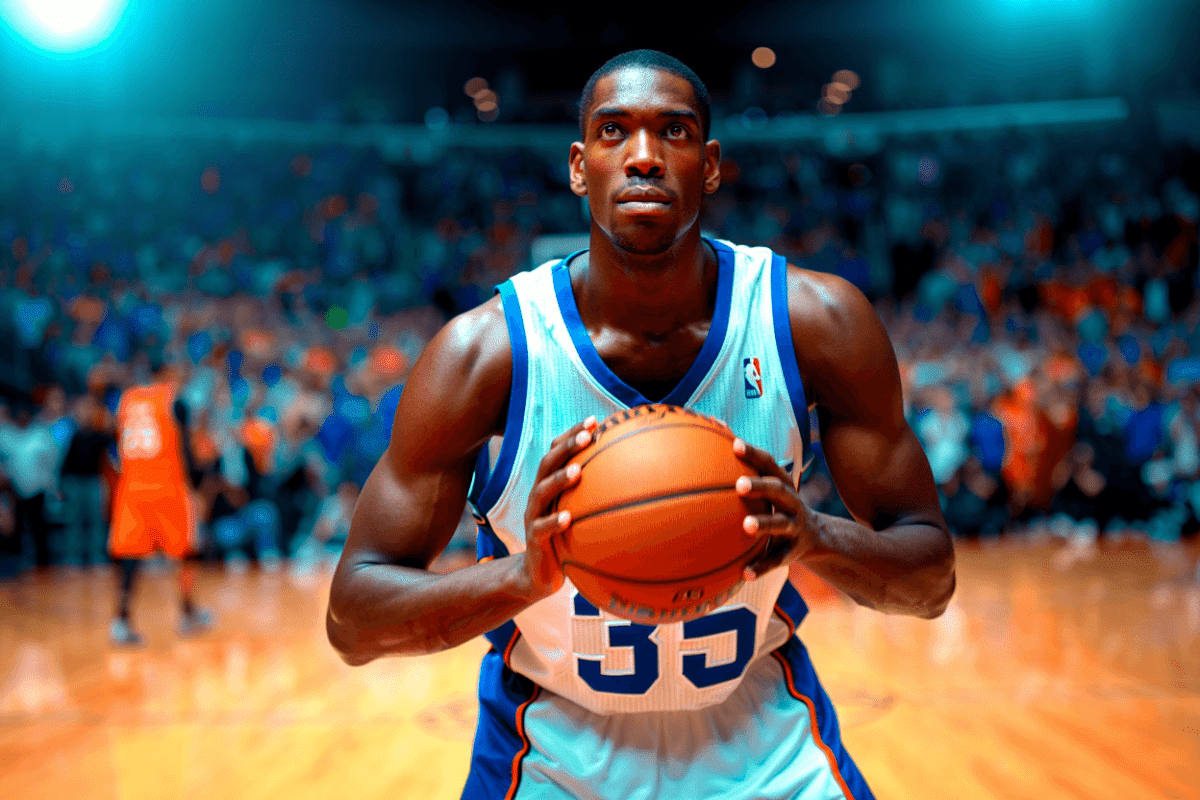
Oklahoma City Thunder defeated the San Antonio Spurs 127-114 in Game 5 of the Western Conference Finals on May 26, 2026, claiming a 3-2 series lead and one victory away from returning to the NBA Finals. Shai Gilgeous-Alexander orchestrated the victory with 32 points and 9 assists, while bench depth proved decisive with Alex Caruso recording 22 points. The Thunder’s balanced offensive attack showcased the depth that separates contenders from pretenders in championship-level basketball.
🔥 Quick Facts
- Thunder win 127-114 to lead series 3-2 in Western Conference Finals
- Shai Gilgeous-Alexander notches 32 points, 9 assists on efficient shooting
- Alex Caruso contributes 22 points as Thunder bench outscores Spurs role players
- Victor Wembanyama held to season-low 20 points by Thunder defensive pressure
- Winner of Game 5 takes series 76.4% of the time when tied 2-2
Thunder Shake Off Game 4 Letdown with Dominant Win
After their worst offensive performance since 2021, when they scored just 82 points in Game 4, the Thunder returned to their elite form that earned them the number one seed. Oklahoma City demonstrated why regular season excellence translates to playoff success, establishing a 15-point lead by halftime and managing the Spurs’ comeback attempts throughout the second half. The Thunder’s recovery from Game 4’s dud revealed championship-caliber resilience, where adjustments and accountability drive urgent corrections rather than panic or doubt.
The Thunder connected on 44% from three-point range in the decisive game, far exceeding the Spurs’ 32% efficiency from deep. This perimeter advantage proved insurmountable, as San Antonio’s defensive scheme that suffocated OKC in Game 4 fell apart under the weight of consistent three-point shooting. Gilgeous-Alexander’s 7-for-19 overall shooting, combined with his perfect 16-for-17 free throw accuracy, demonstrated the efficiency that defines his evolution as a playoff performer capable of carrying teams through championship runs.
Wembanyama Faces First Real Offensive Struggle in Series
Victor Wembanyama posted his lowest scoring output of the series at 20 points, a stark departure from the dominant performances that earned him Game 4 MVP honors with 33 points on 11-for-22 shooting. The Thunder’s defensive approach, utilizing a combination of physical perimeter defense and shot-contest timing, prevented Wembanyama from establishing early rhythm. While still contributing 8 rebounds and defensive intensity, the seven-footer struggled to impose his will offensively, validating Oklahoma City’s strategic defensive adjustments focused on disrupting San Antonio’s primary scorer.
This performance illustrated a critical playoff truth: elite defenders can contain even generational talents through disciplined, high-energy schemes executed with five-man commitment. The Spurs’ inability to generate sufficient scoring from supplementary options meant Wembanyama’s quiet night proved devastating. San Antonio’s bench unit combined for just 12 points compared to Oklahoma City’s 38 bench points, exposing the depth disparity that increasingly favors the Western Conference number one seed.
Bench Production Differential Determines Game Outcome
| Stat Category | Thunder | Spurs |
| Bench Scoring | 38 points | 12 points |
| Three-Point FG% | 44% | 32% |
| Free Throw Rate | High (44 FTA attempts) | Moderate (28 FTA attempts) |
| Starting Lineup Points | 89 points | 102 points |
| Series Position | 3-2 (one win to Finals) | 2-3 (facing elimination) |
The 26-point bench scoring advantage represents the most decisive statistical indicator of Game 5’s outcome. Alex Caruso (22 points), Isaiah Joe, and role players off San Antonio’s bench failed to generate meaningful contributions, leaving Wembanyama isolated in carrying offensive burdens. This dynamic mirrors playoff history where balanced scoring—particularly from bench units supporting star players—separates conference champions from early exits.
Oklahoma City’s rotation depth, emphasizing perimeter shooting and ball movement, has consistently outpaced San Antonio’s more traditional approach. The Thunder ranked 2nd in offensive efficiency during the regular season, and Game 5 reaffirmed why depth, versatility, and three-point shooting comprise essential championship components in modern basketball.
“When we’re locked in defensively and making threes, we’re difficult to beat. San Antonio is a great team, but Game 5 showed our identity when everything clicks. We have one goal: close this out at home and get back to the Finals.”
— Shai Gilgeous-Alexander, Oklahoma City Thunder Guard
Thunder One Win From NBA Finals Return
With the series now 3-2 in Oklahoma City’s favor, the Thunder control their destiny. Playoff statistics indicate that the Game 5 winner in a 2-2 series holds a 76.4% probability of ultimately winning the series, a meaningful advantage but one San Antonio can overcome if they execute championship-level basketball in Game 6. The Spurs have historically thrived in elimination scenarios, earning five titles since 1999 by demonstrating poise under ultimate pressure.
The Thunder’s return to the NBA Finals for the first time since 2019 represents validation of their organizational direction emphasizing young talent development and strategic roster construction. Gilgeous-Alexander, Jalen Williams, and emerging players like Chet Holmgren provide OKC with a championship core positioned for sustained contention rather than one-year windows. A Finals appearance would mark the culmination of careful building strategically executed over multiple seasons.
What Game 6 Means for San Antonio’s Championship Window
The Spurs face an elimination game on their home floor in San Antonio, a scenario where they typically demonstrate maximum competitiveness and defensive intensity. Gregg Popovich’s teams have historically transformed desperate situations into victories through veteran poise, defensive adjustments, and momentum swings powered by bench contributions. However, Wembanyama’s quiet Game 5 performance raises questions about whether primary offensive weapons can generate adequate scoring against elite defensive schemes.
San Antonio’s path to Game 7 requires Wembanyama reasserting offensive dominance, bench players contributing proportionally, and three-point shooting returning to Game 4 levels. The Spurs cannot afford another game where their role players combine for minimal production. If Oklahoma City wins Game 6, the Thunder advance to the Finals seeking their first championship since 2012.
Does Jared McCain’s Role Expand in Finals Push?
As the Thunder prepare for a potential Finals appearance, questions emerge regarding the depth rotation beyond established stars. Young depth players face opportunities to contribute meaningful minutes in championship-level basketball, where experience through high-stakes competition accelerates development. Game 6 will determine whether Oklahoma City’s depth proves sufficient against San Antonio’s veteran experience or whether emerging talent needs refinement through future playoff runs.
Sources
- ESPN — Game 5 box score and statistical analysis
- NBA.com — Official playoff game data and series standings
- Yahoo Sports — Post-game coverage and player statistics
- CBS Sports — Series analysis and statistical comparisons
- The Oklahoman — Local reporting on Thunder performance