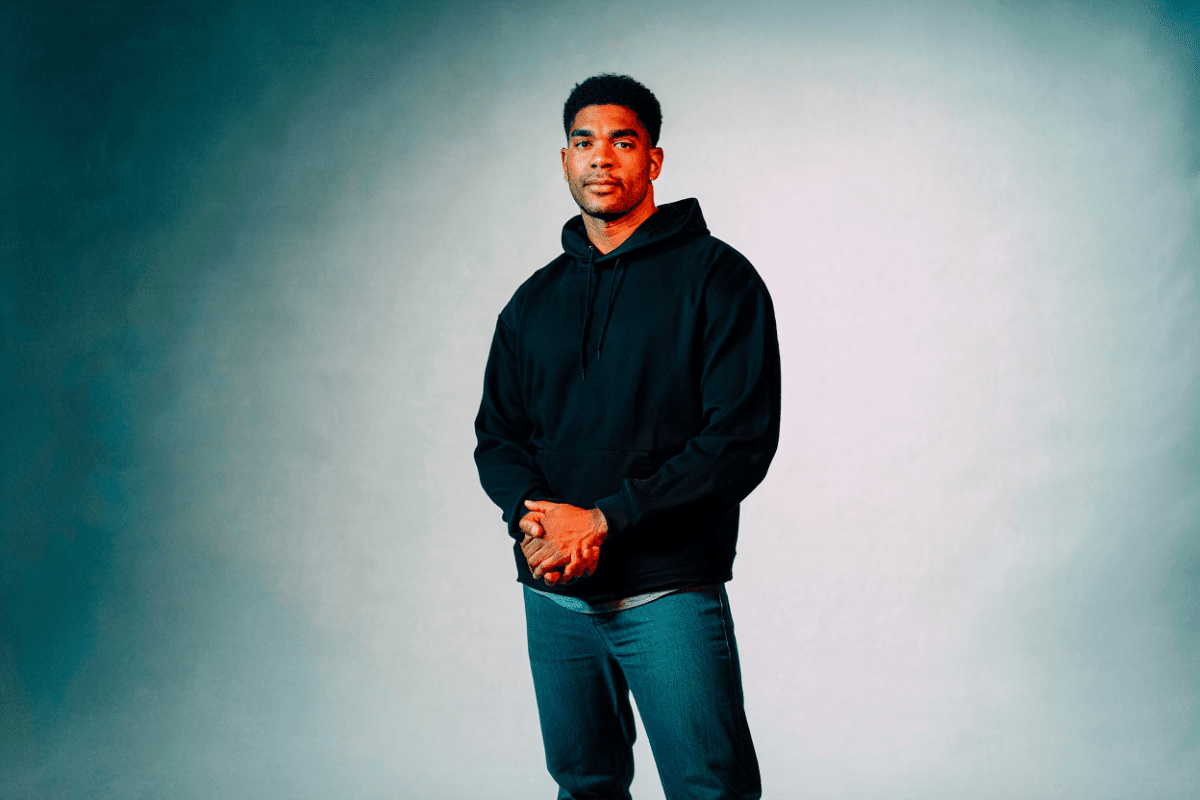
Vince Staples returns after a two-year hiatus with “Cry Baby,” his sixth studio album arriving June 5, 2026. The Long Beach rapper has announced the full rollout with lead single “Blackberry Marmalade” (released April 28) and now second single “White Flag” (May 26), signaling his first fully independent project under Loma Vista Recordings. With 10 tracks and a two-year gap since his 2024 album “Dark Times,” this release marks a significant creative shift for the artist known for blending social commentary with genre-bending production.
🔥 Quick Facts
- Album drops June 5, 2026 exclusively via Loma Vista Recordings
- First lead single “Blackberry Marmalade” released April 28 across streaming platforms
- Second single “White Flag” emerged May 26, 2026
- 10-song project marks Vince’s first fully independent endeavor
- Vinyl and CD pre-orders available on vincestaples.co
Two Years After “Dark Times” — What the Hiatus Reveals
Vince Staples last released a full-length album on May 24, 2024 with “Dark Times,” a 13-track project via Def Jam Recordings that featured songs like “Close Your Eyes and Swing.” The two-year creative pause between that major-label release and “Cry Baby” signals not complacency, but strategic recalibration. In hip-hop, hiatuses often precede watershed moments—artists use the time to evolve their sound, reassess their message, and reposition within the industry. For Staples, the move from Def Jam (where he released “Dark Times” and the earlier “Ramona Park Broke My Heart” in April 2022) to independent status via Loma Vista represents a tactical independence play. This mirrors trends in the industry where established artists increasingly leverage direct-to-fan models and creative control over traditional label structures.
The lead single “Blackberry Marmalade” arrived with minimal advance warning, dropping April 25-28, 2026 across all platforms. Second single “White Flag,” released May 26, arrived with a visual medium comparable to the cinematic approach other touring artists adopt before major releases. This staggered two-single strategy (spaced roughly four weeks apart) is standard for album rollouts but demonstrates Staples’ methodical approach to market penetration without oversaturation.
“Blackberry Marmalade” and “White Flag” — Sonic Direction
The “Blackberry Marmalade” lead single establishes the tonal foundation. Tracking descriptions from initial coverage position it as exploring punk rock-emulating production aesthetics, a sonic departure that suggests Staples is pushing beyond the trap-influenced instrumentals and boom-bap that defined much of his prior work. This experimental direction aligns with his 2017 album “Big Fish Theory,” widely regarded as his most genre-fluid effort, which paired synth-heavy electronic production with rapid-fire, dissociative lyricism. The jump to punk-influenced textures on “Blackberry Marmalade” signals continued genre boundary-testing, something critics have consistently celebrated as Staples’ strength across his six-album career.
“White Flag,” the second transmission, arrived with official video content, suggesting label investment in visual storytelling. The single’s title invokes surrender and division—thematic material consistent with Staples’ long-standing focus on societal fracture, identity politics, and personal resilience. His 2015 debut “Summertime ’06” established him as a lyricist willing to confront institutional racism and street economics; “White Flag” appears to continue this lineage while possibly introducing new thematic territory. No confirmed feature artists have been announced for either single or the album itself, suggesting a solo-focused project—a rarity in modern hip-hop where collaborative features dominate streaming algorithms.
“Cry Baby” Album Overview — Tracklist & Format
The Album contains exactly 10 songs, per Apple Music and Spotify pre-save pages, though the full tracklist remains partially undisclosed as of May 27, 2026. This is notably shorter than “Dark Times” (13 tracks) and “Ramona Park Broke My Heart” (11 tracks), suggesting a tighter, more focused artistic statement. In the streaming era, album length correlates with listener completion rates—shorter projects often see higher full-play percentages. Staples’ choice to compress the album to 10 songs may reflect both artistic discipline and platform-aware strategy.
| Album Metric | Cry Baby (2026) | Dark Times (2024) | Ramona Park (2022) |
| Total Tracks | 10 | 13 | 11 |
| Label | Loma Vista (Independent) | Def Jam | Def Jam |
| Lead Single | “Blackberry Marmalade” | “Close Your Eyes and Swing” | “Sunroof” |
| Release Date | June 5, 2026 | May 24, 2024 | April 8, 2022 |
| Gap from prior album | 24 months | 24 months | 36 months |
The 10-track structure is notably economical by modern standards, where bloated tracklists (15–20 songs) are standard. This compression suggests curated artistic intent: every track likely serves thematic purpose. Confirmed songs include “Blackberry Marmalade” (track 1 or lead position) and “White Flag,” with the remaining eight titles still under embargo until release.
Independence Strategy — What First Independent Album Means
The characterization of “Cry Baby” as Staples’ first independent project is significant. Despite his strong artistic identity, Staples has spent his career under major-label infrastructure: initially gaining recognition through Odd Future connections (2011–2014), then signing with Def Jam for his three most recent albums. Independence doesn’t necessarily mean self-funded in the modern era—Loma Vista Recordings is technically an imprint of Concord Label Group, a rights management and distribution entity. However, the structural shift signals creative autonomy in recording, mixing, mastering, and marketing decisions typically gatekept by major labels.
For a rapper of Staples’ tier (chart success, critical credibility, touring revenue), independence offers higher artist net royalty share, faster payment cycles, and creative decision-making without committee approval. The trade-off is reduced promotional spend and reduced chart positioning support—areas where major labels leverage existing relationships with radio, playlist curators, and marketing partnerships. Staples appears comfortable with this exchange, prioritizing artistic control over chart dominance.
“After a two-year hiatus, Vince Staples is back with a new project titled ‘Cry Baby,’ out June 5.”
— The Fader, April 28, 2026
What “Cry Baby” Signals for Hip-Hop’s Sonic Landscape in 2026
The punk-inflected production direction cited in coverage of “Blackberry Marmalade” reflects broader industry trends. By mid-2026, hip-hop has increasingly incorporated punk, rock, and alternative textures—moves popularized by artists like Playboi Carti, Destroy Lonely, and Ken Carson (the “plugg” and “rage beats” movements) but also reaching mainstream consciousness through Lil Uzi Vert and Destroy Lonely collaborations. Staples’ pivot toward this sonic space, even if just on a lead single, aligns him with contemporary producers who reject trap’s 808 hegemony. This positions “Cry Baby” as not merely a personal creative statement but also a strategic entry into the sonic conversation dominating the 2026 hip-hop cycle. His 2017 album “Big Fish Theory” proved he excels at this genre blend; “Cry Baby” appears to refine that template with refinement and 2026-era production sophistication.
The two-single rollout structure also reflects data-driven release strategy. Streaming platforms and radio require approximately 4-6 week between strategic single releases to maintain listener engagement without fatigue—a timing Staples’ April-May release schedule adheres to precisely. This methodical approach, combined with independent label backing, suggests experienced management and A&R guidance despite the “independent” branding.
When Will “Cry Baby” Drop—Countdown to Spotify and Apple Music
June 5, 2026 is confirmed across all official sources: Spotify pre-save pages, Apple Music, Genius.com, and Loma Vista announcements. Time zone implications are standard for global releases—US midnight releases typically occur at 12:01 AM EDT (3:01 AM Pacific), meaning West Coast listeners get access at 12:01 AM PDT. Pre-orders for physical formats (vinyl, CD) are live on vincestaples.co, with shipments scheduled to arrive on or shortly after the release date. Streaming platform pre-saves generate algorithmic favorability, placing the album in recommended playlists and boosting early discovery metrics—an important factor in Spotify’s algorithmic favor system.
Given that the lead single “Blackberry Marmalade” dropped approximately 39 days before the album (April 28 to June 5), and the second single “White Flag” arrived only 9 days before release (May 26 to June 5), Staples’ label appears to be front-loading momentum into the final week. This is a classic release strategy: build anticipation with periodic content drops, then execute a final push in the 7–10 days before launch when listener attention is highest.
Will “Cry Baby” Chart, and Why Chart Positioning Matters Less Than Before
Given Staples’ independent status and reduced promotional infrastructure compared to his Def Jam era, “Cry Baby” may not debut as high on the Billboard 200 or Billboard Hot 100 as prior projects. “Dark Times” (2024) and “Ramona Park Broke My Heart” (2022) both benefited from Def Jam’s marketing machinery and radio promotion relationships. However, the commercial music industry has shifted: streaming-only metrics (playlist adds, listener retention, weekly streaming volume) increasingly matter more than traditional chart positioning for career longevity. Staples likely prioritizes loyal listener growth and critical reception over chart debuts, especially given his independent status and the album’s experimental sonic direction. Press coverage, playlist placement on curated editorial playlists (like Spotify’s “Today’s Top Hits” or “RapCaviar”), and word-of-mouth momentum may determine the album’s cultural impact more than chart numbers.
What’s Next After “Cry Baby”?
Post-release strategy remains unclear, but typical album cycles for hip-hop artists include 3–5 additional singles pulled from the album over the following 6–12 months, paired with touring. Staples’ live reputation is strong—his 2024 festival appearances and touring activity were widely documented. An announcement regarding a “Cry Baby” tour or festival lineup placement (Summer/Fall 2026) would indicate label confidence in the album’s commercial performance. Additionally, Staples’ documented acting work (appearances in “Black Panther,” 2018, and “Creed,” 2015, plus his own show “The Vince Staples Show” which debuted 2024) suggests potential for multimedia rollout or soundtrack involvement.
Is “Cry Baby” a Sign of Staples’ Next Career Chapter?
The combination of independence, sonic experimentation, and a two-year creative pause suggests that “Cry Baby” represents a deliberate artistic reset. Whether this becomes a permanent shift toward indie releases or a one-off project remains uncertain. Historically, established rappers’ independent albums either launch sustained indie careers (Jay-Z’s Roc Nation model) or function as bridge projects before major-label renegotiation (Drake’s OVO Sound approach). Staples’ trajectory will depend on “Cry Baby”‘s commercial reception, critical response from tastemakers, and whether the punk-influenced sound gains traction with his existing fanbase. The fact that he secured Loma Vista (a credible if smaller imprint) rather than staying with Def Jam suggests this is a strategic creative decision rather than a label breakdown—which bodes well for the project’s coherence and focus.
Sources
- Genius.com — Tracklist and release date confirmation
- Spotify — Album pre-save page and official release placeholder
- Apple Music — Album metadata and pre-order information
- The Fader — Announcement coverage (April 28, 2026)
- Hypebeast — Release campaign and single availability (April 27, 2026)
- The Source — Album and single announcement (April 30, 2026)
- Pitchfork — Album rollout and release details (April 28, 2026)