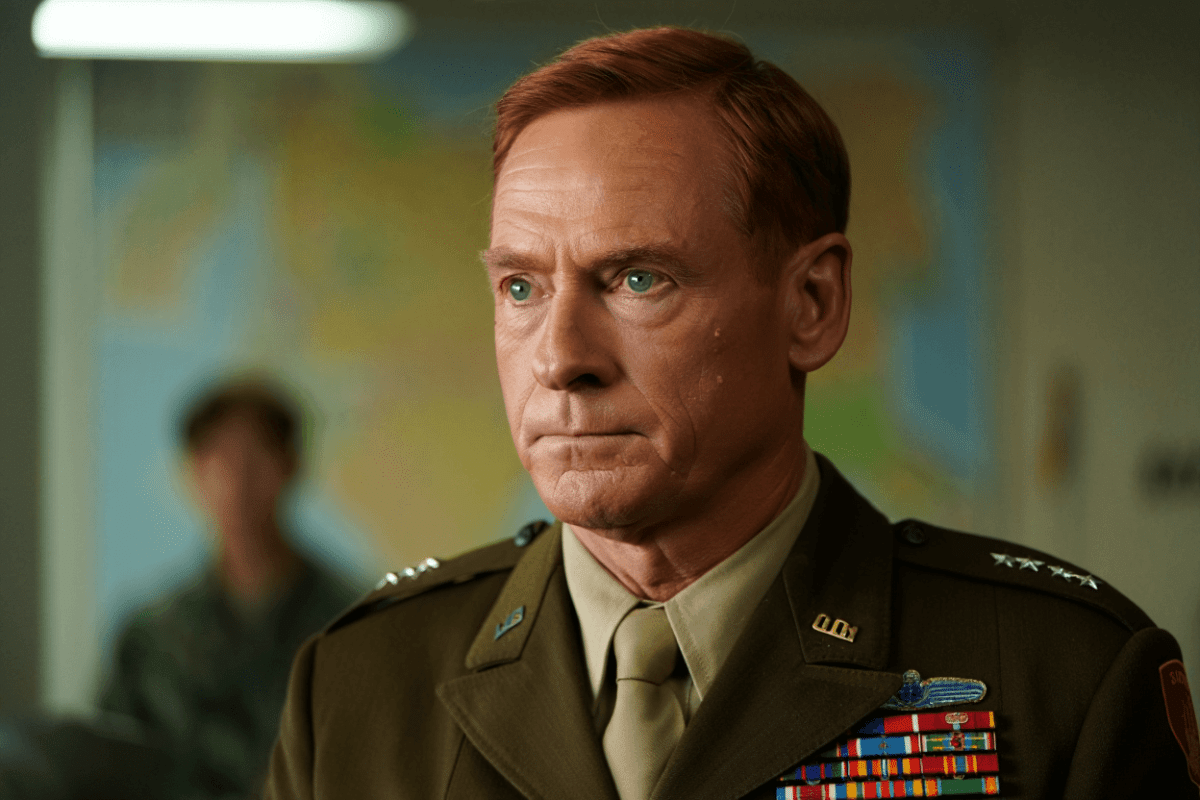
Andrew Scott stars as meteorologist James Stagg in the World War II thriller Pressure, hitting US theaters on May 29, 2026. Alongside Brendan Fraser as General Dwight D. Eisenhower, the film chronicles the critical 72 hours before D-Day when weather forecasts could determine the fate of the invasion. Director Anthony Maras (Hotel Mumbai) delivers a gripping historical thriller centered on the real decision that changed history.
🔥 Quick Facts
- Release Date: May 29, 2026 in the United States
- Cast includes: Andrew Scott, Brendan Fraser, Kerry Condon, Chris Messina, and Damian Lewis
- Runtime: 100 minutes of historical drama-thriller tension
- Director: Anthony Maras, known for 2018’s Hotel Mumbai
- UK Release: September 11, 2026
The Untold Story of D-Day’s Weather Decision
Pressure focuses on Captain James Stagg, the British Royal Air Force meteor officer whose weather forecast determined whether Operation Overlord would proceed on June 6, 1944. The film captures the immense responsibility placed on Stagg’s shoulders against a background of military uncertainty and enormous stakes. Scott’s portrayal brings authenticity to a historical figure whose contribution remains largely unknown outside academic circles. The meteorologist’s expertise proved decisive in one of WWII’s most pivotal moments. Recent entertainment releases have explored untold wartime stories, but Pressure uniquely centers on scientific prediction under wartime pressure.
The 72-hour countdown presented a seemingly impossible choice for Eisenhower: launch the invasion during uncertain weather conditions with potentially catastrophic consequences, or delay and risk military surprise. Stagg’s weather analysis proved crucial in this decision. Director Maras builds intense narrative momentum through this historical pressure cooker, where accuracy in meteorology directly translates to military strategy. The film demonstrates how one man’s expertise shaped the course of twentieth-century history.
An Ensemble Cast Delivers Historical Authenticity
Brendan Fraser assumes the role of General Eisenhower, portraying the Supreme Allied Commander with the gravitas required for this leadership position. Fraser’s performance captures Eisenhower’s burden of command during history’s largest amphibious operation. Kerry Condon plays Captain Kay Summersby, Eisenhower’s personal secretary and driver. Condon brings depth to this supporting role, depicting the women who served in critical support positions during wartime operations. Chris Messina portrays Irving P. Krick, a competing meteorologist whose forecasting methods clash with Stagg’s. Damian Lewis rounds out the cast with significant supporting work.
Director Maras assembled this high-caliber ensemble specifically to capture the human drama underlying historical events. Each actor brings distinct expertise and gravitas to their role. The chemistry between Scott and Fraser generates the central tension: two military figures facing impossible decisions under extreme pressure. Like major television premieres that showcase ensemble talent, Pressure benefits from a carefully curated cast capable of honoring historical figures.
Directorial Vision and Technical Precision
Anthony Maras made his feature directorial debut with Hotel Mumbai (2018), a tense, character-driven thriller depicting the 2008 Mumbai terrorist attacks. That film established Maras’s signature style: meticulous attention to historical detail, tension building through realistic scenarios, and emphasis on human decision-making during crises. Pressure represents his largest-scale project to date, requiring coordination of complex wartime settings, period costumes, and historical accuracy across multiple sequences.
The script was co-written by Maras alongside David Haig, an Olivier Award-winning playwright whose theatrical expertise brings sharp dialogue and dramatic structure to the screenplay. Haig’s background in theatre performance and writing ensures the character-driven elements maintain theatrical intensity throughout the film. This creative partnership combines Maras’s visual storytelling with Haig’s proven ability to craft compelling human drama. The 100-minute runtime suggests a tightly edited narrative focused on the essential 72-hour period.
The Historical Foundation: Weather Forecasting Under Fire
| Key Element | Historical Significance |
| Operation Overlord Launch | June 6, 1944 (D-Day invasion) |
| Deciding Officer | General Dwight D. Eisenhower (Supreme Commander) |
| Meteorologist | Captain James Stagg (advisor to Eisenhower) |
| Critical Decision Window | 72 hours before launch |
| Competing Forecast | Irving Krick’s alternative weather prediction |
| Stakes | 150,000+ Allied troops, operation success |
The film’s central conflict stems from meteorological uncertainty in an era before modern weather satellite technology. Stagg’s forecast methods predicted a temporary break in bad weather, while Krick’s competing analysis suggested continued deterioration. Eisenhower’s decision to trust Stagg’s assessment proved correct. This historical reality provides natural dramatic tension: a single meteorological judgment call determined whether the operation would proceed. The film explores how military leadership must ultimately trust expert analysis when stakes could not be higher.
“History isn’t made in comfort. It’s made under pressure.”
— From the official Pressure film marketing materials
Why This Story Matters Today
The D-Day decision resonates across generations because it demonstrates how expertise, leadership, and calculated risk-taking shape historical outcomes. Stagg’s role as an expert advisor whose analysis directly influenced military strategy remains understated in popular historical narratives. Films like Pressure bring previously overlooked contributors to prominence. The meteorologist’s contribution became so influential that Eisenhower later credited Stagg with making possible the operation’s success. This historical recognition validates the film’s central premise: some of history’s most significant moments depend on individuals whose names rarely appear in mainstream accounts.
The film also explores themes of professional integrity under pressure, military command responsibility, and the weight of expert decision-making during crises. These themes transcend their historical context, speaking to contemporary audiences about leadership and accountability. Maras’s direction emphasizes human drama rather than action spectacle, crafting a character-driven thriller where dialogue and decision-making propel the narrative.
What Sets Pressure Apart From Other WWII Films?
Unlike traditional D-Day narratives that emphasize combat operations and military strategy, Pressure narrows focus to a specific 72-hour window of command-level decision-making. The film prioritizes meteorological expertise and professional tension over battle sequences. Andrew Scott’s casting signals this emphasis on character-driven narrative rather than action heroism. Scott’s acclaimed performances in psychological dramas (Sherlock, Fleabag) demonstrate his capacity to convey internal conflict and intellectual tension. The ensemble supporting cast, including Fraser, Condon, Messina, and Lewis, brings ensemble dramatic weight matched by few contemporary WWII productions.
Many WWII films emphasize tactical combat and ground-level soldier experiences. Pressure instead examines command-level decision-making, the responsibility of expertise, and the human cost of historical choices. This distinctive angle appeals to viewers interested in the intellectual and emotional dimensions of historical events rather than conventional military action. The 100-minute runtime maintains focused narrative momentum on the critical decision period.
Where Can Audiences Experience Pressure This Memorial Day Weekend?
Pressure premiered nationwide across US theaters on May 29, 2026. Advanced showtimes and booking information became available through major ticketing platforms, allowing audiences to plan their theatrical experience. The film’s May 29 release date positions it strategically near Memorial Day weekend, honoring those who served during WWII. UK audiences will have the opportunity to experience the film beginning September 11, 2026, with international releases scheduled across the calendar year.
Director Maras and writer Haig crafted a historically grounded thriller that respects the intelligence of audiences. The film demands engagement with complex historical decisions rather than providing easy answers. Andrew Scott’s lead performance carries viewers through the mounting pressure of the decision period, while Brendan Fraser grounds the narrative in military command responsibility. For audiences seeking character-driven historical drama with contemporary relevance, Pressure offers substantial engagement.