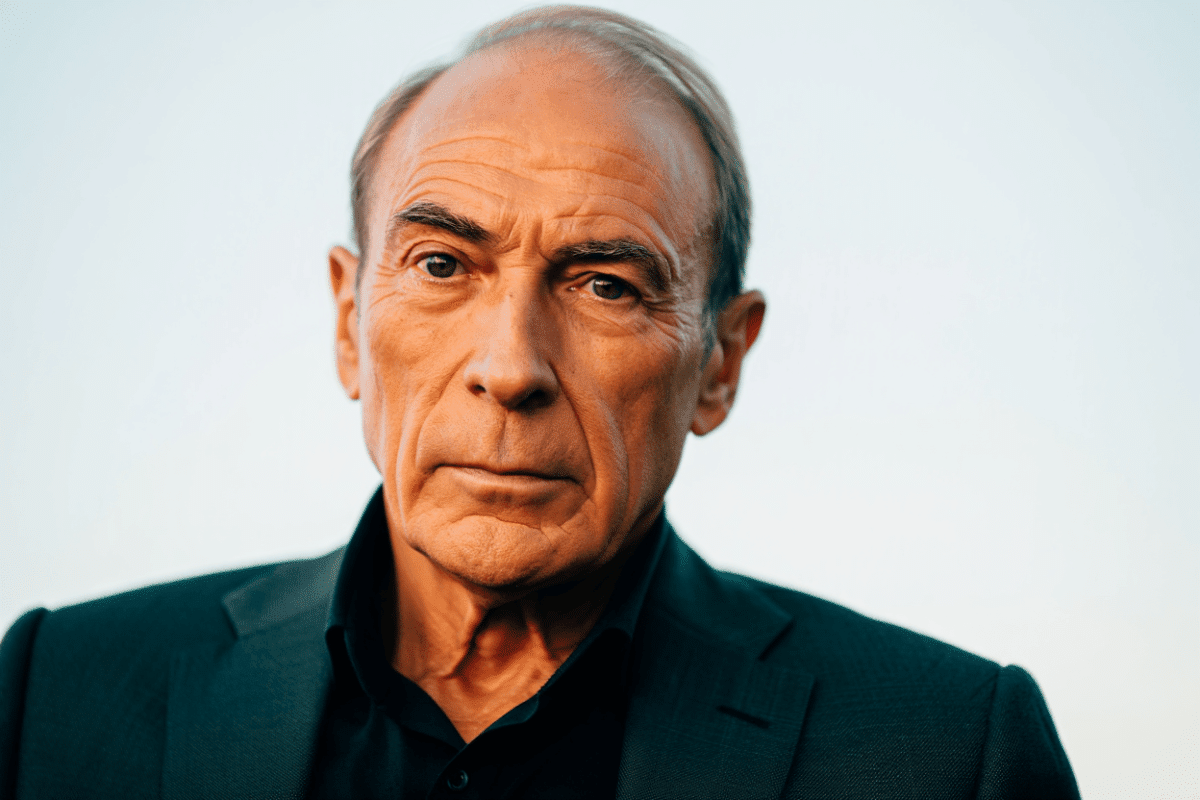
Christopher Walken graces the cover of ICON America magazine, photographed by Charlie Gray, marking a milestone moment for the 82-year-old Oscar-winning actor. As fewer working actors remain from the classic Hollywood era, Walken’s 60+ year career spanning Broadway, film and television stands as a testament to artistic longevity and uncompromising creative choices.
🔥 Quick Facts
- Born March 31, 1943 in Queens, New York — now age 82
- Won Academy Award for Best Supporting Actor for “The Deer Hunter” in 1979
- Acting career spans 60+ years — from child performer in 1950s to present day
- Appeared in 100+ films and television shows across multiple genres and decades
- ICON America cover shoot features photographer Charlie Gray’s signature cinematic portrait style
From Child Performer to Hollywood Icon: A Career Built on Refusal to Conform
Walken’s career trajectory began not in movies, but on stage. He appeared in a sketch with Martin and Lewis on “The Colgate Comedy Hour” which led to a regular role in the 1953 television show “Wonderful John Acton.” Early on, he performed as “Ronnie Walken,” masking his distinctive surname. Trained as a dancer and actor simultaneously, his versatility became his greatest asset — a quality that would differentiate him throughout seven decades of consistent work.
The actor began his theater career under his actual name in 1959 in Archibald MacLeish’s “J.B.” on Broadway. This stage foundation proved crucial. Unlike many actors who transition directly to film at youth, Walken developed interpretive depth and character understanding unavailable to screen-only performers. His classical training, combined with his distinctive Queens accent shaped by multilingual neighbors speaking Greek, Italian, Polish, German, and Yiddish, became his signature — impossible to imitate, impossible to forget.
The Academy Award Win and Artistic Peak: 1978-1980
“The Deer Hunter” (1978) transformed Walken’s career trajectory. Playing Nick Chevotarevich alongside Robert De Niro, Walken delivered a performance of such psychological intensity that it earned him the Academy Award for Best Supporting Actor at the 1979 ceremony. He was 36 years old — neither a young ingénue nor an elder statesman. His victory placed him among cinema’s most respected character actors at a critical moment in American cinema.
What distinguished this period was Walken’s selectivity. The Academy recognized not a prolific commercial actor, but an artist who chose specific, challenging roles — often in films that challenged conventional Hollywood storytelling. His Oscar win validated a career philosophy that rejected easy stardom in favor of artistic integrity and character authenticity.
Career Statistics: The Measure of Longevity
Few actors working in 2026 maintain continuous careers spanning back to the 1950s. Walken’s filmography demonstrates both consistency and quality across multiple genres:
| Career Metric | Record |
| Films and TV Credits | 100+ productions |
| Career Span | 1950s-present (70+ years of continuous work) |
| Academy Awards | 1 win (Best Supporting Actor, 1979) |
| Golden Globe Awards | Multiple wins including for “The Deer Hunter” |
| BAFTA Awards | 2 awards |
| Emmy Award | 1 award for television performance |
| Notable Decade Peaks | 1970s-80s mainstream; 1990s cult classics; 2000s-2020s character work |
His longevity stems from refusal to conform. Rather than chasing era-defining roles exclusively, Walken adapted to changing cinema while maintaining artistic standards. He appeared in mainstream Hollywood productions (“Catch Me If You Can,” 2002), genre films (“The Prophecy” trilogy), comedies, and independent features — never limiting himself to a single category or audience expectation.
The Distinctive Voice and Physical Presence: Brand Without Calculation
“The neighborhood itself, you didn’t hear a lot of English. Lots of Greek, Italian, Polish, German, Yiddish. I think I grew up listening to people who spoke English in a kind of broken way. That unique palate shaped my whole approach to language and rhythm.”
— Christopher Walken, on his distinctive speech patterns and Queens upbringing
Walken’s accent and cadence are not affectations — they’re products of genuine childhood experience. This authenticity separates his work from imitation. His deliberate pauses, unusual stresses on syllables, and measured delivery appear in nearly every role, yet audiences accept them because they feel inevitable to character. He didn’t calculate a “brand.” Instead, his distinctive qualities became indispensable to his mystique.
Few contemporary actors possess this kind of inimitable presence. Walken’s physicality matches his vocal uniqueness. His movement is angular, economical, often balletic — a product of his early dancer training. Watching him cross a room becomes cinema. This physical command attracted major directors across decades who understood that Walken brought architectural precision to every frame.
What Walken’s Longevity Reveals About Artistic Survival in Entertainment
In an industry obsessed with youth and trend-chasing, Walken’s 60+ year career offers lessons for contemporary performers. His success proves that distinctiveness defeats obsolescence. He never tried to become anyone else. He never pursued roles designed to keep him “young” or “relevant.” Instead, he deepened his craft with each decade.
The ICON America magazine cover in spring 2026 represents validation of a principle that becomes rarer: an actor valued for his complete artistic package — voice, movement, intelligence, willingness to take risks. At 82 years old, when most careers have concluded, Walken remains actively engaged in significant projects. This isn’t a retrospective honor. This is contemporary recognition of an artist who never stopped evolving.
His presence across film, television, and theater — rarely seen in a single career anymore — demonstrates that true longevity comes from field-agnostic commitment to the craft itself. Broadway, Hollywood, television projects: Walken never privileged one over the other. Each medium received his full artistic investment.
Why This ICON Cover Moment Matters Now
Magazine covers of aging actors risk becoming sentimentality. Yet Walken’s placement on ICON proves different. The publication acknowledges not a historical figure, but an active creative force whose aesthetic influence shapes contemporary cinema. Directors from 2020-2026 still cast him because his uniqueness remains irreplaceable. No one replaces Walken. You cast him when you need his specific genius.
What distinguishes his legacy from other Oscar-winning actors of his generation is this: he sustained relevance not by reinvention, but by deepening originality. Each decade saw new interpretations of the same essential Walken qualities — the voice, the stillness, the psychological complexity. Like a jazz musician perfecting his improvisations, Walken refined his instrument across 60+ years.
The entertainment industry increasingly measures success by trending moments and viral peaks. Walken’s career predates that metric entirely. His success demonstrates that cultural staying power — being essential to cinema itself — outlasts any trend or franchise. He became an institution by refusing to chase institutions.