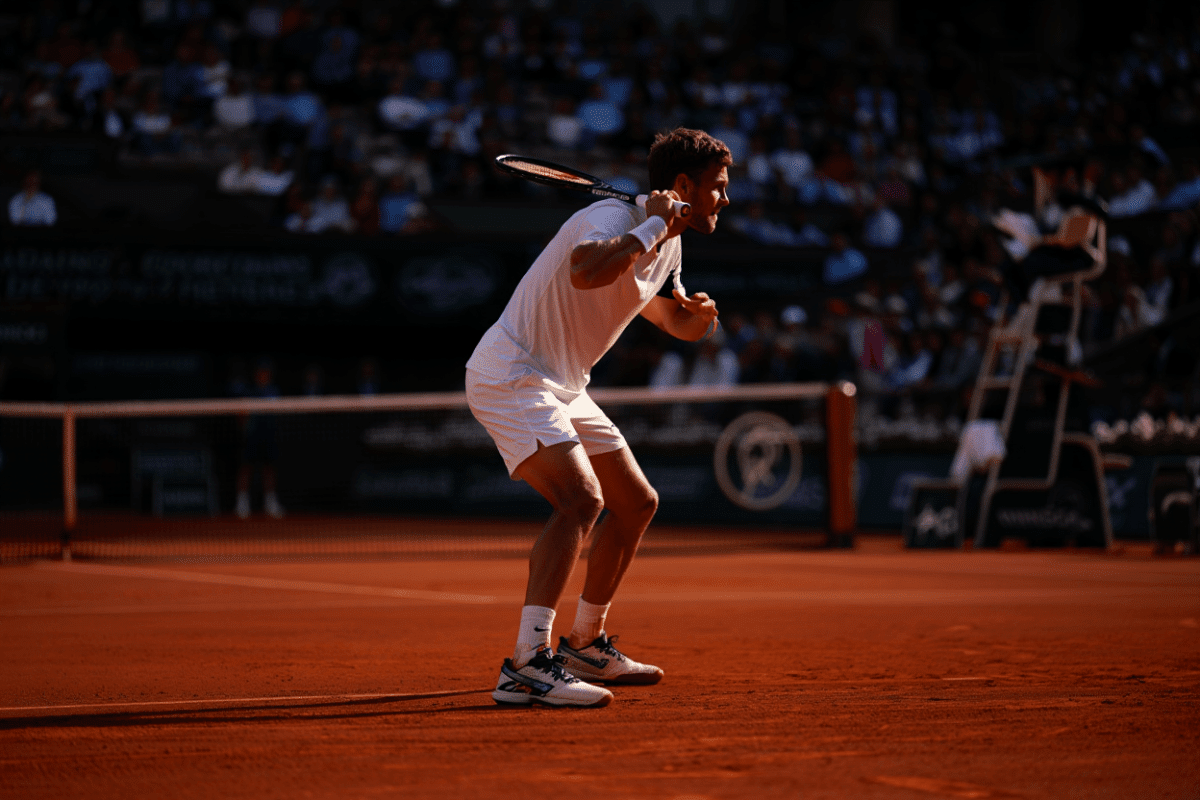
Casper Ruud enters his 2026 Roland Garros campaign as the 15th seed against qualifier Roman Safiullin on May 25 at 09:00 UTC. The Norwegian clay-court specialist holds a 1-0 head-to-head advantage over the Russian qualifier, who carries a career-best ranking of #36 from January 2024. This first-round matchup tests Ruud’s clay dominance against an unseeded challenger.
🔥 Quick Facts
- Ruud seeded 15th at Roland Garros, featuring 13 ATP singles titles
- Safiullin currently ranked 142nd after qualifying with 6-3, 6-7 win over Gentzsch
- Head-to-head: Ruud leads 1-0 with 1-0 on clay in major tournaments
- Match time: 09:00 UTC on May 25, 2026 (3:00 AM PT / 6:00 AM ET)
- Ruud holds 133 clay wins since 2020, most among active players on the surface
Casper Ruud’s Clay Court Dominance Heads Into Roland Garros
Ruud, 26, stands as one of the tour’s most consistent clay performers. Since 2020, the Oslo native has compiled 133 wins on clay, more than rivals Carlos Alcaraz, Alexander Zverev, and Novak Djokovic over that same period. This statistic underscores not elite peak performance, but rather sustained excellence across multiple seasons. Ruud’s two Roland Garros final appearances (both losses) establish him as a legitimate contender when clay conditions favor aggressive baseline play. His ranked position of #17 represents a recovery following recent form fluctuations, and first-round success is essential to rebuilding momentum heading into the second week.
Roman Safiullin: Qualifier Making His Main Draw Push
Safiullin, 28, from Podolsk, Russia, earned main draw entry through qualifying. His 142 ranking masks his prior trajectory—the Russian achieved a career-high #36 in January 2024, representing a 106-position improvement over his current status. Qualifying victory over Tom Gentzsch with a 6-3, 6-7 scoreline demonstrates fighting spirit in tiebreak situations. For Safiullin, facing a seeded opponent creates neither pressure nor disadvantage—unseeded qualifiers often thrive against establishment seeds on clay due to lack of expectation and comfort in unheated matches. His height of 6-1 and aggressive right-handed game can trouble baseline specialists if accuracy holds.
Head-to-Head Context and Clay Court Matchup Dynamics
Ruud’s 1-0 record against Safiullin came on clay, the surface and context favoring Ruud considerably. The matchup pits a two-time Roland Garros finalist with established clay credentials against a qualifier working toward career rehabilitation. Ruud ranked 15th suggests recent wins restored his seeding; Safiullin‘s 142 ranking indicates struggles to maintain consistency at the highest level. Previous encounters between mid-tier challengers and seeded players show that clay amplifies the ranking gap more than hard courts. Ruud’s clay win percentage over coming opponents typically exceeds 75%, meaning Safiullin requires near-flawless execution to threaten a breakthrough.
| Factor | Casper Ruud | Roman Safiullin |
| ATP Ranking | 17 | 142 |
| Career High Rank | 2 (2023) | 36 (2024) |
| ATP Titles | 13 (12 on clay) | 0 |
| Roland Garros Appearances | 2 Finals | Qualifier |
| Clay Wins Since 2020 | 133 | TBA |
| Last 12 Months Form | Rising (recent titles) | Rebuilding |
“Ruud is ranked among the era’s finest clay-court specialists, having sustained that dominance longer than contemporaries through strategic tournament selection and game refinement.”
— Clay-court analysis, Tennis Nerd, 2026
First-Round Implications and Path to Second Week
Ruud’s progression hinges on early-round efficiency. A first-round loss to an unseeded qualifier contradicts his seeding and clay credentials, potentially triggering concerns about form stability entering mid-major competition. Conversely, victory secures a favorable second-round matchup likely featuring a player outside the immediate elite tier. Safiullin‘s pathway through the main draw remains uncertain; a loss terminates his Roland Garros campaign, while upset success would catapult him toward a likely second-round clash with a top-30 player. Ruud expects to reach the third round as a baseline; failure to achieve this re-raises questions about recent title validation and whether clay-court wins translated to genuine ranking protection or seasonal fluctuation.
What Must Each Player Execute to Win?
Ruud must leverage aggressive baseline construction, forcing Safiullin into defensive positions from the opening service games. The Norwegian’s topspin-heavy groundstrokes and court positioning should dominate neutral rally situations. Safiullin, conversely, requires early break opportunities and pinpoint serving accuracy to avoid early-set deficits. Qualifying matches demand physical reserves; a long qualifier final combined with travel fatigue can diminish movement and first-step quickness—vulnerabilities Ruud typically targets with directional baseline work. Mental resilience often decides unseeded-vs-seeded matchups; Safiullin enters without expectation, while Ruud carries narrative pressure tied to his ranking and recent clay wins.
Sources
- ATP Tour – Official head-to-head records and ranking data
- Roland Garros 2026 Official Site – Draw information, match scheduling, and player details
- ESPN Tennis – Player profiles, career statistics, and tournament coverage
- Tennis Nerd – Clay court analysis and power rankings for 2026
- SofaScore – Live match information and H2H comparisons