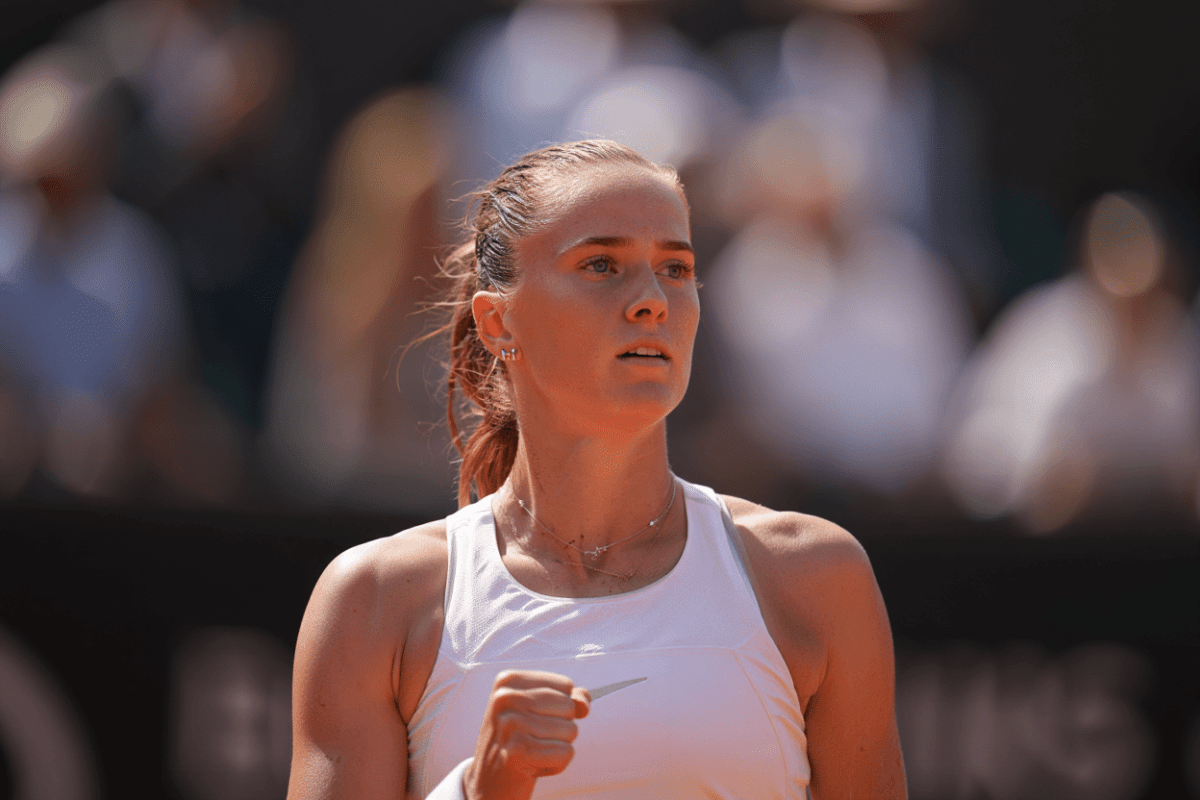
Anastasia Potapova enters her French Open first-round matchup against Maya Joint on May 25, 2026, carrying a decisive edge in clay-court mastery and recent form. The 28-ranked Austrian boasts a 65.8% win rate on clay courts over her career, while the 20-year-old Australian faces this encounter struggling through a form crisis that has seen her win just 2 of her last 11 matches—with zero clay wins in 2026. The two players have never met, setting up an intriguing first encounter at Roland Garros.
🔥 Quick Facts
- Potapova’s clay record spans 52 wins and 27 losses (65.8% success rate) across her WTA career
- Joint ranks #34 globally but stands 2-11 in 2026, with a 0-3 clay record so far this season
- Potapova beat Linda Noskova in the second round at last year’s French Open (5-7, 6-1, 7-5)
- The two players meet for the first time in their professional careers with zero previous head-to-head matches
- Betting markets heavily favor Potapova at 79-84% implied probability, with odds around 1.26-1.185
Potapova’s Clay Pedigree and 2026 Momentum
Anastasia Potapova has built her reputation as one of the tour’s most reliable clay-court competitors. Her 65.8% win-loss record on clay reflects not just comfort on the surface, but genuine expertise in the nuances of play on the red dirt. This season, she has posted a 21-12 overall record, with notable recent victories over Lilli Tagger and Donna Vekic in April—both solid opponents that demonstrate her capacity to handle top competition. At age 25, Potapova brings maturity and experience to Roland Garros, having competed at the tournament for multiple years. Her pathway to a strong performance at Paris is built on clay-surface proficiency that few on the women’s tour can match.
The Austrian right-hander reached the second round at last year’s French Open, defeating Linda Noskova in a competitive three-set encounter that showcased her resilience and shot-making ability on clay. That win suggests Potapova possesses the mental fortitude and tactical discipline required to navigate Grand Slam first rounds successfully.
Joint’s Struggle on Clay and Recent Form Crisis
Maya Joint, the Australian rising star, faces a starkly different narrative entering this matchup. The 20-year-old, ranked #34 globally, has experienced a sharp decline in recent weeks, compiling a 2-11 record in 2026 with particular difficulty on clay courts. Her 0-3 clay-court record this season reveals a fundamental vulnerability: the ginger-haired ninja (as she’s nicknamed on social media) has not yet won a single match on the surface in 2026. This represents a critical weakness entering Roland Garros, where clay dominance determines tournament survival.
Joint’s previous success came on hard courts and grass, where her pace and aggressive baseline play carried more weight. The clay shift exposes technical gaps—softer bounces, slower court play, and extended rallies place different demands on her game. Her career ranking high of #28, achieved in February, now feels distant as form has deteriorated. Despite her talent, the statistical evidence suggests Joint is considerably undermatched against a clay specialist of Potapova’s standing.
Statistical Comparison and Surface Context
The numbers heavily favor Potapova. Here’s how the two players’ profiles compare:
| Metric | Potapova | Joint |
| Current Ranking | #28 | #34 |
| 2026 Record (Overall) | 21-12 | 2-11 |
| 2026 Clay Record | Unspecified (strong) | 0-3 |
| Career Clay Win % | 65.8% (52-27) | TBA |
| Age | 25 (born March 30, 2001) | 20 (born April 16, 2006) |
| Head-to-Head | First Meeting (0-0) | |
The surface advantage heavily favors Potapova. As analyzed by recent coverage, the Roland Garros clay demands patience, lengthy baseline exchanges, and comfort with slower court play. Joint’s game style—built on pace and aggressive shot-making—faces diminishing returns on this surface. Potapova’s recent victories over established competitors on similar surfaces suggest she enters with tactical clarity and recent success momentum.
Expert Predictions and Betting Markets
Professional betting markets reflect this disparity convincingly. Multiple sportsbooks and analysis platforms have positioned Potapova at 79-84% implied probability, with odds hovering around 1.26-1.185 depending on the book. This represents near-consensus confidence in a Potapova straight-sets victory. By contrast, Joint’s odds at 4.48-4.75 price in roughly a 22% chance of pulling off an upset.
Analysts backing Potapova cite her clay mastery as insurmountable given Joint’s current form. The recent Las Vegas Tennis Report and Tennis Tonic analysis both favor the Austrian, with the latter noting that Potapova’s baseline consistency on clay will wear down Joint’s aggressive but inconsistent shot selection. This represents expert consensus across major tennis prediction platforms, from Dimers (84% Potapova win probability) to MatchStat and OddsPedia.
“Joint has never advanced past the first round at a Grand Slam, and her clay-court record this season (0-3) speaks volumes. Potapova brings not just ranking advantage but surface expertise that will be difficult for Joint to overcome.”
— Tennis Analysis, WTA French Open Preview 2026
Playoff Implications and Title Contention
For Potapova, advancing past Joint represents the foundation of a potential deeper Roland Garros run. A strong clay-court performance at Paris could elevate her ranking and restore confidence in her ability to compete with the tour’s elite on preferred surfaces. The 28 ranking contains room for improvement, and a second-round showing (or deeper) would substantiate her status as a genuine clay-court threat during the red-dirt swing.
For Joint, this match carries make-or-break urgency. Her 0-3 clay record in 2026 demands a breakthrough, and if she does find her footing on clay against Potapova—a significant task—momentum could spark a turnaround in her form. However, the statistical narrative suggests Joint’s clay struggles run deeper than a single bad week. Her game style may require the hard-court environment where she has found historical success.
Related coverage of other first-round matchups at Roland Garros similarly emphasizes how the clay surface reshuffles competitive hierarchies, favoring players with surface-specific expertise.
What Will Determine This Match?
Rally length and shot tolerance will likely decide this encounter. On clay, extended baseline exchanges favor the player with superior patience and consistency—typically Potapova’s strength. If Potapova forces Joint into 15-20 shot rallies, the Austrian’s superior clay footwork and passing-shot accuracy should prevail. Conversely, if Joint can shorten points with aggressive first-shot offense and capitalize on her serve velocity advantage, she gains a realistic comeback pathway. However, given her recent form, finding that aggression consistently appears unlikely.
Potapova’s recent wins over Tagger and Vekic demonstrate her current tactical sharpness. A player trending in the right direction typically maintains that trajectory through Grand Slam competition. By contrast, Joint’s 2-11 record suggests a player searching for answers rather than offering them.
What Does This Match Mean for the 2026 Clay Swing?
This bout represents a microcosm of a broader narrative: clay specialization remains decisive at Roland Garros. Hard-court players who lack clay experience continue to struggle when the surface slows down and magnifies technical gaps. Joint’s inability to win on clay in 2026 foreshadows continued challenges should she advance. Conversely, Potapova’s proven clay credentials position her favorably not just against Joint, but against other early-round opponents who may lack surface-specific mastery.
The broader lesson: Grand Slam tournaments reward specialization. Potapova’s 65.8% clay win rate is not random—it reflects years of dedicated clay-court preparation and tactical development.
Sources
- WTA Tennis Official – Current rankings and 2026 season statistics
- Tennis Ratio – Career clay-court win percentages and surface analysis
- MatchStat & Dimers – Betting odds, win probability models, and expert consensus
- Tennis Tonic & Last Word on Sports – Match preview analysis and prediction frameworks
- Roland Garros Official – Tournament schedule and draw information