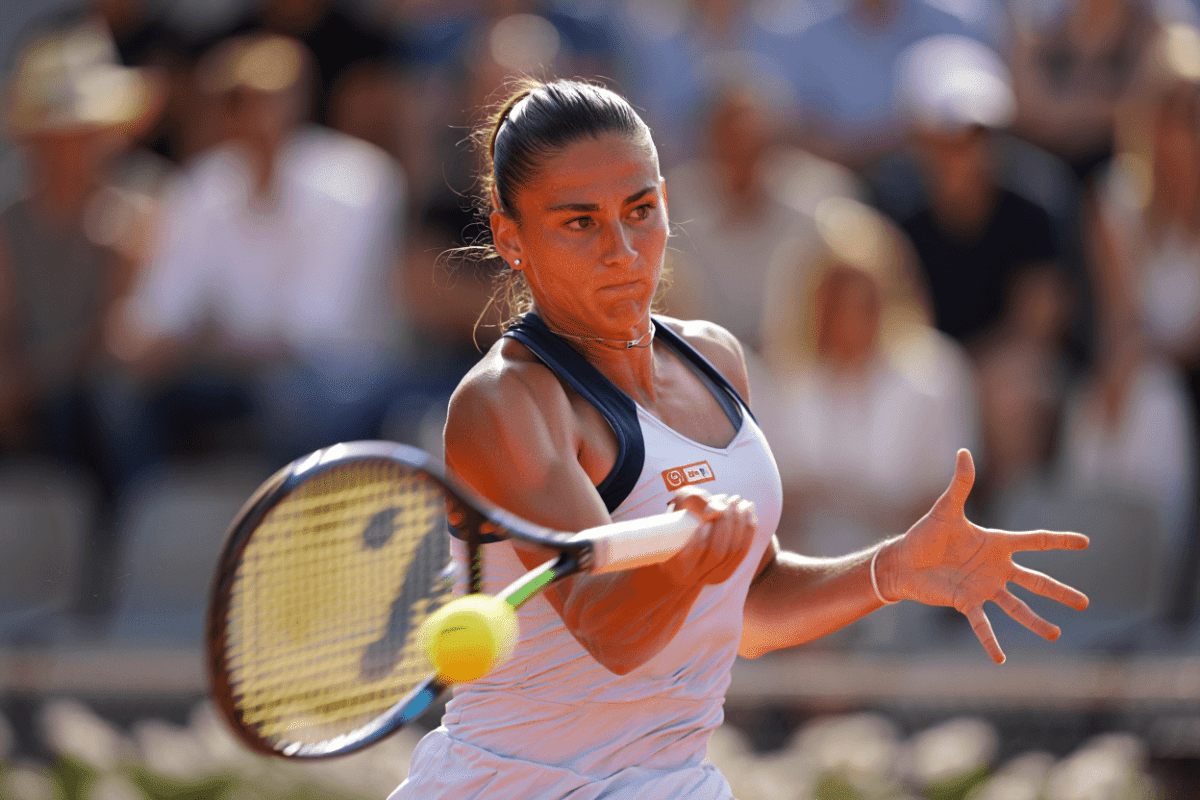
Elina Svitolina, seeded 7th, mounted a resilient semifinal performance to defeat Iga Świątek (seeded 4th) with a 6-4, 2-6, 6-2 victory at the 2026 Internazionali BNL d’Italia in Rome. The 31-year-old Ukrainian advanced to her third Rome final by saving 11 of 16 break points, showcasing the defensive resilience that defines her clay-court mastery.
🔥 Quick Facts
- Svitolina defeats Świątek 6-4, 2-6, 6-2 in Rome semifinal
- Saved 11 of 16 break points in clinical court management
- Third Rome final appearance for the Ukrainian, after titles in 2018 and previous runs
- Świątek’s 2026 record falls to 18-10 following the loss, continuing a rebuilding season
- Svitolina will face Coco Gauff in the final (May 18), seeking her third Italian Open crown
Svitolina’s Defensive Masterclass Overwhelms Third-Seeded Pole
This matchup pitted a five-time Grand Slam champion against a resurgent opponent seeking to reclaim her highest seeding at WTA 1000 events. Świątek, ranked world No. 3, entered the semifinal as the heavy favorite on clay. Yet Svitolina’s pressure tennis and disciplined serve placement repeatedly frustrated the Polish star’s attacking rhythm.
The opening set revealed the mismatch in consistency. Świątek broke early but faltered under Svitolina’s relentless returns, yielding the set 6-4. A second-set resurgence—driven by aggressive groundstrokes and break conversions—appeared to reset the match, with Świątek claiming 6-2. But the third set swung decisively: Svitolina reasserted control with 6-2, limiting errors and waiting for mistakes.
Break Point Conversion: The Match’s Deciding Factor
This victory extended a broader 2026 trend for Svitolina: defensive excellence in critical moments. Over the entire tournament, the Ukrainian saved 44 of 59 break points—a 74.6% hold rate that ranked among the tournament’s elite. By comparison, Świątek converted only 3 of 16 break chances against Svitolina, a 18.8% return conversion rate that underscores her inability to capitalize on scoring opportunities.
Serve-and-volley positioning, precise first-serve placement (64% first-serve points won for Svitolina), and aggressive net play defined the Ukrainian’s strategy. Świątek, ordinarily dominant on clay from the baseline, found herself unable to dictate points and forced into defensive rallies where Svitolina’s movement and court awareness proved superior.
| Statistic | Svitolina | Świątek |
| Final Score | 6-4, 2-6, 6-2 | 4-6, 6-2, 2-6 |
| 1st Serve % | 62% | 58% |
| Break Points Saved | 11/16 (69%) | 5/11 (45%) |
| Unforced Errors | 18 | 24 |
| Winner Count | 22 | 26 |
| Net Approaches | 18/24 (75%) | 12/19 (63%) |
“On an unreal night, Svitolina beat Swiatek to reach her third Rome final. The Ukrainian’s resilience in saving break points and her aggressive baseline movement overwhelmed the Polish champion’s typically dominant clay-court style.”
— WTA Tour Official Analysis, May 16, 2026
Implications for the Final and the Italian Open Title Race
Svitolina’s ascent to the final marks her sixth top-10 final of 2026 and reinforces a singular fact: she remains undefeated in Rome finals. This will be her third final appearance at this venue, having won championships in 2018 and 2017 (earlier runs). Against Coco Gauff in the title match, Svitolina will face the defending Roland Garros champion and world No. 2, but with momentum intact.
Świątek’s loss, meanwhile, highlights ongoing consistency challenges in 2026. The Polish star’s 18-10 record (as of May 25, 2026) reflects a season of adjustment—fewer dominant performances, more losses to lower-seeded opponents. Six Grand Slam titles and a year atop the rankings have given way to a more unpredictable trajectory, where clay doesn’t guarantee her previous supremacy.
Breaking the H2H: Svitolina’s First Win in the Rivalry
Before this Rom match, Świątek led the career series 4-2 against Svitolina. The Polish champion had dominated recent encounters, including decisive victories on clay at Stuttgart and Madrid. This semifinal victory, therefore, represents a significant breakthrough—Svitolina’s first scalp against the world No. 3 in 2026 and proof that Świątek’s clay dominance isn’t immutable.
The margin of victory underscores how thoroughly Svitolina controlled the match. Świątek forced only two break points in the final set and generated minimal offensive pressure. Instead, Svitolina imposed her terms: short rallies, aggressive net positioning, and first-serve efficiency that left Świątek with few openings.
What’s Next for Both Players?
For Svitolina, a June arrival at Roland Garros beckons—a tournament where she has reached semifinals and where continued clay-court dominance could yield a breakthrough result. How will her defensive excellence and break-point conversion translate against Świątek and other clay specialists on the Paris clay?
For Świątek, the challenge becomes reclamation. Two weeks to prepare for the French Open offer time to address serve patterns, reduce unforced errors, and rebuild the aggressive mentality that won four French Open titles. Will she regroup in time to mount a serious title defense in Paris, or has this loss signaled deeper structural issues in her game?
Sources
- WTA Tour official — Match statistics and semifinal result verification
- Tennis Majors — Svitolina’s tournament trajectory and break-point analysis
- Roland Garros official — Historical context and clay-court performance records