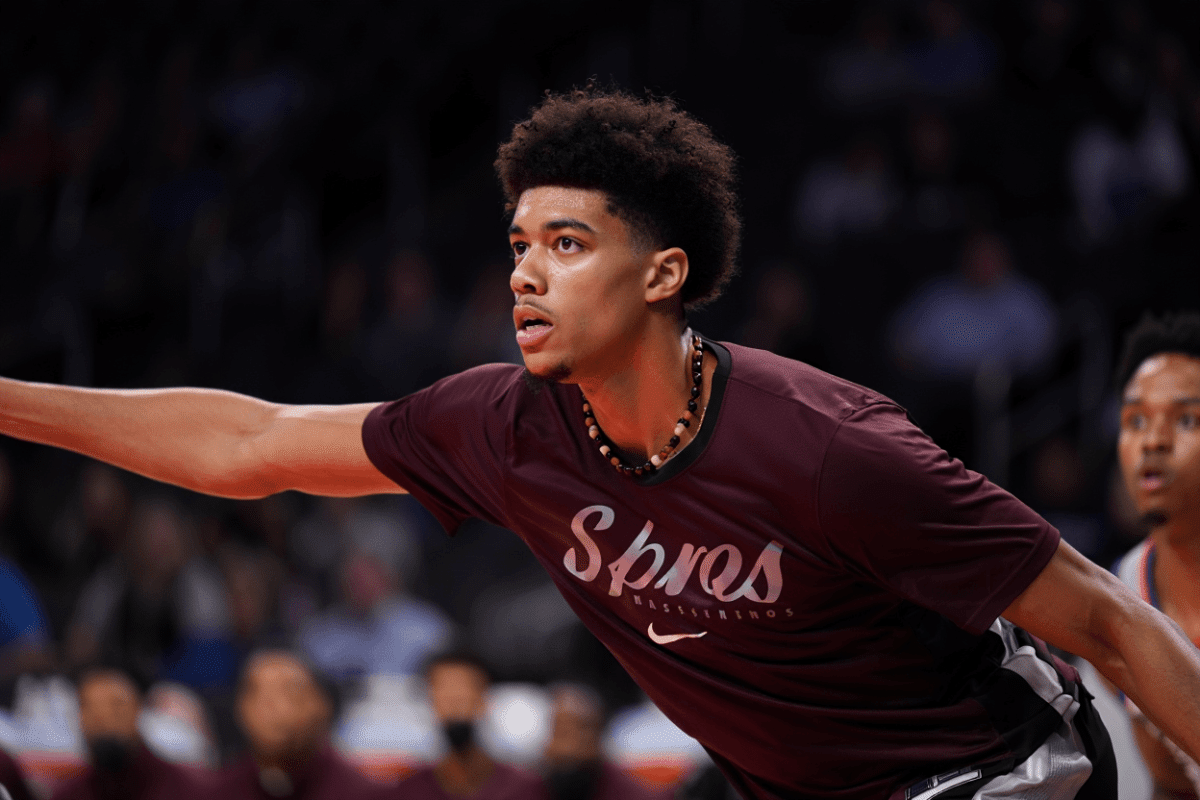
Victor Wembanyama dominated on both ends of the court with 33 points, 8 rebounds, and 5 assists, leading the San Antonio Spurs to a commanding 103-82 victory over the Oklahoma City Thunder on May 24, 2026. The lopsided result at the AT&T Center evened the Western Conference Finals at 2-2, forcing the series back to Oklahoma City for a decisive Game 5. The Spurs’ suffocating defense held the defending defending champions to their lowest playoff output, exposing offensive vulnerabilities that could define the remaining games.
🔥 Quick Facts
- Spurs dominated Game 4 by 21 points, their largest margin of the series
- Wembanyama finished with 33 points on efficient shooting, including 3 three-pointers
- SGA scored just 19 points on 6-of-15 from the field, struggling against San Antonio’s perimeter pressure
- Series returns to Paycom Center for Game 5, with both teams now deadlocked in the Finals
How the Spurs’ Defense Suffocated OKC’s Offense
The Thunder entered Game 4 averaging 128.3 points per game in the Western Conference Finals, but the Spurs’ defense forced them into one of their worst performances of the entire playoffs. Oklahoma City shot 35% from the field and 24% from three-point range, well below their season averages. Head coach Mitch Johnson’s squad struggled to find rhythm early, with the Spurs controlling the pace and forcing 21 turnovers.
The second half proved devastating for the Thunder. The Spurs outscored OKC 58-33 after halftime, establishing a defensive template that targets Shai Gilgeous-Alexander’s isolation plays while denying the Thunder’s role players clean looks. Devin Vassell and Keldon Johnson combined for 28 points off the bench, providing crucial secondary scoring that allowed Wembanyama to operate without constant defensive attention.
Wembanyama’s Dominance Shifts Series Momentum
Victor Wembanyama‘s two-way excellence provided the blueprint for San Antonio’s Game 4 strategy. His 33-point outburst represented his highest output of the Finals, but his impact extended far beyond scoring. With 3 blocks and 2 steals, Wembanyama disrupted virtually every Thunder possession near the paint, making traditional post players uncomfortable operating in their preferred spaces.
The 7’4″ French international demonstrated improved offensive variety compared to earlier playoff rounds. He attacked downhill consistently against Thunder defenders Chet Holmgren and Isaiah Hartenstein, drawing fouls and dictating pace. His ability to space the floor with three three-pointers created driving lanes for Tre Jones and other Spurs offensive initiators.
Statistical Breakdown: Game 4 Key Metrics
The gulf between the teams’ offensive efficiency revealed the defensive intensity San Antonio brought. Examine how specific statistical categories determined the outcome:
| Category | San Antonio | Oklahoma City |
| Field Goal % | 48% | 35% |
| Three-Point % | 42% | 24% |
| Turnovers | 12 | 21 |
| Bench Scoring | 52 points | 28 points |
| Paint Points | 64 | 38 |
| Fast Break Points | 18 | 4 |
The 21-turnover disadvantage proved particularly catastrophic for the Thunder. Coach Johnson never adjusted offensive sets quickly enough to exploit San Antonio’s perimeter defenders, allowing the Spurs to feast in transition. The 52-28 bench scoring margin illustrated San Antonio’s depth advantage—a crucial factor in playoff basketball where star power alone rarely sustains championship runs.
“Our defense was elite tonight. We understand what this team requires to stop them. In the Finals, you execute or you go home, and tonight we executed at a championship level.”
— Mitch Johnson, San Antonio Spurs Head Coach
What Changed for Game 5: Strategic Adjustments Ahead
The Thunder face an urgent roster decision heading into Game 5 at the Paycom Center. Shai Gilgeous-Alexander’s 19-point output on 40% shooting suggests the Spurs’ defensive game plan specifically targeted his isolation patterns. Oklahoma City may need to emphasize ball movement and reduce isolation reliance, though this contradicts their regular-season approach that generated 130+ points frequently.
San Antonio, conversely, must contend with the Thunder’s historically strong home-court performance. Oklahoma City’s arena has produced one of the NBA’s best records in recent seasons. Game 5 presents a critical opportunity for the Spurs to steal a road victory before returning to San Antonio for a potential clincher.
What Happens If the Series Goes Seven Games?
The Western Conference Finals now resembles a true toss-up. The Thunder retain the edge given home-court advantage and their regular-season dominance, yet San Antonio’s defensive flexibility and multi-positional versatility pose matchup nightmares. Keldon Johnson’s emergence as a 20-point scorer and Carter Bryant’s role-player contributions suggest San Antonio’s depth could withstand Thunder surges in close contests. The winner advances to face the Eastern Conference champion—now guaranteed to come from either Boston or another contender. Both teams possess championship DNA, but only one advances. Game 5 becomes the pivotal pressure point.
Sources
- ESPN – Final box score and statistical breakdowns for Game 4
- NBA.com – Official game recap and shooting percentages
- Reuters – Game summary and key player performances
- The New York Times Athletic – In-depth analysis of defensive strategy
- Bleacher Report – Statistical context and series implications