
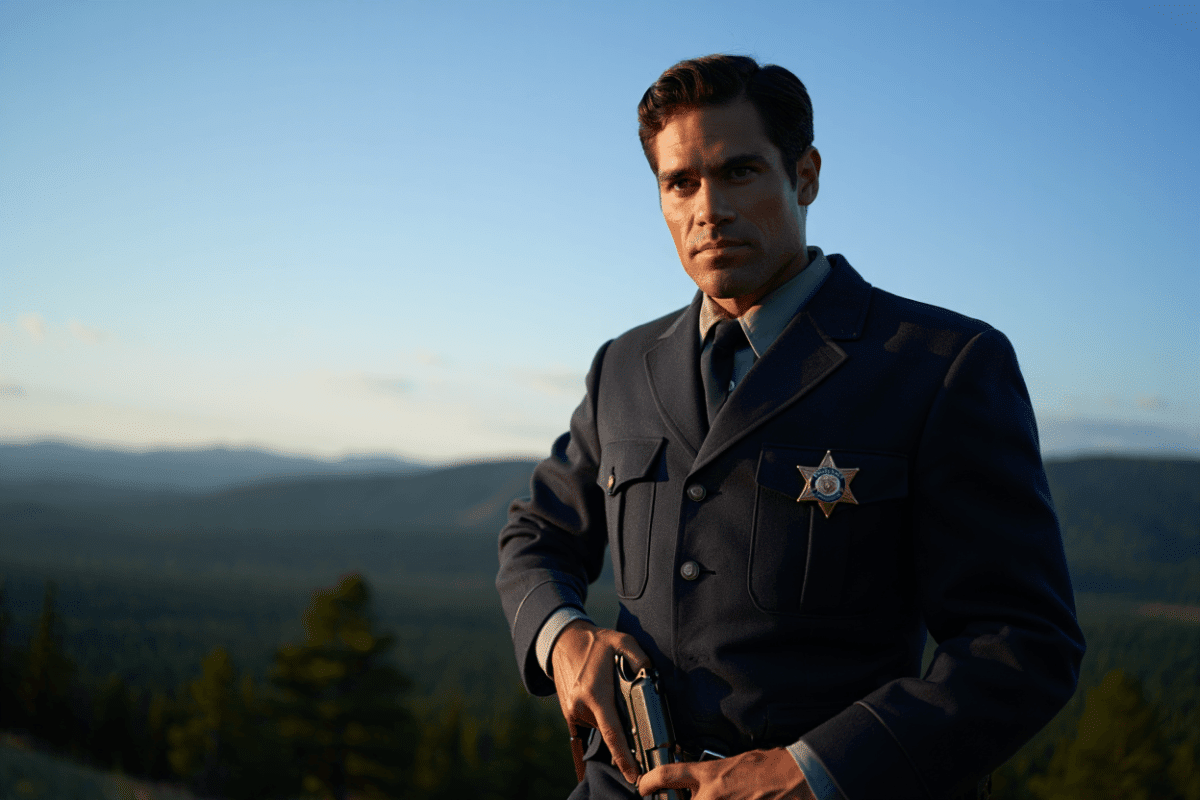
Marshals, the Yellowstone spinoff that debuted on CBS and Paramount+ on March 1, 2026, features Luke Grimes reprising his role as Kayce Dutton in a complete career pivot that moves the character from ranch life to federal law enforcement. Created by Spencer Hudnut and developed under Taylor Sheridan’s production banner, the series follows Kayce as he abandons life on the family ranch to join an elite unit of U.S. Marshals tasked with protecting Montana’s remote and treacherous landscape.
🔥 Quick Facts
- Premier platform: CBS and Paramount+ with finale on June 16, 2026
- Lead character: Luke Grimes as Kayce Dutton, a former Navy SEAL and rancher
- Team size: Five-person marshal unit combining Yellowstone veterans with new ensemble cast
- Renewal status: Renewed for season 2 in March 2026, just weeks after premiere
- Production studio: Paramount Television Studios and 101 Studios, executive produced by Taylor Sheridan
Kayce Dutton’s Transition: From Ranch to Federal Law
Luke Grimes spent nearly a decade portraying one of Yellowstone’s most complex characters—a man torn between loyalty to family and personal conviction. In Marshals, Grimes explores a new dimension of Kayce’s character arc: his evolution into a law enforcement officer. The premise marks a deliberate franchise shift away from protecting family assets to upholding federal justice across Montana’s sprawling jurisdiction. Kayce’s military background as a former Navy SEAL becomes central to his expertise on the marshal team, blending tactical skills with investigative acumen.
This career trajectory represents a significant departure from Yellowstone’s ranch-focused narrative. Rather than defending the Dutton legacy through land acquisition and political maneuvering, Kayce now operates within the structure of federal law, tasked with enforcing order across one of America’s most challenging jurisdictions. The show’s setting—Montana’s unforgiving terrain—provides both literal and symbolic grounding for this transformation.
The Ensemble Framework: New Characters and Familiar Faces
Logan Marshall-Green anchors the supporting cast as Pete “Cal” Calvin, Kayce’s former Navy SEAL commanding officer and now supervisory deputy U.S. Marshal. Marshall-Green’s character serves as both recruiter and team leader, having specifically brought Kayce into the unit. According to Variety’s coverage from early production, Pete represents the bridge between Kayce’s military past and his civilian law enforcement present, dealing with significant personal struggles that test his leadership throughout the season. As covered in Luke Grimes’ music and entertainment ventures, the actor continues to expand beyond acting, though Marshals remains his primary television focus in 2026.
The five-person team also includes Arielle Kebbel as Belle Skinner, Ash Santos as Andrea Cruz, and Tatanka Means as Miles Kittle. Returning Yellowstone cast members Brecken Merrill (Kayce’s son Tate Dutton), Mo Brings Plenty, and Gil Birmingham (as Thomas Rainwater, Broken Rock chairman) provide continuity with the parent series, ensuring narrative connection to Yellowstone’s broader universe.
Production Credentials and Creative Direction
| Element | Details |
| Creator/Writer | Spencer Hudnut (writing); Taylor Sheridan executive producer |
| Premiere Date | March 1, 2026 on CBS and Paramount+ |
| Episodes (Season 1) | 13 episodes, finale airing June 16, 2026 |
| Production Companies | Paramount Television Studios, 101 Studios |
| Renewal Status | Renewed for season 2 in March 2026 |
| Network Distribution | Dual broadcast on CBS (linear) and Paramount+ (streaming) |
The production represents a strategic expansion of the Yellowstone universe, which has generated multiple franchises including 1883, 1923, Dutton Ranch, and Landman. Unlike previous Taylor Sheridan spinoffs where he maintained writing control, Spencer Hudnut takes the primary creative reins on Marshals, signaling Paramount’s confidence in expanding the creative pool. Early reviews from outlets like Rotten Tomatoes cited the show’s balance between procedural elements and character-driven storytelling as a key differentiator.
Marshals’ Thematic Foundation: Justice Beyond Borders
Marshals operates fundamentally differently from Yellowstone’s territorial drama. Where the parent series explored power through land ownership and family loyalty, Marshals examines power through institutional authority and civic duty. The show’s title itself—U.S. Marshals—represents the oldest federal law enforcement agency in American history, tasked with fugitive apprehension, witness protection, and territorial jurisdiction enforcement. By positioning Kayce within this framework, creators establish a narrative where federal law supersedes personal interest.
Kayce’s motivation transcends personal gain: protecting Montana’s communities becomes an abstract mission rather than family preservation. This philosophical shift separates the spinoff from Yellowstone’s morally complicated antihero tradition, instead establishing a framework where protagonists operate within legal constraints despite the region’s inherent dangers.
“With the Yellowstone Ranch behind him, Dutton joins an elite unit of U.S. Marshals, combining his skills as a cowboy and Navy SEAL to bring range justice to Montana’s unforgiving plains.”
— Paramount+ official synopsis
What Sets This Spinoff Apart: Procedural Drama Meets Western
Unlike Yellowstone, which blends political intrigue with ranching drama, Marshals adopts a law enforcement procedural structure with Western aesthetics. Each episode incorporates case-of-the-week elements—fugitive tracking, witness relocation complications, territorial disputes—alongside season-long story arcs. This hybrid format allows the show to satisfy fans seeking Yellowstone’s character depth while delivering episodic narrative satisfaction familiar to procedural audiences.
The Paramount+ streaming release alongside CBS broadcast creates a dual-platform strategy that extends reach beyond traditional network television viewers. This represents a significant evolution from Yellowstone’s initial Paramount Network exclusivity, positioning Marshals as a flagship series designed to drive Paramount+ subscription growth during competitive Q2 2026, when streaming services battled for viewership amid oversaturation.
The Franchise Question: Does Marshals Sustain the Universe?
The rapid season 2 renewal in March 2026—just weeks after premiere—signals network confidence, yet early reception revealed divided opinions among Yellowstone fandom. Some viewers celebrated Kayce’s evolution as a fresh protagonist direction; others found the procedural format less compelling than Yellowstone’s saga-like storytelling. This critical divergence will determine whether Marshals becomes a sustainable franchise cornerstone or a limited-run spinoff riding Yellowstone’s residual popularity.
For Taylor Sheridan’s production ecosystem—already managing multiple Yellowstone properties alongside Landman and 1923—Marshals‘s success depends on its ability to stand independently while honoring the parent series’ legacy. The June 16 season finale will provide crucial data about audience retention and critical reception heading into season 2 planning.
Sources
- Paramount+ — Official series synopsis and release information
- CBS Entertainment — Broadcast schedule and renewal announcements
- IMDb — Cast and production credits
- Variety — Behind-the-scenes production details and interviews
- Wikipedia (Marshals TV series) — Comprehensive episode and character guide
- Entertainment Weekly — Cast breakdowns and preview coverage










I never really got into Yellowstone for some reason. The handful of episodes l watch were impressive. Got into game late and couldn’t catch up.
Have watched all the other Taylor Sharridan projects leading up to Yellowstone. Enjoyed everyone.
I sure am enjoying every episode of Marshalls and can’t wait for new one to stream. l have played all episodes over and over during the week waiting for new episode to stream. Definitely enjoying Luke Grimms on Marshalls. Can’t wait for season 2 to start.