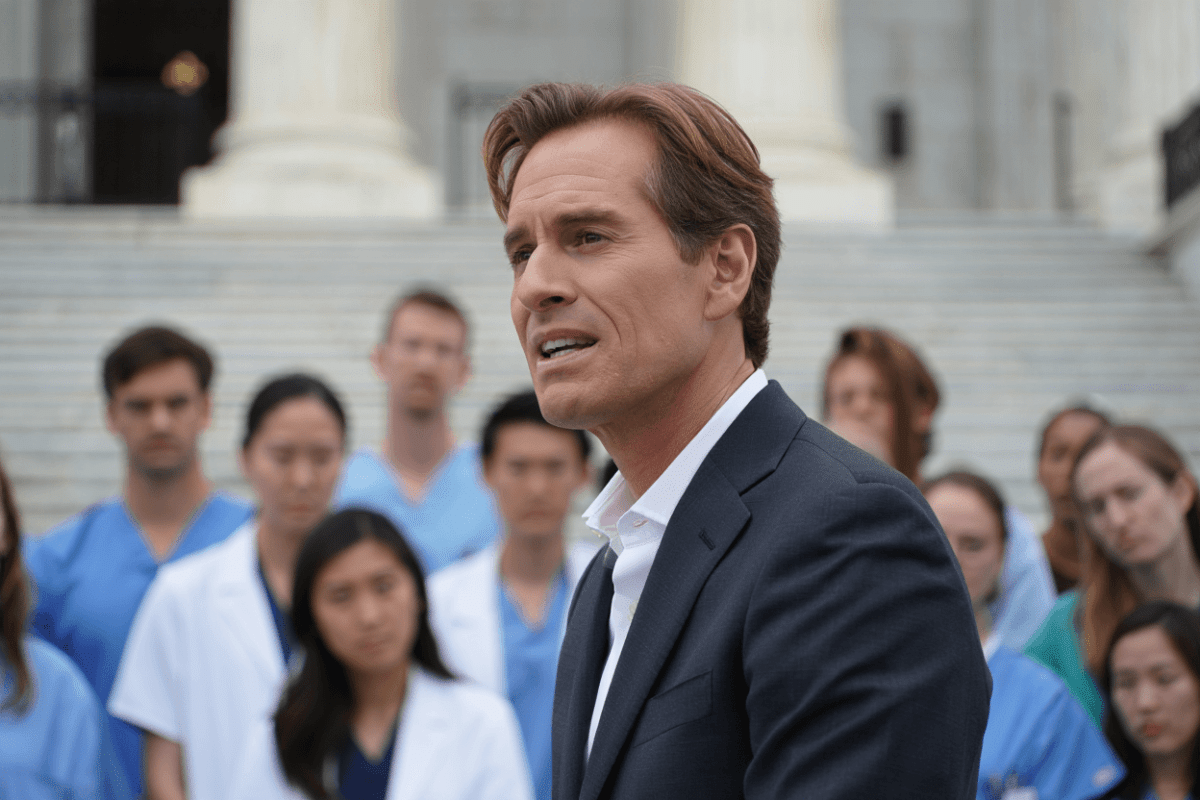
Noah Wyle, star of HBO Max’s medical drama “The Pitt,” headlined the “Healthcare is Human” rally on May 21, 2026, bringing together over 500 healthcare workers on Capitol Hill. The The Pitt actor joined forces with his mother, Marty Wyle, a registered nurse with 50 years of healthcare experience, to advocate for congressional support of three major healthcare-focused bills. Wyle’s personal connection to the profession, combined with his platform within the entertainment industry, underscored a broader crisis affecting American medical professionals.
🔥 Quick Facts
- Over 500 healthcare workers attended the Capitol Hill rally on May 21, 2026
- Noah Wyle’s mother, Marty Wyle, is a registered nurse with 50 years of career experience
- The rally supported the Healthcare is Human Act and two other related bills
- Bipartisan lawmakers joined dozens of healthcare professionals at the event
- Burnout affects over 50% of healthcare providers in the United States according to 2026 data
From Screen Roles to Real-World Advocacy
Noah Wyle built a decades-long career portraying doctors and medical professionals, from his iconic role as Dr. John Carter on the groundbreaking medical drama “ER” (which ran for 14 seasons beginning in 1994) to his current work on “The Pitt.” This entertainment platform provided him with a unique opportunity to speak directly to the systemic challenges facing America’s healthcare workforce.
However, Wyle’s commitment to healthcare advocacy extends beyond character portrayal. His mother’s five-decade career in nursing gave him profound personal insight into the emotional and physical toll of medical work. At May 21’s rally, Wyle brought this lived experience to the forefront, stating that healthcare workers “shouldn’t have to beg for basic support.” This messaging resonated with attendees and congressional representatives, creating a bridge between entertainment industry influence and policy change.
The Healthcare Crisis: Burnout, Retention, and Policy Response
The timing of the Healthcare is Human rally addresses a documented crisis. According to recent studies from the American Medical Association and CDC data, healthcare worker burnout has reached critical levels. In late 2025, approximately 47.9% of physicians reported meeting burnout criteria. Broader 2026 research indicates that over 50% of healthcare providers have experienced significant burnout, with 66% of U.S. employees overall reporting some form of workplace burnout.
This burnout epidemic carries financial consequences. Industry analysts estimate that healthcare worker burnout costs the U.S. healthcare system approximately $4.6 billion annually in lost productivity, turnover, and reduced patient care quality. The crisis extends beyond physicians to nurses, technicians, therapists, and support staff—all represented at the Capitol Hill gathering.
Healthcare leaders across the nation acknowledge the urgency. According to the Cross Country 2026 Healthcare Workforce Outlook, 70% of healthcare administrators identify retention and burnout as their primary workforce challenge. This statistic underscores why legislative intervention has become essential.
The Healthcare is Human Act and Supporting Legislation
The rally specifically advocated for three congressional bills designed to ease healthcare worker strain. The Healthcare is Human Act stands as the centerpiece legislation, addressing both immediate support needs and long-term workforce sustainability. The bill includes provisions for healthcare worker tax credits, mental health support, and workforce development funding.
| Legislative Focus Area | Key Provision | Intended Impact |
| Tax Credits | Healthcare Worker Tax Benefit Program | Direct financial relief for frontline workers |
| Mental Health | Workplace Wellness Funding | Behavioral health support and stress reduction |
| Workforce Development | Education & Training Grants | Talent pipeline support and retention |
| Patient Support | Patient Care Quality Standards | Improved outcomes and reduced worker stress |
The supporting bills address complementary issues: healthcare professional loan forgiveness and student debt relief programs, plus medical facility infrastructure funding to reduce understaffing. Together, these legislative efforts represent a comprehensive approach to healthcare workforce sustainability, moving beyond awareness toward actionable change.
A Mother-and-Son Message to Congress
Perhaps the most powerful moment of the rally came when Noah Wyle and his mother Marty Wyle spoke together on Capitol Hill. Marty Wyle, a registered nurse who has spent half a century in direct patient care, shared firsthand accounts of the challenges modern healthcare workers face: understaffing, long hours, minimal administrative support, and emotional exhaustion from caring for patients during their most vulnerable moments.
“I am the son of a nurse who spent 50 years caring for other people, and I’ve spent much of my career playing doctors on television. Today, I stand with real heroes—the frontline workers who deserve far more than gratitude. They deserve real support, real funding, and real policy change. Healthcare workers shouldn’t have to beg for basic support.”
— Noah Wyle, Actor and Healthcare Advocate, Capitol Hill Rally, May 2026
This unified message carried particular weight because it connected entertainment industry credibility with authentic personal experience. Noah Wyle’s decades of portraying medical professionals on screen lent credibility to his advocacy, while his mother’s presence served as a living example of the healthcare crisis’s human cost.
Industry Partnership and Multi-Sector Support
The Healthcare is Human rally was co-organized by FIGS, a major healthcare apparel company that has positioned itself as an advocate for frontline workers. The partnership between entertainment, healthcare industry, and advocacy organizations demonstrates how multi-sector coalitions can amplify messages on Capitol Hill. FIGS CEO Trina Spear emphasized that this rally represents a long-term commitment to healthcare worker advocacy, not a one-time event.
Attendance included nurses, physicians, dentists, respiratory therapists, and administrative healthcare staff—representing the full spectrum of healthcare professions impacted by systemic burnout. This diverse representation strengthened legislative messaging, showing that healthcare workforce challenges transcend specific medical disciplines.
What This Movement Means for Healthcare’s Future
The May 21, 2026 Healthcare is Human rally signals a shifting political landscape regarding healthcare worker support. Historically, healthcare policy focused on patient outcomes and insurance structures. This movement places healthcare provider wellness at the center of policy discussions, recognizing that worker burnout directly impacts patient care quality.
Congressional representation at the rally included members from both parties, suggesting bipartisan recognition of the healthcare workforce crisis. This cross-party support increases legislative chances for the Healthcare is Human Act and supporting bills. If passed, these bills would represent the first comprehensive federal response specifically targeting healthcare worker burnout and mental health support since the pandemic era.
For Noah Wyle and the broader entertainment-healthcare advocacy coalition, the message is clear: healthcare workers require immediate legislative action, not just symbolic recognition. The combination of a high-profile entertainment figure, authentic family connection to nursing, and data-driven policy proposals creates a compelling case for congressional action.
Will Entertainment Industry Influence Change Healthcare Policy?
The involvement of celebrities in legislative advocacy remains a mixed-success strategy. However, Noah Wyle’s approach differs from typical celebrity activism because it centers on direct family experience rather than abstract concern. His mother’s five-decade nursing career provides ground-truth credibility that transcends typical entertainment industry distance from policy matters.
The question now becomes whether congressional action will follow the Capitol Hill rally. Healthcare worker advocacy has gained significant momentum through 2025 and 2026, with medical professional organizations, healthcare companies, and now entertainment figures backing legislative reform. The Healthcare is Human Act and its companion bills represent a real opportunity for healthcare policy evolution, but only if lawmakers prioritize frontline worker support in the coming legislative sessions.
Sources
- The Hill – Reporting on Noah Wyle’s Capitol Hill statements and rally attendance
- Nurse.org – Coverage of FIGS Healthcare is Human rally details and agenda
- USA Today – Photo journalism and reporting on the May 21, 2026 event
- American Medical Association – Physician burnout statistics and workforce trends
- CDC Vital Signs – Healthcare worker mental health data and burnout prevalence
- Cross Country Healthcare – 2026 Healthcare Workforce Outlook findings
- JAMA Network – Research on burnout trends among U.S. healthcare workers
- Reuters – Photo documentation of Noah Wyle and mother at Capitol Hill event