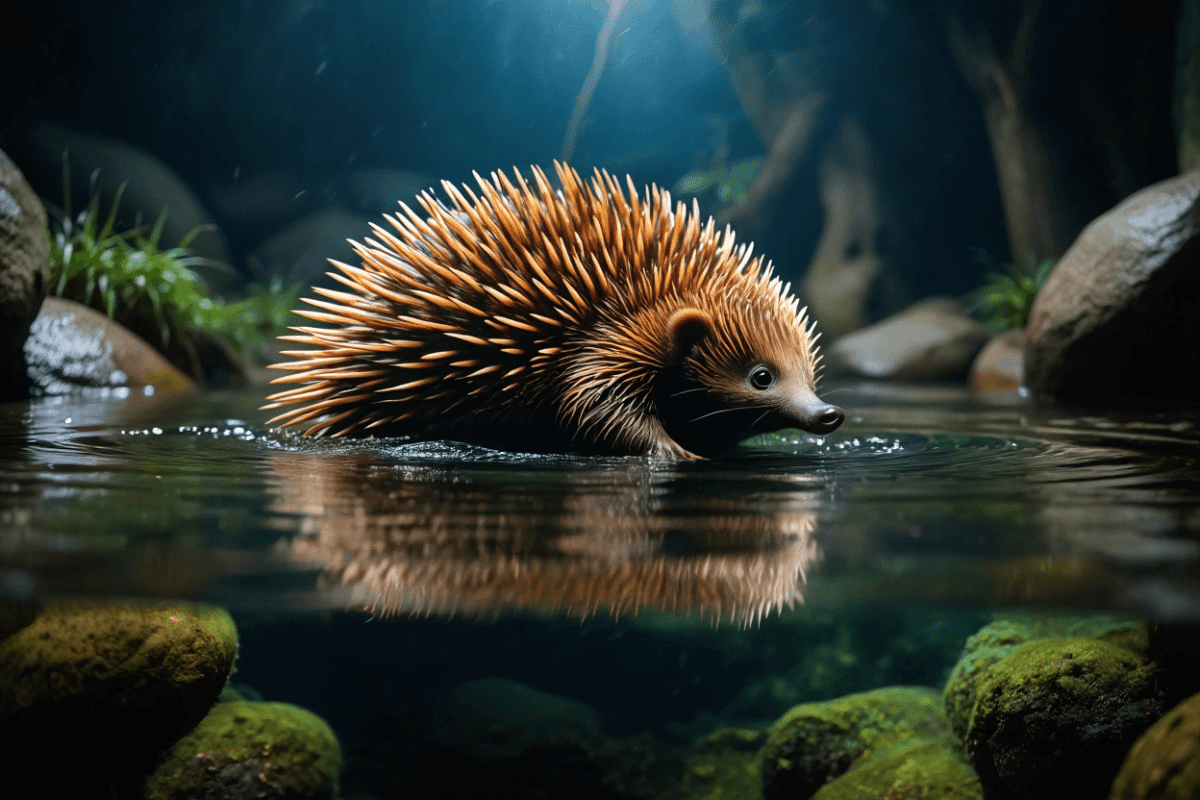
The San Diego Zoo announces an expanded Australia exhibit opening in May 2026, featuring platypuses alongside other iconic Down Under wildlife. Located in Balboa Park, this enhanced experience will showcase some of Earth’s most unusual creatures in historically accurate habitats. The facility remains the only zoo outside Australia housing platypuses in North America.
🔥 Quick Facts
- San Diego Zoo Safari Park houses the only platypuses outside Australia in North America
- May 2026 marks the Australian exhibit’s major expansion in Balboa Park
- Platypuses require cool water maintained below 67°F due to their dense fur
- These monotremes are egg-laying mammals, one of five living species worldwide
- San Diego Zoo partnerships research platypus conservation with international facilities
Why Platypuses Remain Extraordinarily Rare in Zoos
Platypuses present unique challenges for captive care that explain their absence from most facilities globally. These semi-aquatic egg-laying mammals are endemic to eastern Australia, including Tasmania, and possess physiological requirements few zoos can meet. Unlike most mammals, they cannot efficiently dissipate body heat through their skin due to dense fur—creating a critical dependency on temperature-controlled environments.
The San Diego Zoo Safari Park succeeded where others failed by developing specialized systems for platypus management. Facility staff maintain water temperatures under 67 degrees Fahrenheit and provide air-conditioned habitats. Additionally, platypuses consume only live prey—small invertebrates like freshwater shrimp and insect larvae—requiring the zoo to simultaneously maintain separate populations of food organisms. This dual-habitat management distinguishes the San Diego Zoo’s operation as a world-leading facility.
The Australian Wonders: A Comprehensive Exhibit Transformation
The Conrad Prebys Australian Outback section represents the San Diego Zoo’s most ambitious regional expansion. Beyond platypuses, visitors will encounter koalas, kangaroos, Tasmanian devils, cassowaries, and bowerbirds—species collectively representing Australia’s unparalleled biodiversity. The May 2026 debut coincides with the completion of newly reimagined habitats incorporating Australian botanical specimens including Queensland lacebark trees and bottlebrush plants.
This expansion reflects broader trends in modern zoo design. Rather than isolating species in sterile enclosures, habitat-immersion exhibits recreate ecosystem microclimates. The platypus habitat, notably, uses reversed day-night lighting—platypuses are nocturnal, so the zoo inverts their photoperiod to align with visitor hours. When it’s daylight outside, the exhibit displays nighttime conditions, allowing guests to observe naturally active animals.
Global Platypus Conservation: San Diego’s Critical Role
| Factor | Details |
| Only Platypuses Outside Australia | San Diego Zoo Safari Park (North America only) |
| Care Requirements | Water below 67°F, air conditioning, live prey only |
| Conservation Partnership | San Diego Zoo Wildlife Alliance + Taronga Western Plains Zoo + WIRES |
| Lifespan in Captivity | 15-17 years (similar to wild populations) |
| Breeding Success | Extremely difficult; no breeding outside Australia achieved yet |
| Research Focus | Habitat quality, stress responses, invertebrate prey sourcing |
The San Diego Zoo Wildlife Alliance collaborates with international partners through Platypus Rescue HQ at Taronga Western Plains Zoo in Australia. This partnership, funded by the University of New South Wales and San Diego Zoo, conducts research into platypus ecology, stress management, and habitat requirements—knowledge critical for wild population conservation. As climate change threatens Australian freshwater ecosystems, understanding platypus adaptability becomes increasingly urgent.
“Platypuses are densely furred and cannot readily dissipate heat, so they need to be provided a cool (air conditioned) environment and cool water—chilled to under 67 degrees Fahrenheit. We have special staff who work to maintain their water systems as well as the water systems that maintain their invertebrate prey.”
— San Diego Zoo Wildlife Alliance Staff, Platypus Care Specialists
What Makes Platypuses Biologically Unique
Platypuses occupy a position of extraordinary biological significance. They represent one of only five surviving monotreme species—egg-laying mammals that bridge the evolutionary gap between reptiles and placental mammals. The platypus possesses a ten-sex chromosomal system (compared to our two), venomous spurs on males, and a specialized electrolocation snout containing 40,000 electroreceptors for detecting prey in murky—
The platypus’s unique biology explains zoo exhibit complexity. Their evolutionary distinctiveness makes them sensitive to environmental shifts that other mammals tolerate easily. Temperature fluctuations, water chemistry imbalances, stress from transportation, and prey availability disruptions can trigger fatal responses. The May 2026 expansion at San Diego Zoo represents years of technical refinement specifically addressing these sensitivities.
Visiting the San Diego Zoo’s Australian Wonders This May
The San Diego Zoo sits on 100 acres in Balboa Park, minutes from downtown San Diego, hosting over 4,000 animals representing 650 species. The Australian Wonders section features multiple themed zones: the Billabong showcases freshwater habitat species; Arid Australia displays drought-adapted creatures; and Country Road offers eucalyptus groves and open grassland spaces. The platypus exhibit stands as the crown jewel—a dark, climate-controlled chamber with educational signage explaining nocturnal adaptations.
Visitors should plan for the May 2026 opening to experience a newly reimagined Australian experience that integrates the latest in habitat design. The facility typically operates daily, with extended summer hours beginning in May. Tickets start at approximately $78 for general admission.
Why This May Matter for Future Zoo Conservation Technology
The San Diego Zoo’s platypus program establishes a template for managing stress-prone species in captivity. As climate change accelerates and habitat fragmentation increases, more species may require intensive ex-situ conservation support. The technical innovations developed for platypus care—precision water temperature control, live-prey farming systems, reversed photoperiods—become transferable technologies for other threatened species requiring similar interventions.
The May 2026 expansion signals institutional commitment to this mission. Rather than viewing zoo animals as mere attractions, the San Diego Zoo positioned itself as a conservation research hub where captive populations inform wild population management and broader ecosystem understanding. For California visitors and Australian wildlife enthusiasts worldwide, the expanded exhibit offers rare access to understanding one of nature’s most extraordinary organisms.
Sources
- San Diego Zoo Wildlife Alliance – Platypus species profiles, care standards, and conservation partnerships
- San Diego Zoo Safari Park – Exhibit information, habitat design, and live Platypus Cam documentation
- Taronga Western Plains Zoo & WIRES – Platypus Rescue HQ research program and conservation initiatives
- San Diego.org – Spring 2026 exhibit announcements and opening timeline
- Visit California – San Diego Zoo Australian Outback exhibit details and visitor information