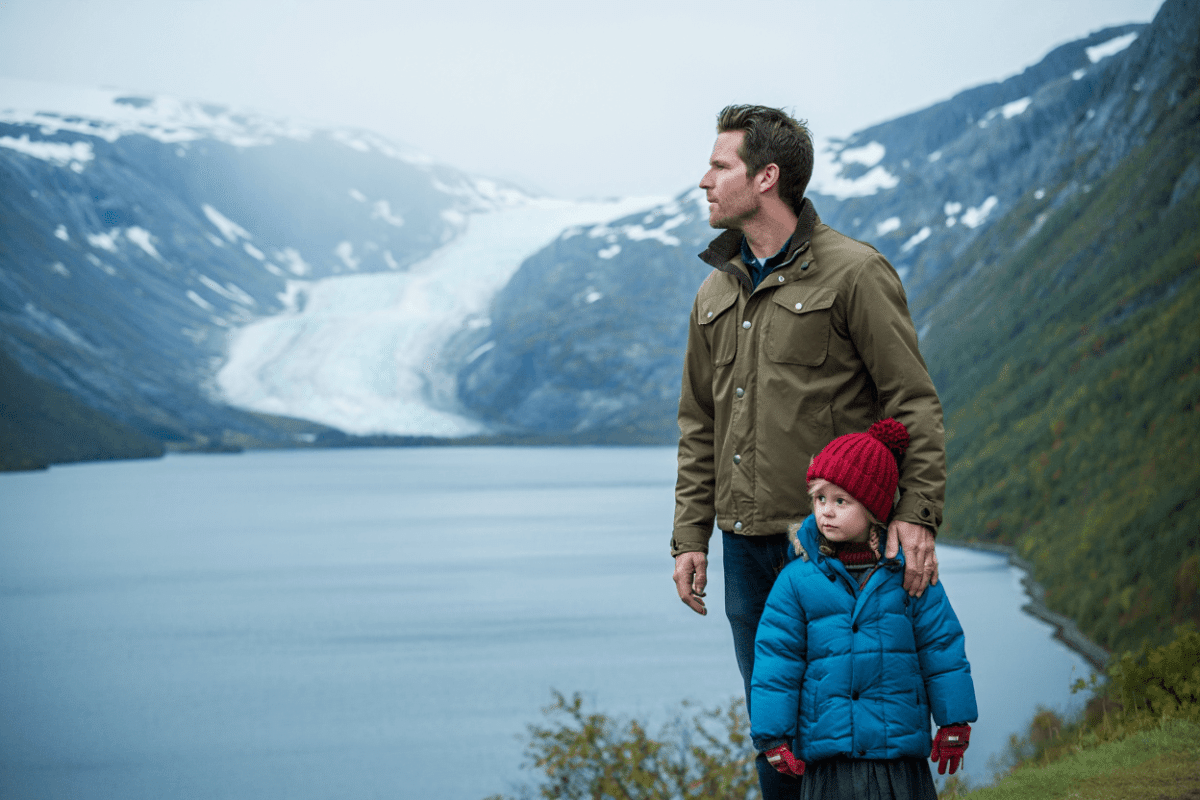
Romanian director Cristian Mungiu claimed his second career Palme d’Or at the 79th Cannes Film Festival, which concluded on May 23, 2026 in France. His English-language drama Fjord, starring Sebastian Stan and Renate Reinsve, received a thunderous 10-minute standing ovation during its world premiere, cementing its position as a major competition contender before the final awards ceremony.
🎬 Quick Facts
- Palme d’Or Winner: Fjord by Cristian Mungiu
- Jury President: Park Chan-wook (South Korea), acclaimed director of Oldboy and The Handmaiden
- Festival Dates: May 12-23, 2026, held in Cannes, France
- Honorary Palme d’Or Recipients: Barbra Streisand and Peter Jackson
- Distributor Record: Neon achieved its 7th Palme d’Or with Fjord
Mungiu’s Return to Cannes Glory
Cristian Mungiu established his credentials as one of cinema’s most significant contemporary voices with his 2007 Palme d’Or for the controversial drama 4 Months, 3 Weeks and 2 Days. His 2026 victory marks his second triumph at the world’s most prestigious film festival, spanning nearly two decades of artistic evolution. Fjord represents a notable evolution in Mungiu’s practice—it marks his first feature entirely in English, departing from the Romanian-language narratives that defined his previous works. This linguistic shift signals his ambition to engage with international audiences while maintaining the psychological depth and social complexity audiences expect from his filmmaking.
The film’s narrative follows a complex family dynamic unfolding in a glacier landscape, exploring themes of responsibility, secrecy, and moral ambiguity. Critics have noted that Mungiu’s transition to English-language cinema does not compromise his distinctive directorial voice. Instead, it expands his creative palette, allowing him to work with internationally recognized actors while preserving his signature slow-burn tension and intimate character studies.
Park Chan-wook’s Jury Leadership at a Historic Edition
Park Chan-wook, the South Korean master director, presided over the 79th edition’s jury with a panel that included Demi Moore, Ruth Negga, Laura Wandel, Chloé Zhao, and Diego Luna, among others. Park’s own Cannes history is extensive—he previously competed in the main competition with Oldboy (2004), which won the Grand Prix, The Handmaiden (2016), Decision to Leave (2022), which earned him Best Director, and Thirst (2009), winner of the Jury Prize. His leadership represented a continuation of the festival’s commitment to international cinema and artistic diversity, with him overseeing award decisions for a festival that attracted submissions and premieres from more than 50 countries.
As jury president, Park emphasized the importance of emotional authenticity over commercial formulas, a philosophy that likely influenced the selection of Mungiu’s introspective drama as the festival’s highest honor. The jury’s deliberations occurred against the backdrop of global cinema undergoing significant technological and narrative shifts, with streaming platforms, independent productions, and international co-productions reshaping film financing and distribution.
Major Awards and Festival Standouts
Beyond the Palme d’Or, the 79th edition distributed major awards recognizing excellence across categories. La Gradiva, directed by Marine Atlan, secured the Grand Prize, offering recognition to a powerful French-language competition entry. The festival also acknowledged rising talent through mechanisms like the Rising Star Award, bestowed upon Aina Clotet for her performance in Alive. Special honors included the Award for Distribution, recognizing A Girl Unknown by Zou Jing, distributed by Pyramide Distribution, acknowledging the crucial role of specialized distributors in bringing international cinema to audiences.
The ceremony itself benefited from ceremonial traditions and contemporary presentation styles. Tilda Swinton, the Scottish actress known for her distinctive presence in avant-garde and art-house cinema, presented the Palme d’Or, connecting Cannes’ legacy of honoring cinematic artistry with contemporary cultural recognition. The festival maintained its tradition of awarding honorary Palme d’Or distinctions, recognizing lifetime achievements in cinema. Barbra Streisand received this honor at the closing ceremony on May 23, celebrating her 65-year career spanning acting, directing, and music. Peter Jackson, the New Zealand director behind the Lord of the Rings trilogy, similarly received an honorary recognition, acknowledging his transformative impact on global cinema.
Industry Impact and Distributor Achievement
The victory of Fjord marked a historic achievement for Neon, the independent distributor that has become synonymous with daring, boundary-pushing cinema. This represented Neon’s seventh Palme d’Or victory, a record that underscores the company’s influence in identifying and championing films that resonate with the Cannes jury’s artistic sensibilities. Previous Neon Palme d’Or winners include films that have become canonical works of contemporary cinema, establishing the distributor as a tastemaker with significant cultural authority. This 2026 victory further solidifies Neon’s position in the global film industry and suggests that audiences worldwide will anticipate Fjord’s theatrical release following its Cannes triumph.
The film’s success also reflects broader trends in international cinema production. Fjord represents a model of European-American co-production, combining European artistic traditions with international casting and English-language dialogue. This model has become increasingly common as filmmakers seek to balance artistic integrity with commercial viability in a fragmented global market. For American audiences in particular, Fjord’s casting of Sebastian Stan, the Bulgarian-American actor known for his roles in Marvel productions and prestige dramas, provides a recognizable international film entry point.
Cannes 2026: Significance Within Festival History
The 79th edition represented a continuation of Cannes’ role as the world’s premier venue for premiering ambitious international cinema. Founded in 1946, the festival has established itself as more prestigious than the Academy Awards, according to film critics and industry observers. The festival’s May 12-23 schedule created a concentrated period of cinematic celebration, press attention, and industry dealmaking that influenced theatrical releases and awards conversations throughout the year. The 12-day festival format has proven sustainable for maintaining both accessibility and prestige while allowing sufficient time for screening competitive selections and parallel sections featuring experimental work and international retrospectives.
This edition featured selections from renowned directors maintaining their presence in competition, alongside emerging voices seeking breakthrough recognition. The diversity of the competition lineup reflected Cannes’ commitment to global representation, with significant submissions from Asia, Latin America, Africa, and Europe. Mungiu’s victory validates the festival’s continued commitment to recognizing psychological depth and formal innovation over commercial narrative formulas, establishing a precedent for future jury decisions and suggesting that audiences globally will gravitate toward intellectually rigorous cinema when given institutional support.
What Will Fjord’s Success Mean for International Cinema Moving Forward?
Fjord’s Palme d’Or victory signals several important directions for global cinema. The film’s success as a first English-language work by an acclaimed European director suggests that international audiences and industry insiders value artistic continuity over linguistic convention. Will other European auteurs follow Mungiu’s path toward English-language productions? The decision carries risks—some directors have found that linguistic adaptation compromises their distinctive voice. Yet Mungiu’s achievement demonstrates that strong storytelling and visual mastery transcend language barriers. Additionally, the festival’s recognition of Neon’s curatorial judgment raises questions about how independent distributors will shape theatrical releases and which films might find limited distribution despite Cannes recognition. How will major streaming platforms respond to prestige films winning at Cannes, and will they commit to theatrical releases before digital availability?
“The Cannes Film Festival remains the world’s most prestigious venue for discovering and celebrating cinema that challenges, provokes, and moves audiences through artistic excellence rather than commercial calculation.”
— According to festival officials and international film critics analyzing the 79th edition’s significance
The Festival’s Legacy Continues
The Cannes Film Festival’s 80-year history demonstrates remarkable consistency in recognizing cinema’s most significant achievements. While the festival has frequently been criticized for occasional controversial selections and jury decisions that prioritize artistic radicalism over broad appeal, its choices typically age well—works that seemed challenging or obscure at the festival often become canonical within five to ten years. Fjord’s recognition positions it favorably for continued critical appreciation and potential success at subsequent awards seasons. The film’s 10-minute standing ovation also suggests that audiences and industry professionals responded emotionally to the work, a prerequisite for films that aspire to sustained cultural impact beyond their initial theatrical releases.
For American audiences who may not have regular access to European art-house cinema, Fjord’s Cannes victory and subsequent Neon distribution create opportunities for theatrical viewing in major metropolitan areas and cities with robust independent cinema programming. The film joins a distinguished lineage of Palme d’Or winners that achieved crossover success in English-speaking markets, suggesting that commercial viability and critical prestige are not mutually exclusive when artistic quality remains paramount.
Sources
- Festival de Cannes Official Website — Award winners list and ceremony details for the 79th edition
- Reuters — Confirmation of Fjord’s Palme d’Or victory and Mungiu’s career achievements
- Variety — Jury composition and festival timeline information
- The Hollywood Reporter — Distribution records and industry analysis of Neon’s achievements
- Wikipedia (2026 Cannes Film Festival) — Complete award categories and competition participants
- France 24 — Live coverage and closing ceremony presentation details