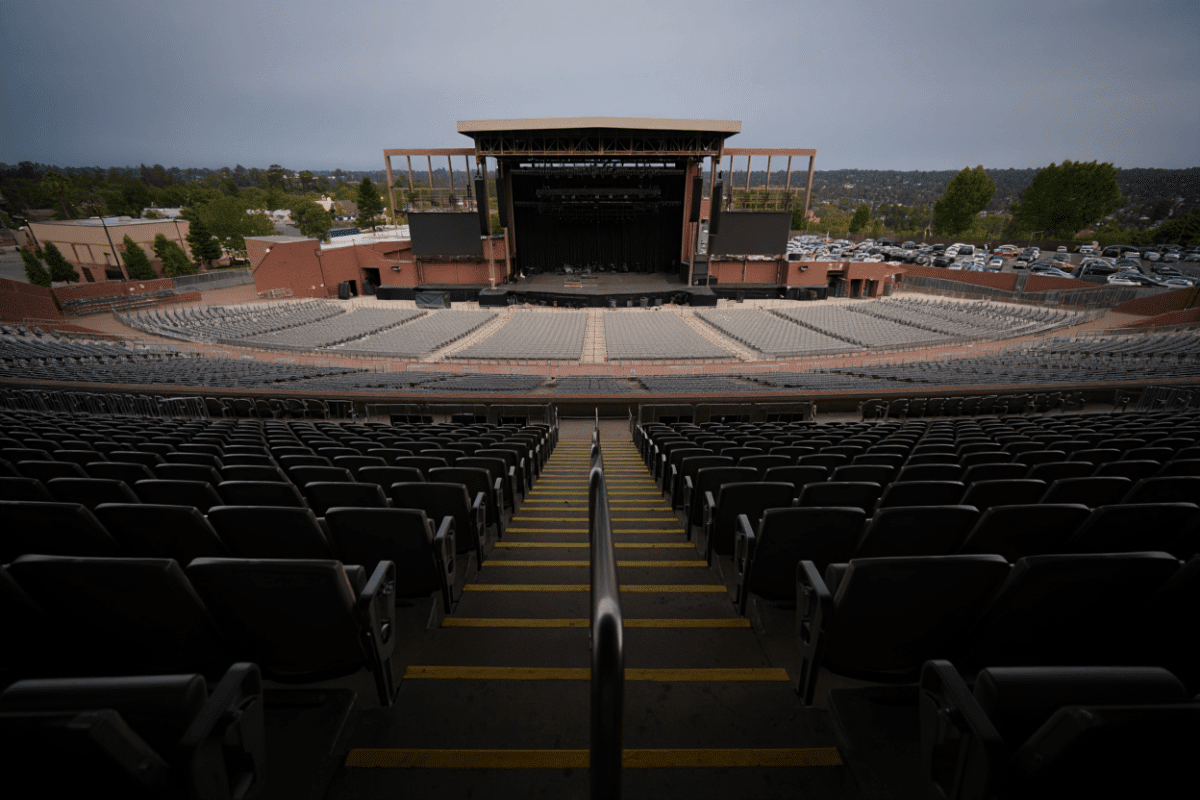
Live Nation Entertainment faces a negligence lawsuit filed in May 2026 over security failures at Credit Union 1 Amphitheatre in Tinley Park, Illinois. The lawsuit alleges the concert promotion giant failed to protect a 16-year-old girl from sexual assault during a Wiz Khalifa and Sean Paul performance on July 22, 2025. This case raises critical questions about venue liability, minor protection protocols, and security standards across major concert venues in the United States.
🔥 Quick Facts
- Lawsuit filed May 19, 2026 by family of 16-year-old assault victim
- Roman Basso, 18, from Frankfort, Illinois charged with aggravated criminal sexual assault (Class X felony)
- Incident occurred July 22, 2025 at Wiz Khalifa/Sean Paul concert
- Attorney Molly Wells claims Live Nation failed security and safety duties for minors
- Settlement amount undetermined; case involves negligence and inadequate crowd control claims
Background: The July 2025 Concert Assault and Investigation
The incident occurred during a summer concert featuring hip-hop artists Wiz Khalifa and Sean Paul at the Credit Union 1 Amphitheatre, a major outdoor venue in suburban Illinois. Following the alleged assault, hospital staff in Ohio reported the incident to law enforcement. Tinley Park Police launched a months-long investigation, collecting surveillance video, witness statements, and forensic evidence. In January 2026, authorities charged Roman Basso, an 18-year-old Arizona State University student, with aggravated criminal sexual assault/bodily harm—a Class X felony carrying a potential prison sentence of 6 to 30 years with no probation eligibility. The criminal case against Basso remains separate from this civil lawsuit targeting Live Nation’s operational failures.
Core Claims: Negligence in Venue Security and Minor Protection
Attorney Molly Wells, representing the family, states that Live Nation failed to uphold basic security duties during the concert. The lawsuit alleges multiple systemic failures: inadequate security personnel deployment, insufficient crowd control measures, failure to screen for intoxicated or predatory individuals, and lack of safety protocols specifically designed to protect minors. According to Wells, when a minor purchases a concert ticket, the promoter and venue assume a direct responsibility to maintain a safe environment. The assault occurred in an area where supervision proved inadequate, enabling the perpetrator to commit the crime with minimal intervention. The lawsuit further alleges that venue staff failed to identify, isolate, or expel Basso despite observable warning signs. The case disputes whether standard security measures at the venue met industry standards for all-ages or mixed-age events.
Industry Context: Live Nation’s Security and Liability Record
| Aspect | Details |
| Venue Operator | Live Nation Entertainment + Credit Union 1 Amphitheatre (Tinley Park) |
| Event Date | July 22, 2025 – Wiz Khalifa & Sean Paul concert |
| Victim Age | 16 years old (minor) |
| Alleged Perpetrator | Roman Basso, 18, ASU student, Frankfort IL |
| Criminal Charge | Aggravated Criminal Sexual Assault (Class X felony) |
| Lawsuit Filing Date | May 19, 2026 (9 months post-incident) |
| Attorney for Family | Molly Wells, Chicago-based civil rights firm |
| Live Nation’s Position | Formal defense not yet publicly detailed |
Live Nation Entertainment, the world’s largest concert promoter, continues to face ongoing regulatory and legal scrutiny. In April 2026, a federal jury found that Live Nation and Ticketmaster operated an illegal monopoly that overcharged fans and excluded competitors. This recent verdict underscores a pattern of alleged failures in industry oversight. The Tinley Park case represents a distinct liability claim—focused not on pricing, but on physical safety and harm to a vulnerable minor. Industry standards for concert security typically include proportional staffing ratios, entry screening protocols, incident reporting systems, and rapid emergency response capabilities. The lawsuit will likely examine whether Live Nation met these benchmarks.
“It’s a life-changing event that happened to her and it’s something that can never be undone. And so, this is something she’ll live with for the rest of her life.”
— Molly Wells, Attorney for Alleged Victim’s Family, NBC Chicago Interview (May 2026)
Legal Implications: Venue Liability and Minor Protection Standards
This lawsuit establishes a critical legal precedent regarding concert venue liability. Illinois premises liability law generally requires property owners and operators—including venue promoters—to maintain a reasonably safe environment for patrons, especially minors. The case will likely hinge on whether Live Nation owed a heightened duty of care to a 16-year-old attendee and whether the venue’s actual security met a reasonable standard for similar events. The family’s attorneys will need to demonstrate that the assault was reasonably foreseeable given typical crowd composition, venue size, and known risks associated with large outdoor concerts. If successful, this case could mandate industry-wide changes: mandatory age-verification protocols, dedicated minor safety zones, plainclothes security in patron areas, and real-time incident reporting dashboards. The outcome may also influence how third-party background checks integrate into venue entry procedures. Live Nation’s defense will likely argue that criminal acts by unidentified perpetrators cannot be entirely prevented and that reasonable security measures were in place.
Similar civil actions have emerged in recent years. Concert venue lawsuits involving security failures and crowd safety have become increasingly common across the U.S., particularly following high-profile incidents at major festivals. The recent departure of Brad Banducci as Ticketek CEO reflects broader operational challenges in the concert ticketing and venue management industry. Meanwhile, artists continue organizing large-scale international tours, placing continued emphasis on venue safety protocols and crowd management systems.
What Comes Next: Discovery, Settlement, and Timeline
The case now enters discovery phase, during which both sides exchange evidence, depositions, and documented communications. Live Nation will face requests for security policies, incident reports, staffing records, and training documentation from the July 2025 event. The family’s legal team will likely request comparative analysis showing how other similar-sized venues handle minor safety. Experts in crowd psychology, security protocols, and event management may be retained by both parties. Settlement negotiations typically begin after preliminary discovery concludes—often 6 to 18 months post-filing. Given the severity of the alleged incident and the civil rights implications, this case could extend to trial if the parties fail to reach a settlement. Tinley Park Police and the Cook County State’s Attorney may be called as witnesses regarding their investigation findings.
Will Concert Venues Face Stricter Safety Mandates Going Forward?
If Live Nation and Credit Union 1 Amphitheatre are found liable, Illinois lawmakers may accelerate passage of concert venue safety legislation mandating specific security measures. Several U.S. states have already begun standardizing crowd safety protocols following tragedies and assaults at large events. The critical question remains whether promoters can be held legally responsible for criminal acts by individual perpetrators, or whether reasonable security measures constitute adequate defense. This lawsuit may reshape that legal calculus. For parents and young concert attendees, the case underscores the importance of vetted pre-event safety information, buddy systems, emergency contact protocols, and awareness of venue-specific hazards. The outcome could establish a new baseline for what “reasonably safe” means at commercial music events.
Sources
- Chicago Sun-Times – Live Nation lawsuit coverage and Molly Wells statements (May 2026)
- FOX 32 Chicago – Security failure allegations and venue compliance details (May 2026)
- NBC Chicago – Family lawsuit filing and attorney commentary (May 2026)
- ABC 7 Chicago – Roman Basso criminal charges and case timeline (May 2026)
- Chicago Tribune – Legal analysis of negligence claims (May 2026)
- Tinley Park Police Department – Criminal investigation summary (January 2026)