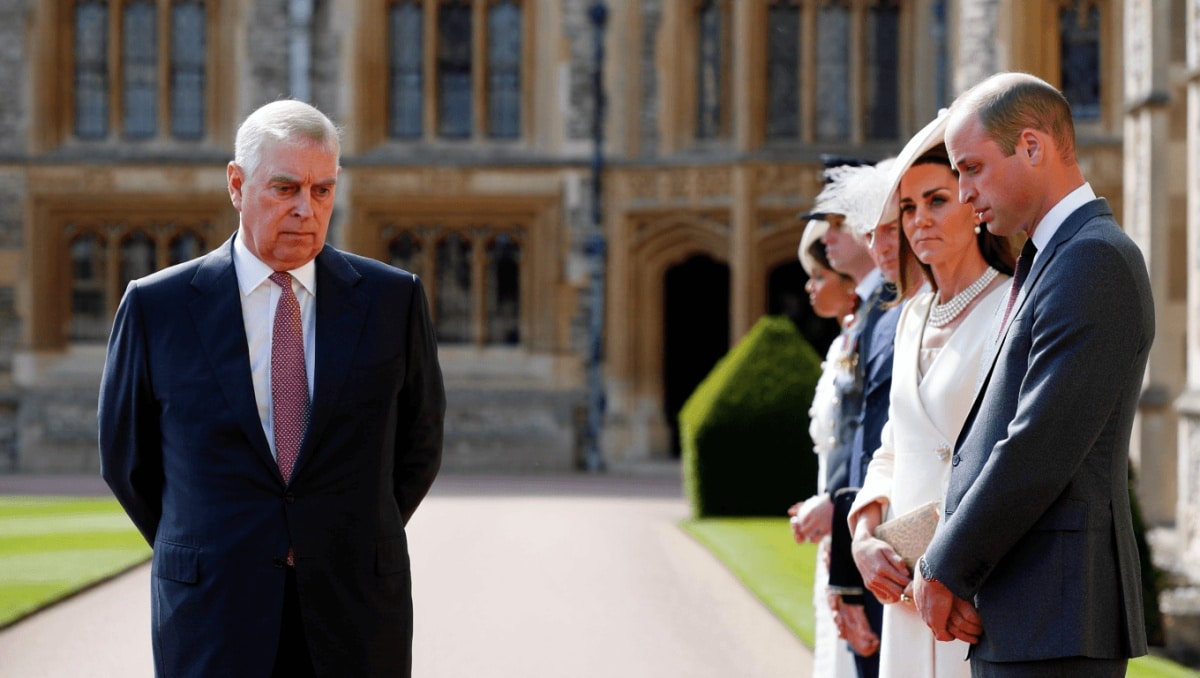
The royal family held its traditional Easter service at Windsor Castle this weekend, a public gathering that took on extra significance amid ongoing controversy surrounding a senior royal. The attendance — and notable absences — underscored both continuity and strain within the monarchy as officials navigate a legal storm.
Attendance and absences at St George’s Chapel
The service at St George’s Chapel drew King Charles III and Queen Camilla, alongside Prince William, Princess Kate and their three children, who made a rare public return since 2023. Close family members including Princess Anne and Prince Edward were also present. Missing from the congregation were the former prince and several of his close relatives.
| Present | Absent |
|---|---|
| King Charles III; Queen Camilla | Prince Andrew |
| Prince William; Princess Kate; Prince George; Princess Charlotte; Prince Louis | Sarah, Duchess of York (Sarah Ferguson) |
| Princess Anne; Prince Edward and their families | Princess Beatrice; Princess Eugenie |
Crowds outside Windsor saw informal moments: the king greeted grandchildren, and the queen accepted a small bouquet and offered a warm “Happy Easter” to well-wishers. The monarch did not read an Easter address on the day.
Wardrobe and return to public life
Style choices reflected a subdued, traditional tone. Charles wore a navy pinstripe suit while Camilla chose a coordinating red coat and hat. Kate appeared in a cream skirt suit with a matching hat; 10‑year‑old Princess Charlotte was seen in a tan Catherine Walker coat over a pale blue dress, pieces linked to designers the princess favors. William and the two sons wore dark suits with light blue ties.
This marked Prince William and Princess Kate’s first visible Easter service since 2023; the couple has kept a lower profile while Kate has undergone treatment for cancer, announced in early 2024. Their presence signals a gradual return to official family engagements.
- When: Easter service, Windsor Castle, April 2026
- Why it matters: The event occurred amid heightened scrutiny of the royal household after a high‑profile arrest
- Public posture: The senior royals emphasized support for legal proceedings and a commitment to due process
Legal pressure and the wider fallout
In February, the former Prince Andrew was arrested on suspicion of misconduct in public office — an unprecedented development for a senior royal in modern times. Charles removed Andrew’s remaining official royal patronages and titles the previous autumn, and the palace has since called for a proper, impartial investigation.
Royal aides and senior family members have repeatedly framed the matter as one for the authorities, stressing that the law must take its course. The former prince has denied criminal wrongdoing and has publicly expressed regret over his past associations; he has not been formally charged.
The absence of Andrew and several close relatives from the service — after attending in 2025 — highlighted the family’s efforts to limit public exposure while the situation unfolds. For the monarchy, the episode raises questions about transparency, public trust and how royal duties will be managed in the near term.
What to watch next
Expect the palace to balance two priorities: maintaining normal ceremonial life and managing reputational risk as investigations continue. The coming weeks could include further adjustments to engagements, statements from the household, or legal developments affecting senior family members.
For the public, the Easter gathering offered a snapshot of the institution attempting to project stability while addressing a rare and sensitive crisis — a dynamic likely to shape royal coverage and public debate in the short term.