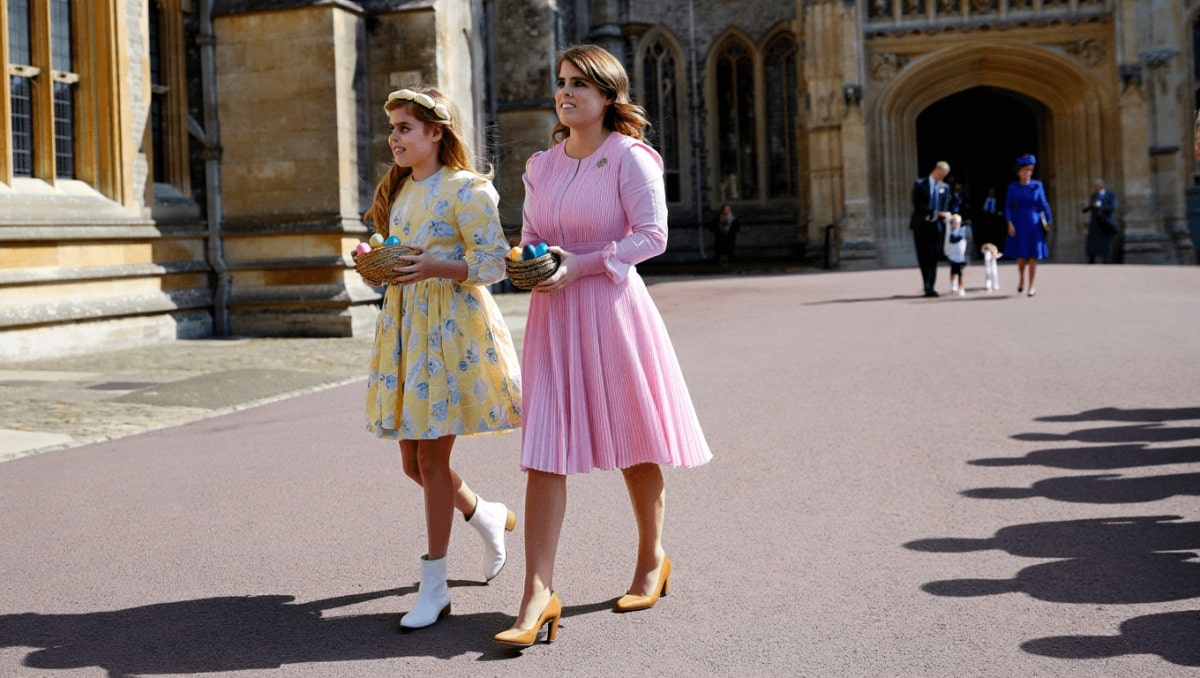
Princesses Beatrice and Eugenie did not attend the royal family’s Easter service at St. George’s Chapel in Windsor, a decision palace insiders link to the arrest in February of their father, Prince Andrew. Their absence underlines fresh tensions around the monarchy as the legal case and public scrutiny continue to unfold.
An unnamed royal source told Reuters and ABC that the sisters chose to stay away from the traditional gathering. The rest of the senior family — including King Charles III, Queen Camilla, Prince William, Princess Kate and the couple’s three children — attended the service, along with Princess Anne and Prince Edward.
What changed within the family
Beatrice and Eugenie’s pattern of public appearances has shifted over the past year. They were photographed with their parents at an Easter service in 2025, but by the following Christmas they were seen leaving St. Mary Magdalene’s Church without Andrew and Sarah Ferguson. Their decision to skip this year’s Easter event marks a further distancing from their father in public settings.
The sisters retain their royal styles and remain active in their own charitable and professional roles. The changes have mainly affected Andrew’s formal standing: in October the monarch moved to remove his official title and honors, a process that did not extend to his daughters.
Timeline of recent developments
- February: Andrew was arrested on suspicion of misconduct in public office.
- October: The king initiated steps to withdraw Andrew’s royal title and honors.
- December: Beatrice and Eugenie were photographed attending Christmas services separately from their parents.
- March 9, 2026: Senior royals gathered at Westminster Abbey for Commonwealth Day; Andrew was absent.
- This Easter: The princesses did not attend the family service at St. George’s Chapel, Windsor.
The immediate consequence is a clearer public separation between Andrew and the core working royals at ceremonial events. For the family, such absences affect optics and can influence how the monarchy is portrayed in media coverage and public debate.
Legal and reputational backdrop
Andrew has faced intense public scrutiny because of his past association with the late convicted sex offender Jeffrey Epstein. He has denied wrongdoing and said he regrets the friendship; according to reporting, he has not been charged in connection with Epstein-related investigations. Buckingham Palace issued a statement from the monarch urging “a full, fair and proper” inquiry and saying the law must take its course.
Sarah Ferguson, the former Duchess of York, has also seen fallout from past ties: several charities cut formal links after her name appeared in Epstein-related files. Her representatives have said she ended contact once allegations were known; she has not been accused of criminal conduct.
Lawyers and royal-watchers note that public events are routinely managed to balance private family relationships with institutional responsibilities. This recent pattern of selective attendance underscores those tensions: when a family member becomes the focus of legal proceedings, visible solidarity can be constrained by protocol, public expectation and legal considerations.
For now, Beatrice and Eugenie remain in their established roles and titles, even as their father’s position within the royal framework continues to be contested. How often they appear at major family services going forward could be shaped both by the status of the legal matter and by decisions about how the palace presents the monarchy to the public.
Reporting contributions: Reuters, ABC.