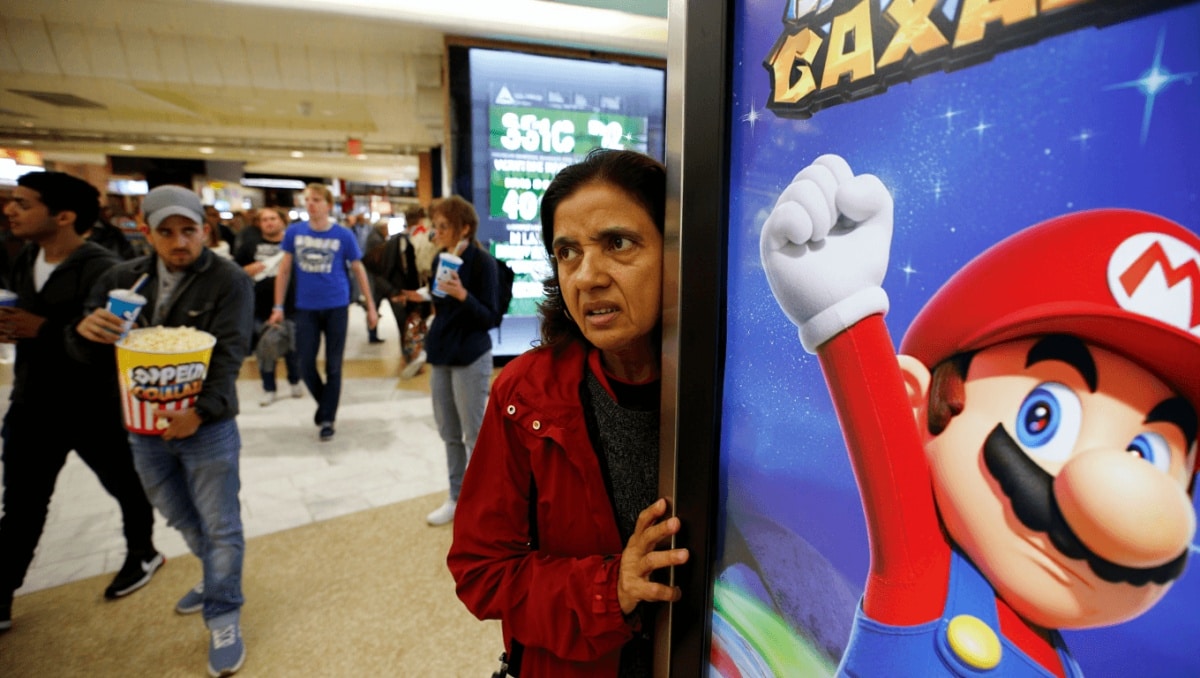
The new animated sequel from Nintendo and Illumination opened to blockbuster numbers this Easter weekend, reshaping early 2026’s box office landscape and underscoring Hollywood’s renewed appetite for video-game adaptations. Why it matters now: the film’s launch not only set a year-to-date record but also reignites questions about franchise-building, studio strategies and which Nintendo properties will next hit theaters.
According to Comscore estimates, The Super Mario Galaxy Movie earned roughly $190.1 million over the five-day Easter frame and about $130.9 million across the traditional three-day weekend. That performance made it the biggest domestic opening of 2026 so far, surpassing the March debut of Ryan Gosling’s sci-fi title, which opened to an estimated $80.5 million over three days.
The sequel’s opening sits just short of the 2023 Super Mario film’s initial surge — the first movie took in about $204.6 million across five days and $146.4 million over three — but still ranks as one of the strongest video-game-based launches ever. Only the original Super Mario film and the 2025 Minecraft feature, which posted roughly $162.8 million in its three-day opening, outpaced it in the domestic charts for game-to-film adaptations.
- Five-day debut (Comscore estimate): $190.1 million
- Three-day total: $130.9 million
- Critical reaction: Critics’ ratings trailed the original — Rotten Tomatoes shows about 41% approval versus 59% for the 2023 movie
- Audience response: CinemaScore reported an A-, down slightly from the first film’s A
Critics were mixed, and audience scores dipped modestly, but neither reduced the film’s commercial momentum. Review aggregators placed the sequel lower than its predecessor, yet the movie still drew large families and gaming fans to theaters over the holiday weekend.
On the cast front, the sequel reunited familiar voices and added new ones from Nintendo lore: Brie Larson voices Princess Rosalina, Benny Safdie plays Bowser Jr., and Donald Glover returns as Yoshi. A surprise addition — Glen Powell as Fox McCloud — was confirmed only days before release, a late reveal that boosted buzz by hinting at cross-franchise connections.
Studios seem to be exploring the idea of a broader Nintendo cinematic universe. The Galaxy sequel’s end-credits scene teased the arrival of a notable Nintendo character absent from the first two films, sparking speculation about an unannounced cameo voiced by a high-profile actor who doesn’t speak on screen.
What this means for Hollywood: the success reinforces a recent trend in which video-game properties have become reliable tentpoles. After a long stretch of uneven adaptations — including the notorious 1993 live-action Super Mario effort — recent hits such as Five Nights at Freddy’s and HBO’s Emmy-winning The Last of Us have shown studios a viable path forward.
More Nintendo projects are already on the horizon. A high-profile live-action adaptation of The Legend of Zelda, featuring Benjamin Evan Ainsworth as Link and Bo Bragason as Princess Zelda, is scheduled for release in May 2027. Outside Nintendo, studios are also moving ahead with new takes on Resident Evil and a live-action Street Fighter film in the pipeline.
At the weekend box office, the Galaxy sequel led the charts, followed by Project Hail Mary in second. Rounding out the top three was The Drama, a Zendaya–Robert Pattinson dramedy that opened to about $14.4 million domestically — a steady start comparable to Zendaya’s recent releases.
Final, studio-verified totals and weekday tracking will be published this week, but the early data already confirms one clear takeaway: Nintendo’s characters remain powerful draws on the big screen, even when reviews are mixed.