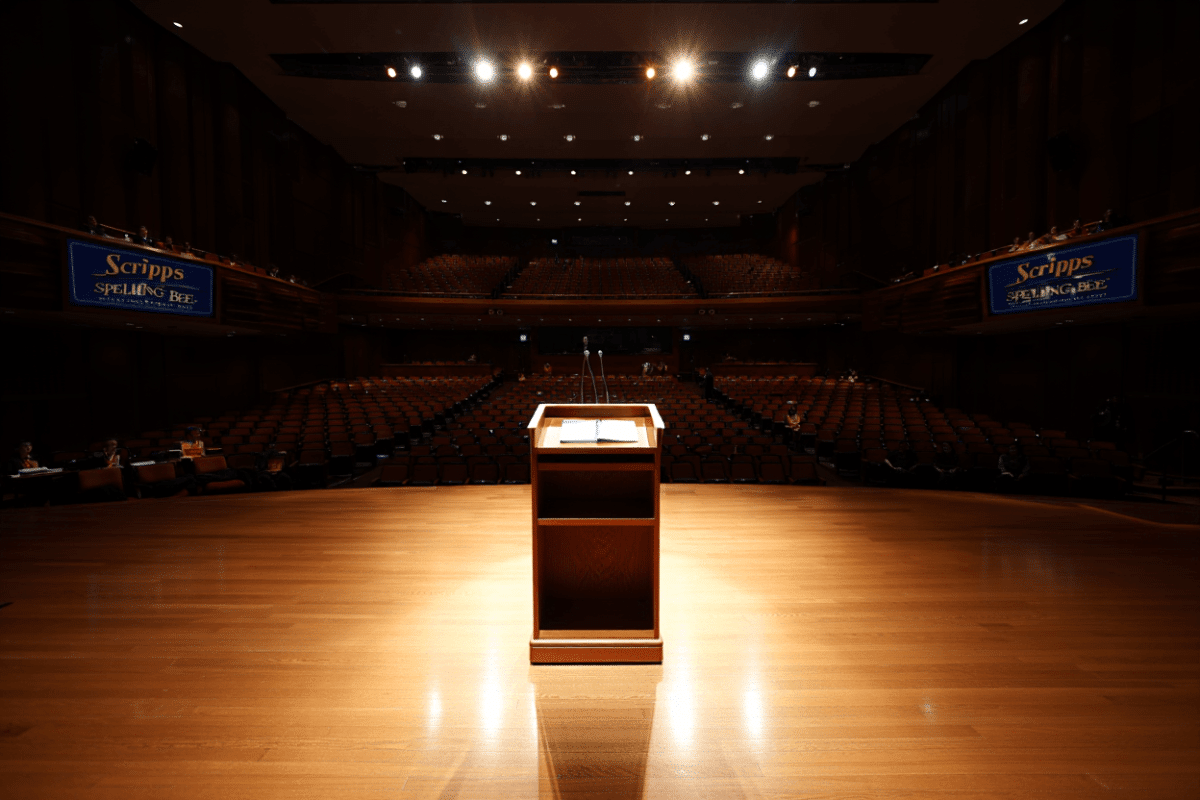
The 98th Scripps National Spelling Bee crowns its champion tonight as 9 finalists compete at the iconic DAR Constitution Hall in Washington, D.C. The championship finals air live at 8 p.m. ET (5 p.m. PT), with the winner claiming the $50,000 grand prize, a commemorative trophy, and the title of national spelling champion. The competition represents the culmination of 247 spellers from across the United States and beyond who competed throughout the week.
🔥 Quick Facts
- 9 finalists advancing from 247 total competitors across multiple rounds
- May 29, 2026: Championship finals air at 8 p.m. ET on ION
- $50,000 cash prize awaits the champion, along with educational scholarships
- DAR Constitution Hall in Washington, D.C. hosts the 98th edition
- Faizan Zaki won last year by spelling “éclaircissement” (French word meaning to clarify)
A Century of Competition: The Scripps Tradition
The Scripps National Spelling Bee has operated continuously since 1925, making it one of America’s longest-running educational competitions. This year marks the 98th iteration of a contest that began with a single champion, Frank Neuhauser from Louisville, who defeated eight competitors for the inaugural title. Over the decades, the event has grown from a regional competition into a national phenomenon broadcast on major networks.
The competition’s structure reflects decades of refinement. 247 spellers began this year’s bee across multiple rounds, competing through preliminary matches, semifinal rounds, and ultimately narrowing down to today’s 9 finalists. The progression tests not just spelling accuracy but also linguistic knowledge, pattern recognition, and composure under pressure.
Meet the 2026 Finalists: Diverse Competitors from Across the Nation
The nine finalists represent diverse geographical backgrounds and competitive experiences. Aiden Meng, 13, from California, brings youth to the competition. Oliver Halkett, 14, also from California, returns with deep preparation. Shrey Parikh, also 14 and from the Golden State, competes alongside Zwe Spacetime, another 14-year-old in the field. Kushi Gottimukkala and Avishka Dudala round out the core competitors, with Sarv Dharavane, a sixth-grader from Dunwoody, Georgia, making a notably young but determined run after finishing third at last year’s nationals. Ishaan Gupta and one additional finalist complete the roster.
The finalists’ ages range from early middle school to high school, with most competitors aged 13-14. This narrow age range reflects the intensive preparation required to reach the national stage. Many finalists have trained for months, studying etymology, linguistic patterns, word origins, and pronunciation guides.
The Prize Structure: Beyond the $50,000
While the $50,000 grand prize captures headlines, the Scripps National Spelling Bee awards significantly more than cash. According to official competition details, the champion receives:
| Award | Details |
| Cash Prize | $50,000 |
| Scripps Cup Trophy | Commemorative trophy awarded since 1925 |
| Educational Awards | College scholarships and merit awards |
| Runner-Up Prize | Second place receives substantial cash award (amount varies yearly) |
| Media Recognition | National television coverage and press opportunities |
The runner-up and third-place finishers receive significant awards as well. In past years, the prize structure has provided cash prizes ranging from $15,000 to $30,000 for positions two through six, depending on tie situations. Education sponsorships often total substantial amounts, with major corporations funding scholarships for top competitors.
Word Difficulty Through the Years: How Standards Have Evolved
The evolution of winning words reveals how the competition has intensified over 101 years of history. In the 1930s, champions won by spelling relatively straightforward words: “knack” (1932), “torsion” (1933). By the 1940s-1950s, complexity increased substantially, with champions mastering “insouciant” (1951)—a French-derived adjective meaning carefree.
Modern championships demand expertise in rare, technical, and etymologically complex vocabulary. Faizan Zaki‘s winning word last year, “éclaircissement“, exemplifies current difficulty standards. This French term refers to clarification or elucidation. Recent generations of winners have tackled words like “staphylococci” (1987, plural of bacteria), “succedaneum” (2001, a substitute), and “autochthonous” (2004, meaning indigenous). This progression reflects competitors’ growing linguistic sophistication and the competition’s commitment to challenging elite spellers.
“Throughout Scripps National Spelling Bee history, championing spellers have demonstrated extraordinary linguistic knowledge and mental discipline. The words have become progressively more challenging, reflecting evolving standards of what American youth can achieve under pressure.”
— According to research compiled from spanning Scripps National Spelling Bee historical records
Tonight’s Broadcast: How to Watch the Finals
The championship finals air live tonight at 8 p.m. ET on ION Television, running approximately until 10 p.m. Multiple streaming platforms offer access: Peacock, YouTube TV, and Tubi will all stream the competition live. For cord-cutters and streaming-first viewers, this multi-platform availability makes the competition accessible nationwide.
The two-hour broadcast format allows viewers to watch the complete championship round, including all words, definitions, and pronunciation guides from the official judges. Live commentary provides expert analysis of competitors’ strategies and linguistic preparation methods. The event generates substantial viewership annually, with dedicated fan communities following along in real time on social media platforms.
What Happens After Tonight: The Winner’s Path Forward
The champion crowned tonight will instantly become a national figure, receiving extensive media coverage and potential speaking invitations. Prior Scripps Bee champions have gone on to notable careers in academia, law, medicine, and media. The title carries significant weight in college applications and scholarship considerations. Many universities actively recruit distinguished spelling bee alumni, recognizing the discipline and cognitive abilities the title represents.
Beyond the immediate celebrity status, the $50,000 prize provides substantial resources for education. Winners typically use funds for college preparation, tutoring, or enrichment programs. The educational scholarships and sponsorship opportunities often exceed the cash prize in total value, creating pathways for winners to pursue advanced academic studies at top-tier institutions. The combination of financial support, national recognition, and competitive prestige makes tonight’s victory transformative for the winner.
Will Any Competitor Join the Elite Circle of Back-to-Back Champions?
One compelling subplot surrounds whether any finalist can become a repeat champion. Historical records show back-to-back victories are extraordinarily rare in Scripps Bee history. The competition’s structure and difficulty progression make consecutive wins a remarkable achievement. Tonight’s finalist roster includes both newcomers and returning competitors who tested their abilities against national standards before.
The drama unfolds as each of the nine spellers approaches the microphone under intense pressure. A single mispronounced letter ends their competition. The word that determines the champion hasn’t been revealed publicly—it remains locked away in judges’ materials. That mystery adds compelling uncertainty: will tonight’s winning word be accessible to most English speakers, or will it represent the esoteric vocabulary typical of twenty-first century national dominance?
Sources
- Scripps National Spelling Bee Official Website (spellingbee.com) — Finalist roster, prize details, broadcast schedule
- The New York Times — 2026 finals coverage and historical context
- USA Today — Finalist profiles and competition methodology
- Fox News — Prize structure and champion benefits information
- Historical Spelling Bee Word Archives — Winning word progression since 1925