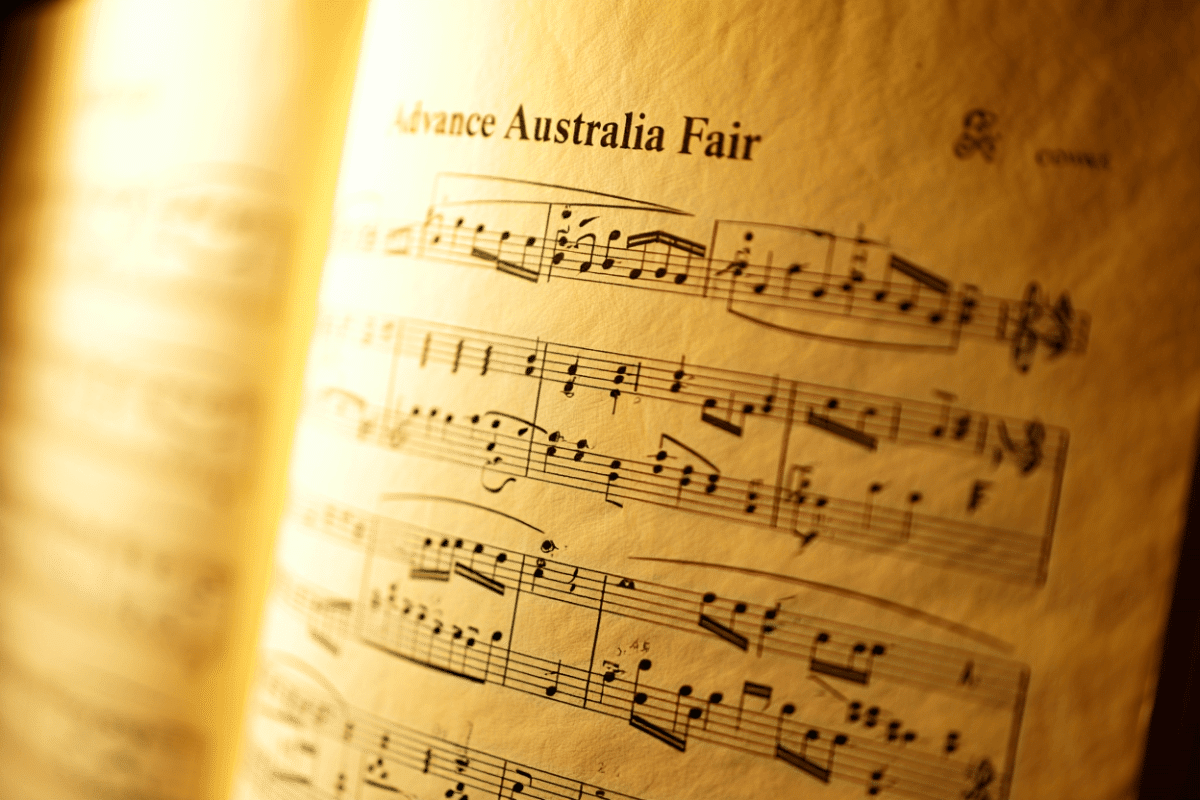
Advance Australia Fair, the Australian National Anthem, carries over 140 years of musical and cultural history. Composed by Scottish-born musician Peter Dodds McCormick in 1878, the anthem replaced God Save the Queen as Australia’s official patriotic song in 1984. Most recently, in January 2021, Australia made a historic change to the lyrics, adjusting the second line from “For we are young and free” to “For we are one and free” to recognize the presence of Indigenous Australians who have inhabited the country for tens of thousands of years before European settlement.
🔥 Quick Facts
- Composed in 1878 by Peter Dodds McCormick, a Sydney teacher
- Officially adopted as the national anthem on April 19, 1984
- Lyrics changed January 1, 2021 to include Indigenous recognition
- Original composition had four full verses, though only the first verse is commonly performed
- Replaced the British “God Save the Queen” as Australia’s patriotic song
The Origins and Creation of Australia’s Anthem
Peter Dodds McCormick (born January 28, 1833) was a Scottish-born schoolteacher who spent much of his life in Sydney. According to his own account from 1913, McCormick created Advance Australia Fair after attending a concert where national anthems from other countries were performed. He felt frustrated that Australia had no national song of its own. Inspired by this gap, he composed both the music and lyrics on the journey home, later refining the piece into the patriotic composition recognized today.
The song was first performed publicly on November 30, 1878, in Sydney. It gradually gained acceptance as an unofficial anthem over the following decades, particularly during moments of national pride and celebration. The composition remained relatively unknown outside Australia until its formal adoption as the official national anthem more than a century later.
Understanding the Lyrics and Their Historical Context
The original opening verse of Advance Australia Fair remains largely unchanged:
“Australians all let us rejoice, For we are young and free; We’ve golden soil and wealth for toil, Our home is girt by sea.”
The phrase “girt by sea” uses the archaic past tense of “gird,” meaning surrounded or encircled by the ocean. This poetic language captures Australia’s geographic isolation and island continent status. The lyrics celebrate national pride, natural wealth, and opportunity, reflecting values important to late 19th-century Australian society.
The original composition contained four complete verses, many of which referenced British discovery and colonization, including references to Captain Cook. Over time, these additional verses fell out of standard use, and today only the first verse is typically performed at national events, sports matches, and public ceremonies.
Evolution of the Anthem: From 1984 to Modern Era
| Year | Event | Details |
| 1878 | Composition & First Performance | Song written and performed in Sydney by McCormick |
| 1974 | First Official Adoption | Adopted as national anthem briefly before reverting to God Save the Queen |
| 1984 | Permanent Adoption (April 19) | Officially proclaimed as Australia’s national anthem on this date |
| 2021 | Lyrics Modification (January 1) | “Young” changed to “one” in the second line for Indigenous recognition |
The path to Advance Australia Fair’s status as the national anthem was not straightforward. God Save the Queen remained the official anthem until 1984, when Advance Australia Fair was finally proclaimed the nation’s official patriotic song. This change marked a significant step toward Australian cultural independence from British monarchical symbolism, though God Save the Queen retained status as the Royal Anthem for occasions involving royal visitors.
The 2021 Lyrical Change: Recognizing Indigenous Australians
The most recent and meaningful modification to the anthem occurred on January 1, 2021, when Australia’s government changed one word in the second line. The phrase shifted from “For we are young and free” to “For we are one and free.” This single-word substitution carries significant weight: it replaces the concept of youth with unity, and more importantly, it acknowledges the tens of thousands of years of Indigenous occupation before European settlement.
The original phrase “young and free” had faced criticism for perpetuating the concept of terra nullius—the colonial-era legal fiction that Australia was empty land before European arrival. Critics argued this phrasing erased Indigenous history and sovereignty. By changing to “one and free,” the anthem became more inclusive, recognizing that Indigenous Australians and non-Indigenous Australians now share the nation together, while honoring those who came before.
This change was made without formal parliamentary legislation, reflecting widespread bipartisan support for the modification. Government agencies, sports organizations, and schools quickly adopted the new wording, making the change institutionally embedded across Australian society.
“In recognition of the long habitation of Indigenous Australians, the official lyrics were updated to reflect our shared national identity while honoring those who came before us.”
— Australian Government Communications, Department of Prime Minister and Cabinet
What the Anthem Means Today
Today, Advance Australia Fair serves as a unifying symbol of Australian national identity. The anthem is performed at international sporting events, government ceremonies, school assemblies, and national celebrations. Unlike many other national anthems, it does not reference a monarch, making it distinctly Australian rather than tied to royal authority.
The 2021 modification represents an important evolution in how modern Australia sees itself—not as a young, post-colonial nation, but as one nation united, with respect for ancient Indigenous cultures alongside later immigrant communities. The change occurred during a broader cultural movement toward Indigenous recognition and reconciliation in Australia, including conversations around constitutional reform and treaty discussions.
Most Australians hear only the first verse during public performances, which means the change primarily impacts official contexts and formal recitations. However, the symbolic importance extends beyond the words actually sung—it represents an official acknowledgment that Australia’s identity encompasses Indigenous heritage as fundamental to the nation’s past and future.
Why Understanding the Anthem Matters for Australians and Beyond
National anthems serve as cultural time capsules, reflecting the values and understanding of their eras. Advance Australia Fair’s evolution tells the story of Australia’s journey from a British colonial outpost to an independent nation wrestling with its colonial legacy and seeking genuine unity.
For Australian audiences, the anthem connects them to 146 years of history, from Peter Dodds McCormick’s composition to contemporary identity. For international audiences, Australia’s willingness to modify its anthem demonstrates how nations can acknowledge historical truths and evolve their symbols respectfully. The 2021 change stands as one of the few examples where a major nation has substantively revised its national anthem in recent decades—a decision that balances tradition with meaningful progress toward inclusivity.
Sources
- Australian Government – Prime Minister & Cabinet – Official anthem lyrics, history, and January 2021 modification
- Wikipedia – Advance Australia Fair – Comprehensive historical documentation of composition, development, and lyrical changes
- Australian Dictionary of Biography – Peter Dodds McCormick biographical information and original composition account
- Smithsonian Magazine – Coverage of the 2021 Indigenous recognition change
- Australian National Archives – Official timeline of anthem adoption and status
- CNN International & The Guardian – Global news coverage of 2021 lyrics modification