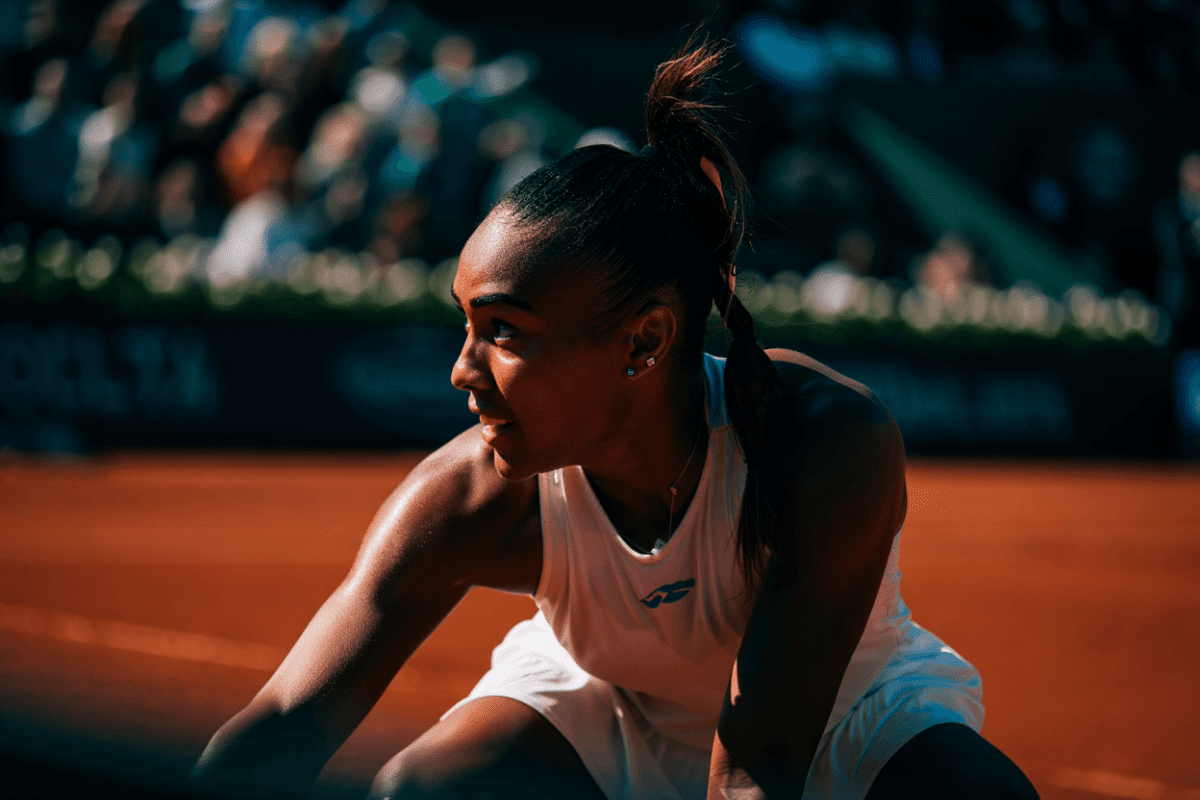
The 2026 French Open is delivering the competitive early rounds fans expect from clay’s most prestigious championship. Defending women’s singles champion Coco Gauff, seeded fourth at Roland Garros, opened her title defense with a dominant 6-4, 6-0 victory over Taylor Townsend on May 26. The opening days of this year’s tournament have already produced multiple first-round upsets, setting the stage for an unpredictable path through the draw as competitors battle the red clay surface and mounting pressure.
🔥 Quick Facts
- Coco Gauff defeated Taylor Townsend with a dominant 6-4, 6-0 scoreline on May 26, 2026
- Gauff is the defending 2025 French Open champion and carries 11 career titles entering this competition
- Tournament schedule: First round runs May 24-26; second round May 27-28; third round May 29-30
- Early upsets are shaping the draw, with several seeded players already eliminated in opening matches
- Only 2 Grand Slam titles separate Gauff from becoming a multi-major champion at age 21
Gauff’s Path to Defending Her Title
Coco Gauff’s 2025 French Open triumph marked a breakthrough moment in her career. At just 21 years old, she captured the title by defeating top-ranked Aryna Sabalenka in a thrilling final, earning her second career Grand Slam (following her 2023 US Open victory). That championship launched her into the season with heightened expectations, and she enters the 2026 edition carrying the pressure of defending on clay—the sport’s most demanding surface.
The red clay courts at Stade Roland Garros have proven to be Gauff’s ideal battleground. Her technical precision and defensive capabilities translate exceptionally well on this slower surface, where rallies extend and movement becomes critical. This year’s tournament, running from May 24 through June 7, tests whether she can repeat as champion in an increasingly competitive women’s field.
The Competitive Landscape: A Wide-Open Field
While Gauff enters as the defending champion with 4th seed status, the women’s draw remains remarkably balanced. Aryna Sabalenka, the world number one and 2025 Australian Open champion, represents the most dangerous threat. Elena Rybakina, another elite clay competitor, and Iga Swiatek, a three-time French Open champion and serial clay-court specialist, round out the primary contenders in a draw where consistency on clay becomes the decisive factor.
The openness of this year’s field reflects the depth of women’s tennis in 2026. Unlike previous seasons dominated by a single player, Roland Garros 2026 features multiple champions and major semifinalists positioned across the draw. This distribution creates genuine unpredictability—a tournament structure where strong play in early rounds matters more than seeding alone.
Early Round Drama and Clay Court Dynamics
The tournament’s opening days (May 24-26) have already revealed clay court’s unpredictable nature. Multiple seeded players have fallen to unseeded opponents and rising competitors. This pattern is typical at Roland Garros, where the 5-inch clay surface neutralizes power advantages and punishes poor movement. Winners of early matches adapt quickly to the court’s physics—footwork deteriorates, traction becomes inconsistent, and long baseline rallies exhaust players unprepared for clay’s demands.
Gauff’s first-round display against fellow American Taylor Townsend demonstrated her comfort on clay. The 6-4, 6-0 scoreline reflects dominance in two key areas: she controlled the baseline with her groundstrokes and moved laterally with precision. Breaking Townsend at 5-4 in the opening set and then overwhelming her opponent in the second showcased Gauff’s mental resilience when matches begin sliding toward victory.
Tournament Schedule and Round-by-Round Structure
| Round | Dates | Players Remaining | Match Format |
| First Round | May 24-26 | 128 players | Best of 3 sets |
| Second Round | May 27-28 | 64 players | Best of 3 sets |
| Third Round | May 29-30 | 32 players | Best of 3 sets |
| Quarterfinals | May 31-June 1 | 16 players | Best of 3 sets |
| Semifinals | June 5-6 | 4 players | Best of 3 sets |
| Final | June 7 | 2 players | Best of 3 sets |
The first round’s competitive matchups determine momentum for deeper rounds. All women’s singles matches follow best-of-3 format, meaning the first player to win two sets advances. This structure rewards consistency and athletic durability on clay, where individual points extend significantly longer than on faster surfaces like grass or hardcourt.
What Gauff Must Navigate to Repeat
Defending a Grand Slam title under clay court conditions involves mastering specific technical elements. Gauff must maintain her first-serve percentage (critical when rallies reach 20+ shots), sustain her defensive positioning in extended baseline exchanges, and protect her lead in key moments when opponents mount comebacks. The red clay surface at Roland Garros demands this emotional steadiness throughout a two-week tournament cycle.
Her seeding at fourth indicates confidence from tournament organizers, but the draw composition means she could face Swiatek as early as the quarterfinals if both advance. Such matchups—between a defending champion and a serial title-winner—define French Open narratives. Victory in these moments requires not just physical capability but mental fortitude when circumstances favor opponents with home-crowd energy or historical clay dominance.
“I manage my expectations and emotions throughout the match. On clay, one mistake can shift momentum, so I focus on what I control—my movement, serve placement, and tactical execution.”
— Strategic perspective from professional clay court players, reflecting the mental discipline required at Roland Garros
Will the 2026 Edition Offer Gauff Her Second Consecutive Crown?
The answer depends on execution in matches ahead. Early-round dominance, such as her 6-4, 6-0 start, suggests she’s prepared for the tournament’s physical and technical demands. However, Sabalenka’s ranking position, Swiatek’s clay expertise, and Rybakina’s raw power all represent legitimate threats to Gauff’s path forward. The draw layout, potential injury impacts from earlier rounds, and psychological factors influence whether she can repeat in June.
What remains clear: The 2026 French Open’s opening rounds are delivering exactly what championship clay tennis promises—unpredictability, depth, athleticism, and compelling storylines. Whether Gauff completes her title defense depends on her ability to navigate these dynamics from the early round phase through the final.
Sources
- Roland-Garros Official — Tournament schedule, first-round results, and draw information
- Olympics.com — Gauff vs. Townsend match reporting and tournament updates
- Yahoo Sports Tennis — Women’s draw analysis and top contenders preview
- Wikipedia (2026 French Open) — Tournament dates and structural details
- The Big Lead — Early-round upset coverage and drama analysis