Quentin Tarantino’s Kill Bill: The Whole Bloody Affair premiered exclusively on Peacock on May 22, 2026, delivering the director’s definitive 275-minute vision of his two-volume revenge saga in a single viewing. This release marks the first time audiences can experience the complete film exactly as conceived, combining restored violence, new footage, and structural refinements that remained unrealized for over two decades.
🔥 Quick Facts
- Runtime: 275 minutes (4 hours 35 minutes) including 15-minute intermission
- Exclusive streaming debut May 22, 2026 on Peacock following theatrical run
- Restored violence and uncensored content previously cut to avoid NC-17 rating
- New anime sequence featuring O-Ren Ishii’s backstory with extended animation
- Director’s definitive cut unites Volume 1 (2003) and Volume 2 (2004) as one film
Twenty-Two Years in the Making: Tarantino’s Unconventional Path to One Film
Quentin Tarantino originally conceived Kill Bill as a single four-hour epic during production of Pulp Fiction (1994), collaborating with Uma Thurman on the iconic Bride character. Hollywood financial realities forced a split: Kill Bill: Volume 1 arrived in 2003 at 111 minutes, while Volume 2 followed in 2004 at 137 minutes. This separation meant removing crucial connective material and restoring certain violence only to home video releases. For nearly two decades, Tarantino maintained that the films were artificially divided, considering them a single work interrupted by an intermission—a position vindicated by the theatrical debut of The Whole Bloody Affair in December 2025. The Peacock release extends this vision to global audiences one day after the theatrical run concluded.
What Changed: The Studio Cut Versus Tarantino’s True Vision
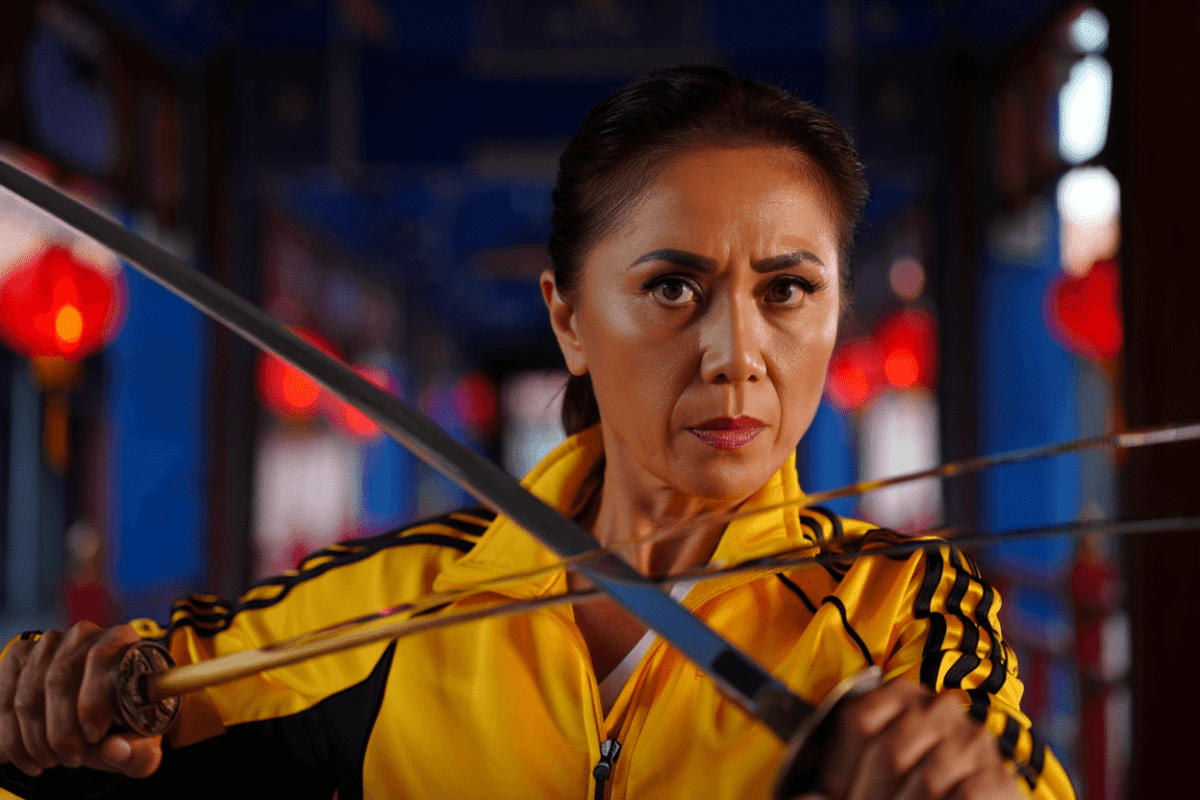
The Whole Bloody Affair restores approximately 3.5 minutes of previously cut violence, particularly in the iconic House of Blue Leaves sequence. The fight scene with the Crazy 88 is now presented in full color rather than the black-and-white stylization of Volume 1’s theatrical release. Additionally, a never-before-seen anime sequence details O-Ren Ishii’s childhood and assassination history, expanding her backstory beyond the theatrical versions. The film also removes brief black-and-white interludes that traditionally separated the volumes, replacing them with Tarantino’s intended smooth dramatic flow—a structural choice that fundamentally alters pacing and emotional momentum.
Content Changes in The Whole Bloody Affair
| Change | Impact |
| Restored Violence | Uncensored sequences previously cut for NC-17 avoidance |
| House of Blue Leaves (Full Color) | Replaces theatrical black-and-white with color cinematography |
| Extended O-Ren Anime Sequence | New animation detailing character history; adds ~5 minutes |
| Removed Intermission Text | Streamlined transitions between volumes; maintains 15-min break |
| Color Grading Adjustments | Consistent visual palette across both volumes |
These changes reflect Tarantino’s documented frustration with theatrical constraints. In interviews during the December 2025 theatrical run, he emphasized that the original NC-17 rating threat forced compromises on his artistic intent—particularly regarding the visceral choreography that defines Kill Bill’s revenge narrative. The Whole Bloody Affair removes those concessions entirely. Beyond violence restoration, the expanded anime work (originally conceived but rejected for theatrical pacing) provides narrative depth about O-Ren’s transformation into an assassin and yakuza boss, enriching her characterization as more than antagonist—she becomes a tragic parallel to the Bride’s journey.
The Streaming Strategy: Peacock’s Exclusive Window and Industry Implications
NBCUniversal‘s decision to grant Peacock exclusive streaming rights represents a calculated gamble in the prestige-film market. Most major releases follow theatrical-to-SVOD windows of 45-90 days; Kill Bill: The Whole Bloody Affair debuted theatrically in limited markets during the November-December 2025 season before transitioning to streaming. This compressed timeline acknowledges that Tarantino fans are willing to experience the director’s cut regardless of platform—many had already seen theatrical versions. The Peacock release capitalizes on this audience overlap while positioning the streaming service as a destination for director-approved, uncompromised cinema. Similar to how Jordan Peele’s horror work continues attracting audiences to platforms, this strategy leverages filmmaker prestige to generate subscriber engagement.
Why the 275-Minute Cut Works: Technical and Narrative Analysis
The conventional wisdom suggests that modern audiences lack patience for films exceeding three hours—yet Kill Bill: The Whole Bloody Affair’s architecture proves this assumption incomplete. Tarantino designed both volumes with strategic 15-minute intermission placement: viewers pause after the first film’s climax (the House of Blue Leaves massacre), creating a natural reset point. This structure mimics classic Hollywood epics like Ben-Hur or Lawrence of Arabia, treating the break as a feature rather than limitation. The combined runtime justifies itself narratively: the original theatrical split necessitated redundant exposition, repeated establishing shots, and artificial cliffhangers. The Whole Bloody Affair eliminates these paddings, creating a tighter dramatic engine than either volume alone.
From a technical perspective, cinematographer Robert Richardson‘s work maintains visual consistency across both films’ footage despite the one-year gap between their original releases. The color-grading adjustments in this cut standardize lighting and saturation, ensuring that scenes don’t feel like they were created by different productions. The restored violence integrates seamlessly with existing footage—fight choreography hits harder without jarring transitions.
What Comes Next: Will Tarantino Pursue Final-Cut Director Status for Other Films?
The success of The Whole Bloody Affair’s theatrical and streaming debuts will likely influence how archive material from other Tarantino projects is handled. Questions persist about Kill Bill: Vol. 3, which Tarantino has teased intermittently but never committed to production. If the director pursues a third volume, the Whole Bloody Affair template offers a precedent: theatrical directors’ cuts can generate revenue and critical reevaluation decades after initial release. Additionally, Tarantino’s other films—Inglourious Basterds, Django Unchained, and The Hateful Eight—may eventually receive similar restoration and re-evaluation. The filmmaker’s stated plan to direct only 10 films total (he has completed 9) heightens the archival value of his work. Peacock’s hosting of this definitive cut establishes the platform as a curator of filmmaker vision rather than merely a content aggregator.
Sources
- IMDb News – Reporting on the May 22, 2026 Peacock exclusive debut and runtime specifications
- No Film School – Detailed catalog of all technical changes and restored content in The Whole Bloody Affair
- The Guardian (Dec 5, 2025) – Critical analysis of narrative changes and theatrical reception
- Variety – Production history and timeline of theatrical-to-streaming release strategy
- Peacock Official Blog – Confirmed exclusive streaming rights and May 2026 schedule
- Men’s Journal – Comprehensive breakdown of violence restoration and artistic restoration details