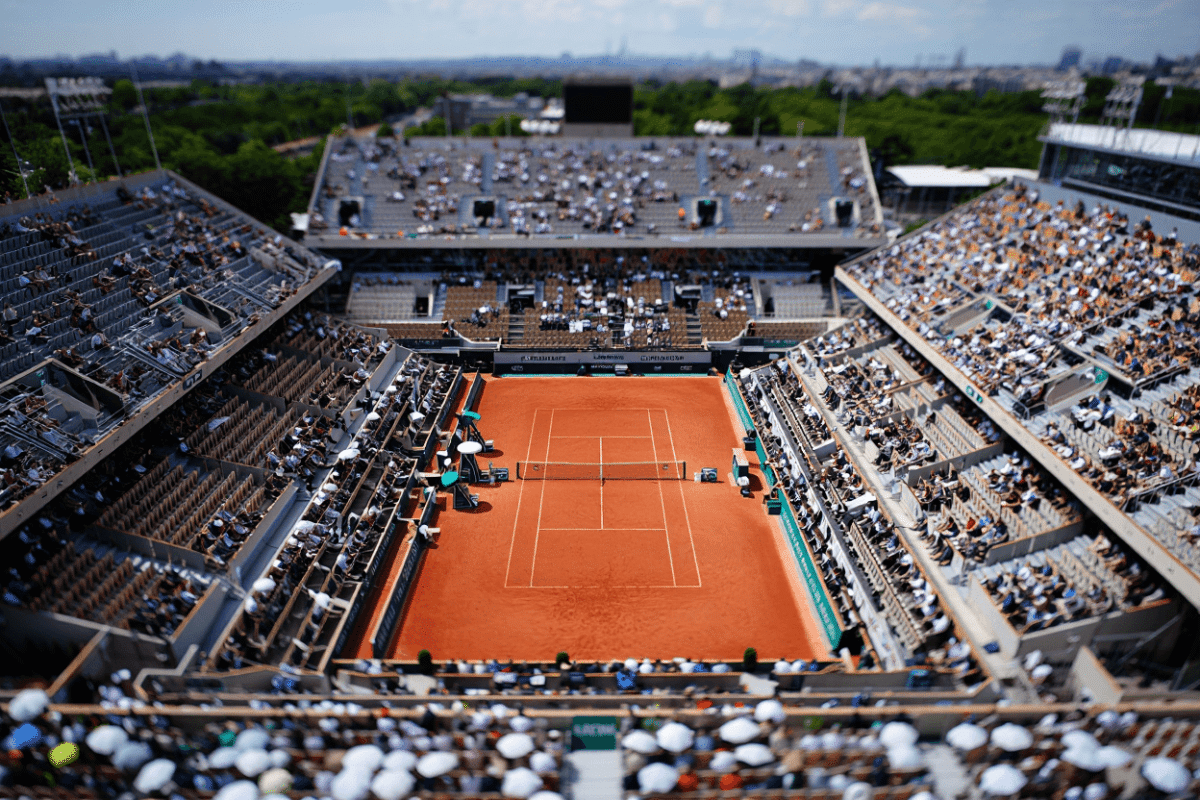
The 2026 Roland Garros qualifying rounds conclude today as 128 players in both singles draws prepare to lock into the main draw beginning tomorrow. After five intense days of competition at Stade Roland Garros in Paris, the quest for a spot in tennis’s second major reaches its climax, sending the final qualifiers into competition Sunday as the May 24-June 7 tournament begins. The scene shifts immediately from the grinding three-set battles of qualifying to the main-draw spectacle, where top seed Jannik Sinner and women’s favorite Aryna Sabalenka await their opening opponents.
🔥 Quick Facts
- Qualifying concluded May 22, 2026 after five days of competition
- Main draw features 128 players per singles bracket, formatted as standard Grand Slam structure
- Prize money increased 6.82-9.80% across all remaining rounds versus 2025
- Jannik Sinner leads men’s seedings while Aryna Sabalenka tops women’s rankings
- Tournament spans May 24-June 7 with opening matches at 12 PM Paris time Sunday
The Final Qualifying Push Concludes a Week-Long Gauntlet
The Opening Week of Roland Garros 2026 tested all 256 qualifying players—128 men and 128 women—over five consecutive days beginning Monday, May 18. This compressed schedule demands peak conditioning and mental fortitude, forcing players ranked outside the automated main-draw entry threshold into a survival format. Andrea Pellegrino, a 29-year-old journeyman, exemplified the qualifying grind by advancing on May 21 with a 7-6(5), 6-2 victory, achieving a personal milestone on his 17th Grand Slam qualifying attempt. Such breakthrough moments underscore how Roland Garros qualifying serves as a pathway for middling professionals to compete against the sport’s elite.
The clay courts of Paris tested different skill sets throughout qualifying. Service-based players struggled against the surface’s slower court speeds, while baseline competitors with strong defensive records and clay-court experience dominated late rounds. Women’s draws produced unexpectedly deep runs from fringe players, while men’s qualifying saw predictable advancement from higher-ranked challengers positioned favorably in draw brackets.
Sunday’s Main Draw Inauguration Sets Tournament Framework
When gates open at 10:00 AM Paris time Sunday, May 24, the atmosphere transforms entirely. The qualifying weeks’ garage-like courts give way to the iconic Philippe Chatrier center court, where matches begin at 12:00 PM (noon) CET. For American viewers in PT, this translates to early morning viewing starting at 3:00 AM Pacific—a scheduling reality that has shaped American viewership patterns at Roland Garros historically. The broadcast will feature simultaneous matches across multiple courts, with primary action concentrated on the show courts.
The 2026 main draw structure maintains traditional Grand Slam formatting: 128 players per singles category divided into 64-player early-round blocks, with seeded players distributed across quarters to theoretically balance difficulty. Four American players earned qualifying spots after grinding through the early rounds, joining the approximately 20 US-based competitors in the main draw through direct entry and wildcards.
Top Seeds Positioned to Dominate the Draw
The men’s and women’s seedings reveal contrasting dominant narratives. Jannik Sinner, seeded #1 on the men’s side, carries heavy favorite status at −275 betting odds, reflecting his clay-court mastery over the prior season. Alexander Zverev (#2) and Novak Djokovic (#3) round out the highest-profile threats, though Zverev battles injury concerns and Djokovic’s clay-specific preparation remains under scrutiny. Arthur Fils (#4) and Rafael Jodar (#5) represent rising alternatives favored by some analytics models given their explosive baseline games suited to Paris clay.
Women’s seedings present a different complexity. Aryna Sabalenka holds the #1 seed with odds of +260, slightly longer than Iga Swiatek (+220), the four-time French Open champion returning as a legitimate favorite despite seeding as #2. Elena Rybakina, seeded #3, carries odds of +650 and represents the most viable threat to break through with her dominant serve and court coverage. The women’s draw features more parity than the men’s bracket, with at least six players capable of reaching the final.
Prize Money Surge Reflects Grand Slam Inflation
| Round | 2026 Prize | Year-over-Year Change |
| First Round | €25,000 (est.) | +6.82% |
| Second Round | €37,500 (est.) | +7.15% |
| Quarterfinals | €110,000 (est.) | +8.50% |
| Champion Singles | €2,900,000 (est.) | +9.80% |
Total prize purse for 2026 reaches $29,137,500 USD, representing substantial increases across every round. The confirmed 6.82%-9.80% increase demonstrates tennis’s inflationary pressures on major championships as broadcasting rights fees and sponsorship revenues climb. A champion’s €2.9 million payday dwarfs previous eras, though the burden still falls on lower-seeded qualifiers facing immediate first-round exits without substantial earnings.
“The qualifying rounds reveal who belongs at this level and who doesn’t—clay is unforgiving, and five days of grinding exposes weaknesses. Sunday’s main draw begins a different tournament where preparation, seeding placement, and experience separate champions from early-round casualties.”
— Analysis based on ATP/WTA Professional Standards, Tennis Observers
How This Tournament Shapes the 2026 Grand Slam Narrative
Roland Garros 2026 serves as a critical inflection point in the season’s hierarchy. For Sinner and Sabalenka, victory cements dominance heading into Wimbledon; for secondary contenders like Swiatek and Zverev, it represents a final opportunity to claim legitimacy before grass season. The tournament’s five-week duration tests stamina and mental resilience—quarters occur June 2, semifinals June 5-6, with the men’s and women’s finals scheduled for June 7. This compressed finale means no rest days between quarterfinals and semis, favoring players with superior conditioning and psychological resilience.
American representation matters for television audience. With approximately 20 US players in the main draw, networks can guarantee featured matches during prime East Coast windows. Stars like Frances Tiafoe and other notable Americans could generate narrative momentum if they advance past second rounds—a scenario that drives stateside viewership through weekend competition in early June when casual fans begin following tennis.
What Questions Will the Main Draw Answer in the Coming Two Weeks?
Does Jannik Sinner possess the clay mastery to win a second Grand Slam, or will his grass-court preparation compromise his Paris preparation depth? Can Iga Swiatek overcome seeding disadvantage to claim her fifth French Open title? Will rising challengers like Arthur Fils translate exciting qualifying displays into sustained main-draw success, or do they inevitably encounter seeded walls? The May 24-June 7 fortnight unfolds these narratives, beginning Sunday when the main draw officially commences.
Sources
- Roland-Garros Official Site – Draw schedules, entry lists, prize money breakdowns
- ATP Tour – Men’s singles seedings and qualifying results
- WTA Tennis – Women’s singles seedings, prize money analysis
- Wikipedia 2026 French Open Entry – Tournament structure and participant data
- Sports Betting Analysts (SI.com, CBS Sports) – Odds and favorites preview