The Late Show with Stephen Colbert concluded its historic 33-year run on May 21, 2026, ending the CBS franchise after mounting financial losses. CBS cited $40+ million in annual losses as the primary reason for cancellation, alongside a steep decline in advertising revenue that dropped 40 percent over recent years. The finale featured an 80-minute extended episode filled with emotional farewells, celebrity cameos, and musical tributes that celebrated Colbert’s 11-year tenure as host while acknowledging the end of an era in late-night television.
🔥 Quick Facts
- $40+ million annual losses cited by CBS as cancellation reason
- May 21, 2026 — Final episode aired on CBS at Ed Sullivan Theater in New York
- 80-minute extended finale with star-packed guest appearances and musical performances
- 2.47 million viewers — Colbert’s show still led traditional late-night format competing against Jimmys
- 11 years — Colbert’s hosting tenure spanning September 2015 to May 2026
The Financial Crisis Behind the Cancellation
CBS publicly cited financial hardship as the driving force when announcing the cancellation in July 2025. The network stated it was “purely a financial decision against a challenging backdrop in late night.” According to Wall Street Journal reporting and confirmed by Washington Post analysis, the show accumulated losses of approximately $40 million annually — a staggering sum even for a top-rated program competing in a declining late-night market.
The core issue wasn’t audience size but revenue collapse. Despite commanding 2.47 million viewers nightly (which outpaced both Jimmy Fallon and Jimmy Kimmel in traditional metrics), advertising dollars evaporated. Advertising revenue plummeted 40 percent, devastating the show’s financial model. Industry experts noted that late-night television broadly faced ratings declines in the post-pandemic era, with viewership down approximately 50 percent compared to pre-2020 levels.
The Finale: Spectacle and Farewell
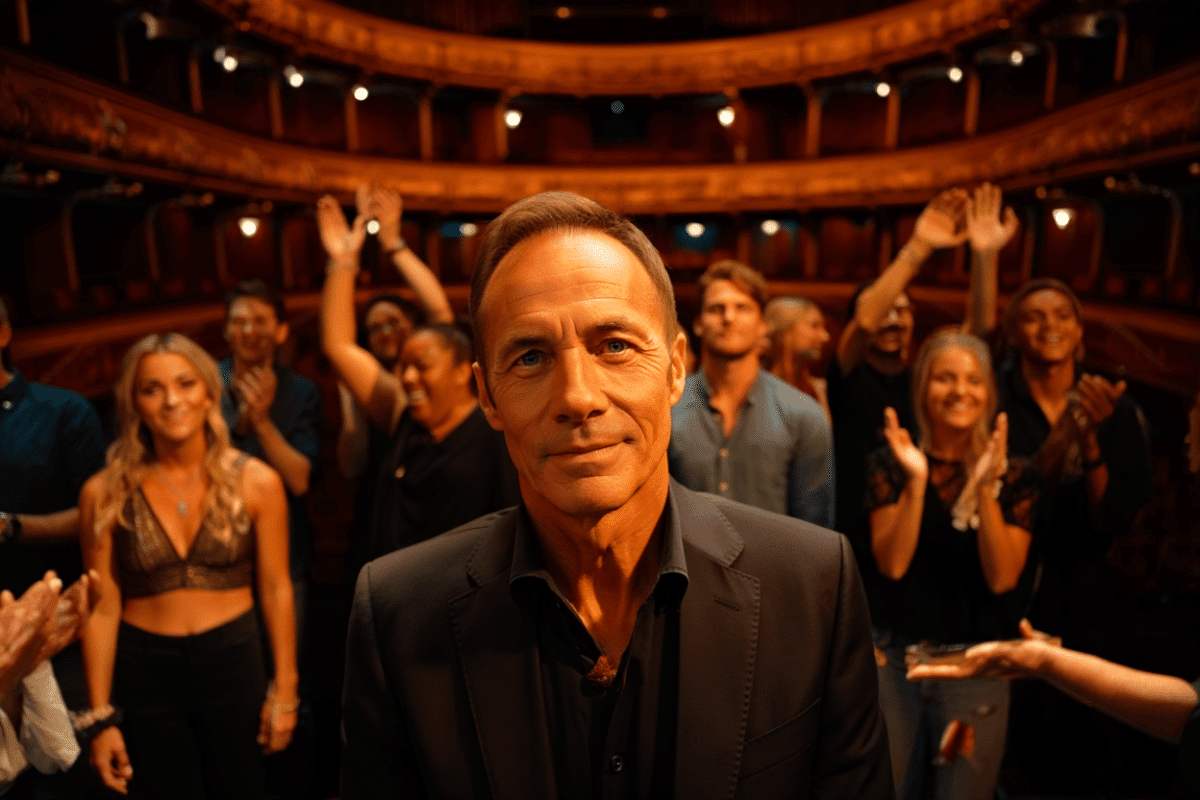
Colbert went out with grace and star power. The finale featured an unforgettable musical performance with Elvis Costello and Paul McCartney, turning the Ed Sullivan Theater stage into a celebration rather than a dirge. The extended 80-minute broadcast included emotional moments alongside comedy, with Colbert directly addressing CBS’s decision to cancel the show while maintaining his signature humor.
The program opened with Colbert’s final monologue, which balanced reflection with self-deprecating jokes about the cancellation. Several celebrity guests — including Bryan Cranston, Tig Notaro, and others — appeared throughout the evening. The stage transformed into a dance floor during the climactic musical number, with Colbert, McCartney, Costello, and band leaders Jon Batiste and Louis Cato performing a medley that included the Beatles’ “Hello Goodbye” and Costello’s own track “Jump Up.”
Ratings Context: The Late-Night Crisis
Colbert’s departure reflects a broader structural collapse in broadcast late-night television. The competitive landscape shifted dramatically over the past decade, driven by cord-cutting, streaming fragmentation, and demographic shifts toward digital media consumption.
| Metric | Late Show (Colbert) | Industry Context |
| Nightly Viewers (Recent) | 2.47 million | Led traditional late-night hosts |
| Annual Losses | $40+ million | Unsustainable for legacy media model |
| Advertising Revenue Change | -40% decline | Industry-wide ad market weakness |
| Viewership vs. Pre-Pandemic | ~50% lower | Structural shift in consumption habits |
| Broadcast Network Status | Primetime slot eliminated | Replaced by comedy reruns and specials |
The show’s final episode coincided with Colbert’s 62nd birthday, adding personal poignancy to the professional milestone. Despite leading traditional late-night metrics, Colbert’s program couldn’t overcome the fundamental economics of broadcast television in 2026.
What Comes Next for CBS and Late Night?
Byron Allen purchased the 11:35 p.m. ET time slot on CBS formerly occupied by Colbert’s show. The network will air back-to-back episodes of Comics Unleashed beginning May 22, 2026, representing a departure from traditional celebrity-driven talk shows in favor of stand-up comedy programming. This shift signals CBS’s belief that expensive, scripted late-night talk shows are no longer viable in the current advertising environment.
Colbert’s cancellation sends ripples through the industry. Jimmy Fallon and Jimmy Kimmel continue on NBC and ABC respectively, though both face similar viewership pressures. Analysts suggest the late-night talk show format — once a pillar of broadcast television and advertising revenue — has fundamentally transformed. Digital clips, streaming availability, and social media distribution have decoupled the shows from their traditional 11:35 p.m. airtime, forcing networks to reckon with a model designed for a media landscape that no longer exists.
How Will Colbert’s Legacy Shape Entertainment?
Stephen Colbert’s departure marks the effective end of a historic franchise. The Late Show originated in 1993 under David Letterman, establishing the template for modern celebrity talk shows. Colbert’s 11-year tenure sustained the format longer than many analysts expected, but ultimately could not resist the economic forces reshaping broadcast television. His ability to attract A-list celebrities, maintain strong cultural commentary, and command 2.47 million daily viewers proved insufficient against the mathematics of late-night advertising and production costs.
The finale itself — emotional, star-studded, and deliberately comedic about its own cancellation — demonstrated why Colbert earned prestige in late-night television. His farewell managed what few shows achieve: acknowledging professional failure while celebrating professional accomplishment. Whether late-night talk shows survive in any meaningful broadcast form remains an open question as streaming services and digital media continue fragmenting the television audience.
Sources
- The New York Times — Coverage of the finale and historical context of the franchise ending
- NPR — Detailed reporting on the May 21 finale episode and musical performances
- Wall Street Journal — Financial analysis of the $40 million annual losses
- Washington Post — Investigation into advertising revenue collapse and industry implications
- CBS News — Official statements and coverage of Colbert’s final broadcast
- The Guardian — International perspective on the show’s conclusion and legacy
- Variety — Music and entertainment angle on McCartney and Costello performances