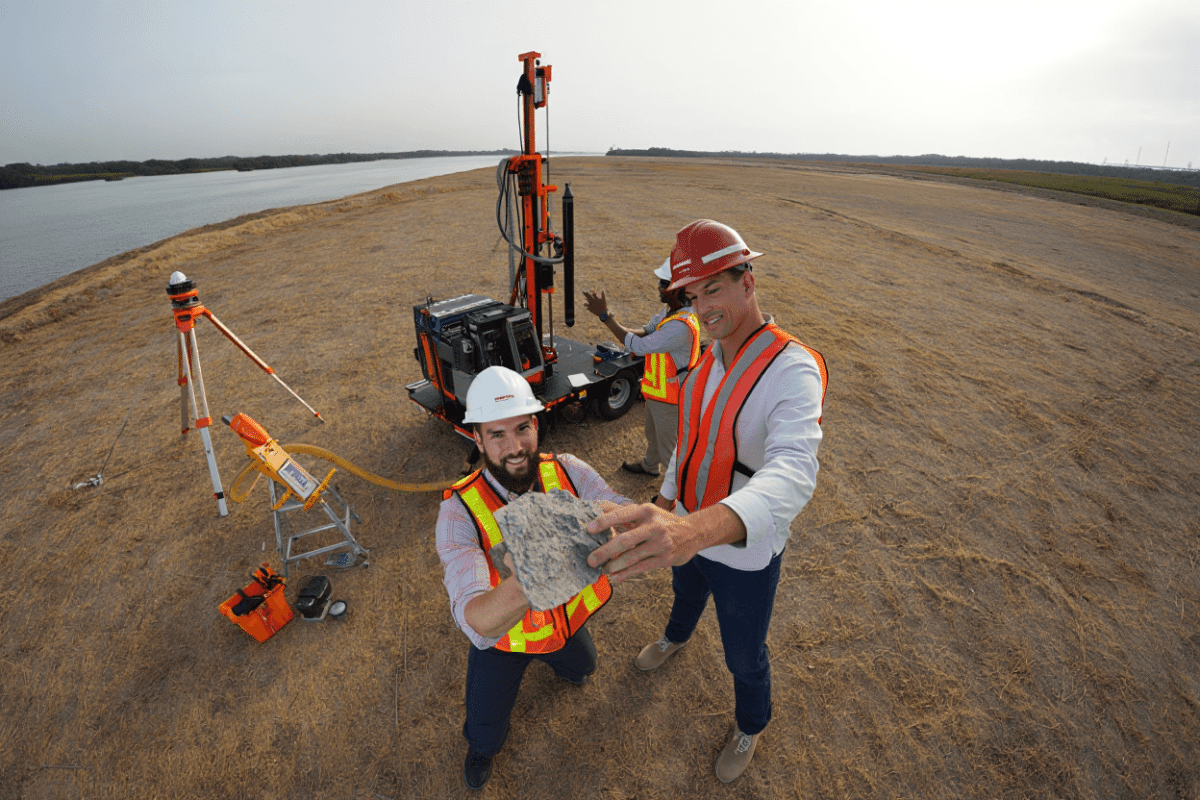
Engineers began preliminary testing this week at the proposed Trump Arch site near Arlington, evaluating the structural feasibility of a 250-foot neoclassical monument. The testing phase—underway since May 12, 2026—focuses on soil composition, load-bearing capacity, and foundation requirements for a structure that would stand 76 meters tall and weigh thousands of metric tons. Feasibility assessments will determine whether the Columbia Island location can support this ambitious architectural proposal without major geotechnical interventions.
🔥 Quick Facts
- Arch height: 250 feet (76 meters) total, with 166-foot main structure plus 60-foot winged statue
- Testing started May 12, 2026 following Commission of Fine Arts preliminary approval on April 16
- Site location: Columbia Island near Arlington Memorial Bridge in Washington, D.C.
- Key challenge: Structural feasibility on soft alluvial soils with river proximity
- Architect: Harrison Design firm selected for neoclassical design concept
Structural Design Meets Engineering Reality
The Trump Arch design features a 166-foot stone arch topped by a 60-foot gilded winged statue—described as a modern interpretation of Lady Liberty. The structure incorporates classical elements: lintels, cornices, and friezes in limestone and granite. Early architectural renderings show a single arch spanning approximately 100-120 feet across its opening, with internal chambers and elevator systems to reach observation decks. However, architectural ambition and geotechnical reality present distinct challenges. Monument construction traditionally requires deep foundation systems—typically bored piles or pilings extending 40-80 feet below grade—to support concentrated vertical and lateral forces from wind, weather, and structural weight. The Arlington site’s soft alluvial composition (riverside location) complicates foundation design, necessitating extensive soil testing that engineers are now conducting.
Engineering Assessment: What the Tests Reveal
The preliminary surveys involve geotechnical borings, soil sampling, and bearing capacity analysis. Engineers are extracting subsurface samples at multiple depths—typically 5, 10, 20, 40, and 60-foot intervals—to determine soil density, composition, water table elevation, and consolidation rates. This data feeds into foundation design calculations. A 250-foot monument carries enormous structural demands: wind pressure increases exponentially with height, requiring structural analysis under Category 3 hurricane-force winds (110+ mph sustained). The combined dead load (structure’s weight) plus live loads (visitors, equipment) could exceed 8,000-12,000 tons, depending on interior systems. The U.S. Commission of Fine Arts conditionally approved the design, but approval presumed engineers would resolve geotechnical constraints. Current testing will generate the geotechnical engineering report—a prerequisite for building permits in Washington, D.C. According to engineering standards, shallow foundations (spread footings) are unsuitable for monument structures; deep pilings or caissons will likely be required, significantly increasing project cost and construction timeline. Recent analysis of public reaction to infrastructure projects suggests this complex engineering phase will attract ongoing scrutiny.
Site Conditions and Foundation Strategy
The Columbia Island location presents both logistical advantages and constraints. Site elevation near the Potomac River requires careful hydrological assessment—engineers must verify the water table elevation, seasonal flooding risk, and river scour potential. The soft alluvial soils (silt and clay deposits) common in floodplain areas exhibit lower bearing capacity than dense sand or bedrock, typically 1,000-3,000 pounds per square foot (psf) in undisturbed state. By comparison, monument-scale structures demand bearing capacities of 4,000-8,000+ psf, requiring either soil treatment or deep foundation systems. Common solutions include: pile driving (driving steel or concrete shafts to bedrock, 60-100+ feet deep), caisson construction (excavating deep circular shafts below foundation level), or soil stabilization (cement injection, grouting). The geological Survey data for Washington, D.C. indicates bedrock (schist, marble) exists at 50-150 feet depth depending on location. Engineers conducting current tests will likely recommend pilings socketed into bedrock—a design approach that increases project complexity and cost significantly but ensures long-term structural integrity against settlement, seismic forces, and wind loads.
| Engineering Factor | Requirement | Status |
| Soil Bearing Capacity | 4,000-8,000 psf minimum | Testing underway |
| Water Table Elevation | Must be verified for foundation design | Sampling in progress |
| Wind Load Rating | 250+ mph threshold for monument height | Under structural analysis |
| Bedrock Depth | Foundation must reach stable stratum | Geological data indicates 60-120 feet |
| Seismic Tolerance | Meets D.C. seismic design codes | To be evaluated |
| Flood Risk Assessment | 100-year flood elevation compliance | Hydrological survey ongoing |
“Testing begins for proposed D.C. arch as experts cite engineering hurdles and legal challenges over size, cost and lack of congressional approval.”
— Multiple Engineering and News Sources, May 2026
Timeline and Next Phase Assessment
The feasibility assessment timeline typically spans 60-90 days for preliminary results, with detailed foundation designs requiring an additional 3-6 months. Assuming testing yields viable results, the project would then require final D.C. building permits, environmental review compliance, and potential congressional authorization. Current testing focuses on answering five critical questions: (1) Can the existing soil support foundation systems without extensive, expensive treatment? (2) What depth must pilings reach to achieve required bearing? (3) Are there underground utilities or archaeological constraints? (4) Does flood risk necessitate elevated foundations? (5) What contingency factors apply to wind, seismic, and settlement loading? Answers to these questions will determine total project cost, construction duration, and feasibility classification. If soil conditions prove more challenging than preliminary estimates, costs could increase dramatically—deep pilings in soft soils can add $5-15 million to total project expense per engineering cost-benefit analyses. Conversely, favorable test results could support the project’s advancement to permitting phases.
What This Testing Phase Means for the Monument’s Future
The engineering feasibility study represents a critical inflection point. If test results indicate the site is viable (moderate soil capacity, reasonable bedrock depth, manageable water table), the project moves toward design development and permitting. If results reveal unfavorable conditions (very deep required pilings, poor soil quality, high seismic risk), it could necessitate redesign, site modification, or project reconsideration. Federal monuments require exceptional engineering standards—they must endure centuries, withstand extreme environment conditions, and maintain structural integrity under continuous public access. The Washington Monument (555 feet), completed 1884, rests on bedrock foundation at only 36 feet depth. The Lincoln Memorial (190 feet), completed 1922, required extensive pilings due to soft Potomac River alluvium. Engineers conducting the current study are drawing on these precedents—comparing how the 250-foot Trump Arch compares in scale, site conditions, and feasibility relative to existing Washington monuments. This analysis will inform whether the proposed design remains realistic or requires substantial modification.
Is This Monument Truly Achievable, and What Comes Next?
Architectural ambition and engineering reality often diverge. The 250-foot height provides dramatic visual impact—taller than the Lincoln Memorial (190 feet), nearly rivaling the Capitol dome (288 feet). However, height increases structural demands exponentially. Wind forces, settlement risk, and foundation costs climb steeply with each additional 50 feet of height. The current testing phase will determine whether the Columbia Island site can support this vision within reasonable cost and schedule parameters. Industry experience suggests that foundation costs for large monuments range from 15-30% of total project cost, with soft-soil sites pushing toward the higher end. If testing confirms significant pilings are required, total project expense could exceed initial estimates substantially. The final feasibility report—expected by late summer 2026—will provide the evidence base for whether construction can proceed, whether design modifications are needed, or whether unforeseen constraints require reconsideration.
Sources
- NBC Washington – Survey work begins for contested Trump Triumphal Arch project
- Multiple broadcast news outlets (WRAL, KATV, WTOP) – Preliminary testing and engineering assessment coverage, May 2026
- Washington Post, Politico, NY Post – Design specifications and Commission of Fine Arts approvals
- Engineering standards references – Geotechnical foundation design practices per ASCE and D.C. building codes