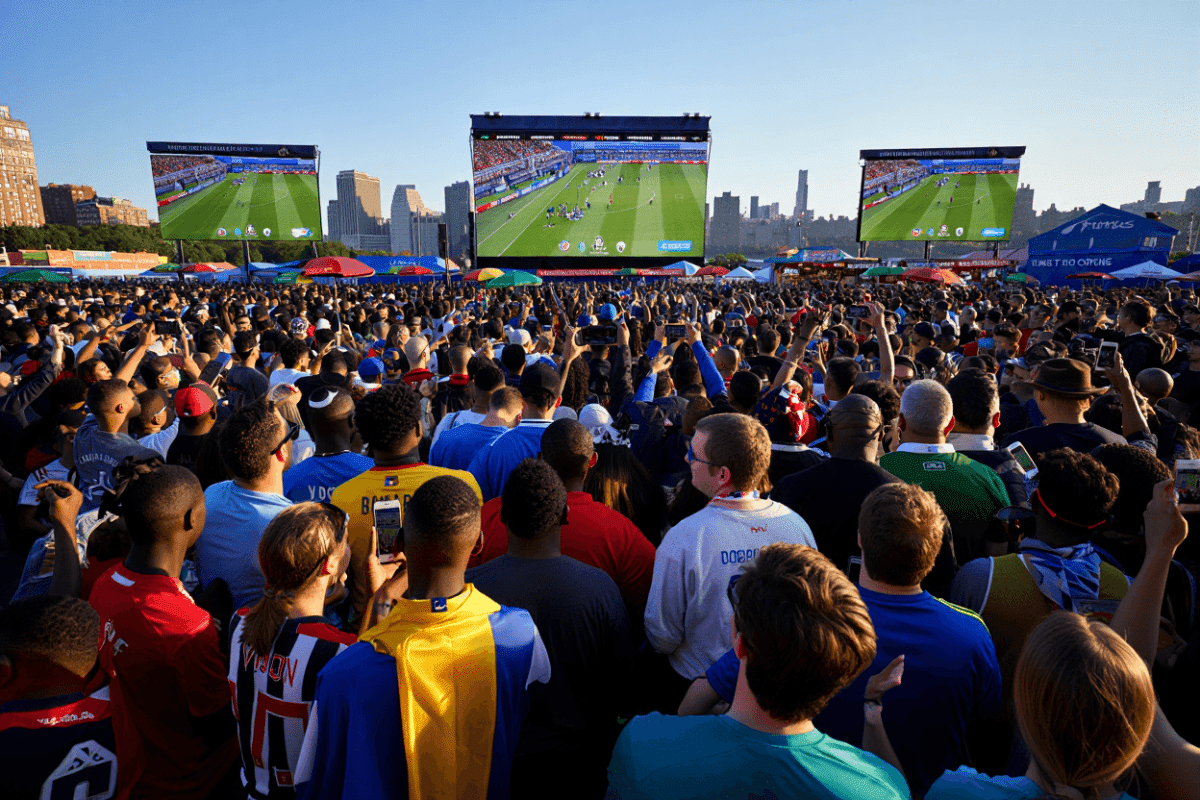
NYC Mayor Zohran Mamdani announced that New York City will host free World Cup fan events across all five boroughs during the 2026 FIFA World Cup, running from June 11 through July 19, 2026. With $20 million in state funding backing the initiative, the city aims to provide affordable access to World Cup experiences for residents and visitors who cannot afford the tournament’s costly ticket prices, which average $1,500 to $2,000 per match.
🔥 Quick Facts
- Five official fan zones — one in each NYC borough, all with free admission
- $20 million in state funding from Governor Kathy Hochul to support programming
- June 11 to July 19 — the complete tournament dates in North America
- Eight matches at MetLife Stadium — hosted in nearby East Rutherford, New Jersey
- Live match screenings, entertainment, and local food — no ticket required for fan zones
Addressing World Cup Affordability in the United States
The initiative responds to a critical challenge facing the 2026 World Cup: ticket accessibility. Unlike previous World Cup tournaments, the 2026 edition in the USA, Canada, and Mexico has generated significant affordability concerns. Early reports indicate that FIFA received 150 million ticket requests within just 15 days, revealing unprecedented demand—yet pricing remains a barrier for many North American fans. Standard match tickets range from $60 to $10,990, depending on matchday, seat location, and dynamic pricing models applied by FIFA.
Mayor Mamdani and Governor Hochul recognized that most working families cannot absorb these costs. By expanding free fan zones across the city, New York City ensures that soccer enthusiasts can participate in the global celebration without financial hardship. This approach aligns with recent entertainment industry trends toward democratizing access to major events, moving away from exclusive, premium-only experiences.
Five Borough Fan Zones: Locations and Programming
Each NYC borough will host a dedicated World Cup fan zone with identical amenities and programming. Live match screenings will be displayed on giant screens, allowing fans to experience tournament drama in real time. Beyond viewing, each location will feature local food vendors, music, games, entertainment, and cultural programming that reflects the borough’s unique character. The Bronx fan zone, for example, will operate at Bronx Terminal Market, a major commercial hub in the borough.
Each zone is designed to be family-friendly with programming that appeals to all ages. This multi-venue approach distributes fan attendance across the city, preventing overcrowding at centeralized locations while making the World Cup accessible via public transportation from every neighborhood. Queens will host the Group Stage Headquarters, emphasizing its role as a destination for serious fans during the tournament’s opening phase. Brooklyn Bridge Park, Manhattan, and Staten Island will each feature distinct fan activation sites, ensuring equitable geographic distribution.
State Investment and Economic Impact
The $20 million state funding allocation represents Governor Hochul’s commitment to ensuring New York City maximizes its role as a co-host of the 2026 World Cup. This investment covers operational costs, entertainment programming, food and beverage coordination, security, and promotional activities across all five locations. Both New York State and New Jersey have committed matching funding to support fan activations on both sides of the Hudson River, with MetLife Stadium in New Jersey hosting eight official matches.
Economic projections suggest the tournament will generate substantial tourism revenue. The broader impact of major events on host cities typically includes hotel bookings, restaurant spending, and retail activity. However, recent hotel industry reports indicate that World Cup 2026 bookings are running below initial forecasts in some regions, making free fan zones essential for driving foot traffic and engagement in New York City.
| Fan Zone Location | Borough | Key Features |
| Bronx Terminal Market | The Bronx | Large commercial venue with retail shopping nearby |
| Queens Group Stage HQ | Queens | Primary venue for group stage match viewings |
| Brooklyn Bridge Park | Brooklyn | Waterfront setting with views of Manhattan skyline |
| Manhattan Location | Manhattan | Urban center accessibility via major transit hub |
| Staten Island Venue | Staten Island | Community-focused programming and local partnerships |
“The World Cup is coming to our backyard, and we’re making sure every New Yorker can experience the excitement. These free fan events bring live matches, local culture, and community celebration to every corner of our city.”
— Mayor Zohran Mamdani, New York City Mayor, April 27, 2026
Tournament Context: Why These Fan Zones Matter Now
The 2026 World Cup represents the first co-hosted tournament in North American history, with matches across the United States, Canada, and Mexico. The USA will host 12 matches across multiple cities, including New York/New Jersey, which is positioned as one of the premier venues for the tournament. With MetLife Stadium’s capacity of 82,500 spectators, the region is equipped for major matches, yet ticket demand vastly outpaces supply.
The affordability crisis stands in stark contrast to typical sporting events. World Cup ticket prices have increased significantly since previous tournaments, driven by FIFA’s dynamic pricing model and global demand. For comparison, UEFA Euro 2024 offered more affordable entry-level tickets in some markets. This pricing structure has prompted cities like New York to develop alternative fan engagement strategies that preserve the tournament’s cultural impact without requiring expensive attendance at official stadiums.
The NYNJ Host Committee also announced that free fan zones will complement official FIFA Fan Festivals planned for other U.S. cities including Atlanta, Boston, Dallas, Houston, Kansas City, Los Angeles, Miami, and Philadelphia. New York’s commitment of five dedicated borough venues positions it as among the most comprehensive free fan programming in any 2026 host city.
What Fans Can Expect at Each Location
Beyond live match screenings, each fan zone will deliver a full cultural experience reflecting New York’s diversity. Live entertainment, local musicians, and cultural performers will rotate through venues during matchdays. Partner restaurants and food vendors will feature authentic cuisine from nations competing in the tournament, allowing fans to pair viewing with culinary experiences. Children’s play areas, interactive soccer activities, and merchandise stands will create additional attractions for families.
Transportation to each venue is optimized for public access. Subway, bus, and ferry connections ensure that fans across all income levels can reach fan zones without car dependency. The MTA will coordinate special service enhancements on major matchdays to accommodate increased ridership. Free WiFi, charging stations, and restroom facilities will be available at all locations, ensuring comfortable all-day viewing experiences.
What Happens Next for New York Soccer Fans?
As the tournament dates approach in June 2026, additional programming details will be released through NYC.gov and the NYNJ Host Committee website. Fans should monitor official channels for exact matchday schedules, entertainment lineups, and special programming announcements. Mayor Mamdani has stated that the city will continue advocating for more affordable World Cup access, including partnership discussions with local soccer clubs and community organizations to expand programming beyond the five official fan zones.
The initiative also signals that New York City’s commitment to world-class sports hosting extends beyond traditional stadium economics. By investing public funding in free fan experiences, the city recognizes that the World Cup’s true value lies in community engagement, not just matchday attendance. This approach may influence how future major sporting events are distributed across host cities, prioritizing inclusive access over premium-only models. Will other 2026 host cities follow New York’s lead, or will they rely on traditional paid attendance models? The summer tournament will provide critical data for future event planning decisions.
Sources
- Governor Hochul Office – Official announcement of $20 million state funding allocation for World Cup activations
- NYC Mayor’s Office – Details on five borough fan zone locations and programming frameworks
- NYNJ World Cup 2026 Host Committee – Tournament schedule, venue information, and fan experience details
- MetLife Stadium – Match schedule and stadium capacity data for MetLife hosting duties
- Fortune, NPR, ABC News – Context on ticket affordability concerns and World Cup ticket pricing analysis